
Last Updated: November 14, 2026
Quick Summary
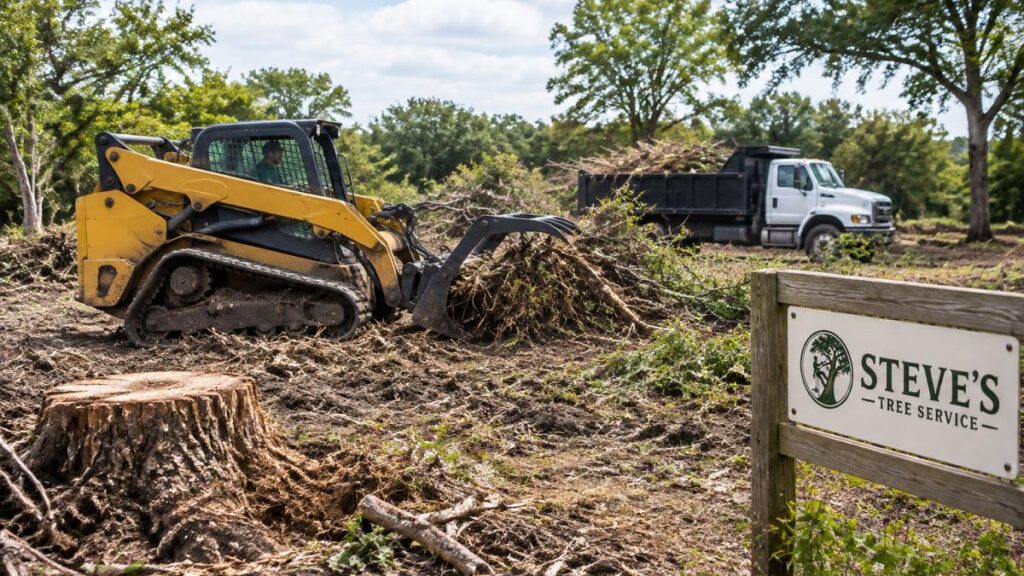
Land clearing services for homeowners remove trees, brush, undergrowth, and debris to turn unusable ground into space you can use, and a full project usually bundles tree removal, brush removal, stump grinding, debris removal, and rough grading. The scope depends on your goal, since a garden plot needs far less clearing than a building pad.
- Hand clearing suits small lots and light brush but is slow and labor-heavy.
- Forestry mulching grinds brush and small trees into mulch on the spot, leaving less to haul away.
- Mark trees to keep with ribbon or paint before crews arrive.
- Call your local permitting office to ask whether your project requires a permit.
- Seed or mulch exposed soil quickly after clearing to prevent erosion.
Table of Contents
- What Land Clearing Services for Homeowners Actually Include
- Forestry Mulching for Residential Properties
- Land Clearing Preparation Checklist Before Crews Arrive
- Land Clearing Permits for Homeowners: What to Check First
- Your Land Clearing Contractor Checklist for Vetting Crews
- Erosion, Drainage, and Aftercare Once the Land Is Cleared
- Schedule Your Free Land Clearing Estimate
- Frequently Asked Questions
What Land Clearing Services for Homeowners Actually Include
Land clearing services for homeowners cover the removal of trees, brush, undergrowth, and debris to turn unusable ground into space you can actually use. Clearing is not just cutting things down. It is a plan for what stays, what goes, and what happens to the ground afterward.
Most first-time homeowners picture a crew with chainsaws and a trailer. In practice, a full clearing project usually bundles several jobs:
- Tree removal for unwanted or hazardous trees
- Brush removal and cutting back thick undergrowth
- Stump removal or stump grinding so nothing trips you or sprouts back
- Debris removal so the cut material leaves your property
- Rough grading to smooth the ground after the work
The scope you choose depends on your goal. A garden plot needs far less than a building pad. That is why any honest on-site estimate starts with a conversation about what you want the land to do.
USDA Natural Resources Conservation Service guidance on managing trees and brush on private land
Clearing Methods Compared: Which Fits Your Lot
There is no single best method. The right one depends on your terrain, how thick the vegetation is, and how much of the ground you want disturbed.
Hand clearing suits small lots and light brush. It is slow but gentle on the soil and surrounding trees.
Machine clearing uses heavy equipment to push, cut, and pile vegetation. It handles acreage clearing and lot clearing fast, but it disturbs topsoil and can leave ruts.
Forestry mulching grinds brush and small trees into mulch on the spot. It leaves a cleaner finish and less mess to haul away.
| Method | Best For | Main Trade-off |
|---|---|---|
| Hand clearing | Small lots, light brush | Slow, labor-heavy |
| Machine clearing | Large acreage, building pads | Disturbs topsoil |
| Forestry mulching | Brushy lots, access paths | Limited on large trees |
If you want to understand the full sequence of a clearing job, this step-by-step guide to clearing overgrown land walks through each stage.
What Gets Cleared and What Gets Saved
Good clearing is selective. A common mistake is assuming everything green has to go. Mature shade trees, healthy hardwoods, and anything framing your home often add value and should stay.
Before crews arrive, walk the property and mark what matters. Flag trees you want kept, note anything near power lines, and point out fences, septic lines, and buried utilities. Vegetation management works best when the homeowner and the crew agree on the keep list up front.
Forestry Mulching for Residential Properties
Forestry mulching is a clearing method that grinds brush, saplings, and small trees into a layer of mulch directly on the ground. For homeowners, it solves two problems at once: it clears overgrowth and leaves the cut material behind as ground cover instead of a pile to haul off.
The result is a cleaner, more natural finish than bulldozing. Forestry mulch can help hold moisture and slow erosion on sloped ground in general. It is often used for:
- Opening a walking trail or access road through woods
- Clearing brush around a home for fire safety and visibility
- Reclaiming an overgrown field or fence line
- Preparing ground for a future project without stripping topsoil
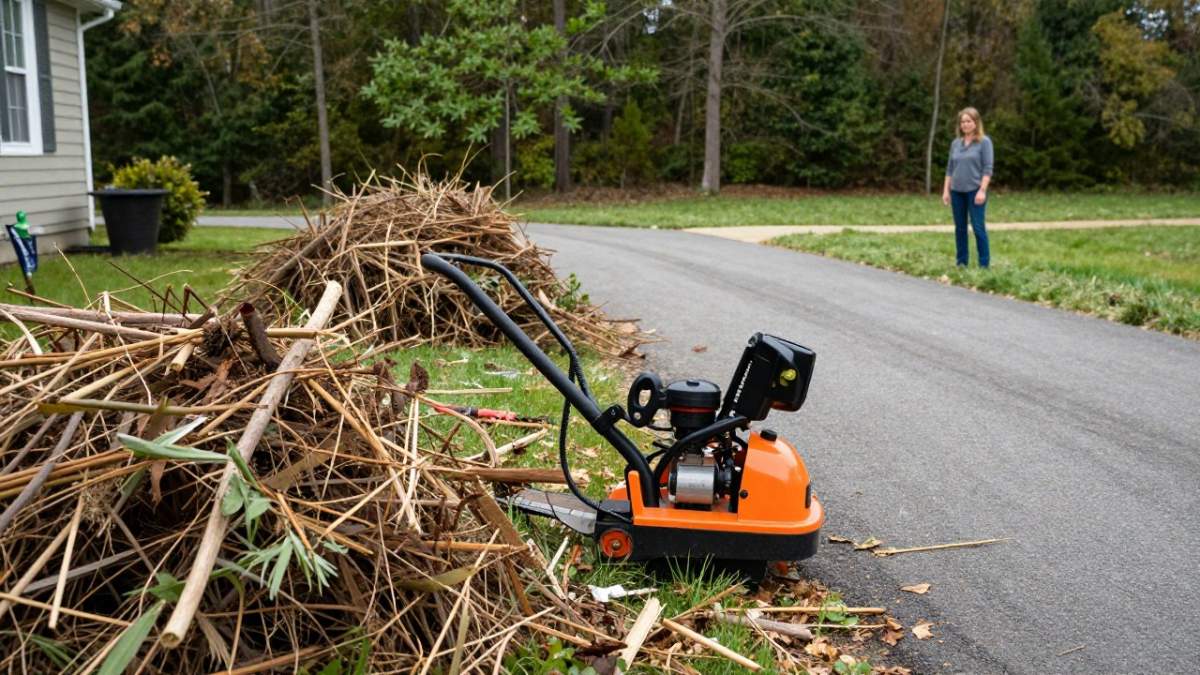
One limit to know: forestry mulching is not the tool for large, mature trees. Those need proper tree removal. Steve’s Tree Service LLC offers tree removal for hazardous trees.
Land Clearing Preparation Checklist Before Crews Arrive
Preparation makes the difference between a smooth job and a stressful one. The real work is deciding what you want before anyone shows up with equipment.
First, define the clearing area and set priorities. Walk your property with a notebook and sketch a simple map.
Second, prepare the property before crews arrive. Use this checklist:
- Walk the property and mark trees to keep with ribbon or paint
- Identify fences, septic systems, wells, and buried utility lines
- Clear vehicles, tools, and equipment from the work area
- Confirm where cut debris will be piled or hauled
- Check for nesting birds or wildlife before work begins
- Confirm the crew’s arrival time and expected duration
- Ask who handles final cleanup and raking
Third, protect what matters. Flag trees you want kept, note anything near power lines, and point out fences, septic lines, and buried utilities.
Fourth, plan for access and staging. Think about where trucks and equipment will enter and exit, where cut material will be stacked, and whether neighbors need notice.
Fifth, confirm cleanup terms in writing. The last checklist item matters most. This guide to confirming tree debris removal lists the exact questions to ask.
Watch out: skipping the written goal and the keep list is the most common reason homeowners feel disappointed after the crew leaves, because the finished job matches the contractor’s assumptions rather than the homeowner’s plan.
Land Clearing Permits for Homeowners: What to Check First
Permits catch many homeowners off guard. Rules vary by city and county, and some properties have protected trees, easements, or setbacks that limit what can be cut. Before any work starts, call your local permitting office and ask a focused set of questions. Get the answers in writing if you can.
Start with these core questions:
- Does this project require a permit, and if so, what is the application process?
- Are any trees on my property protected or restricted by local tree ordinances?
- Are there setback or drainage rules that affect clearing near waterways or wetlands?
- Are there any easements on my property that restrict clearing?
- Do I need an erosion and sediment control plan before work begins?
Then check these specific areas:
- Protected trees. Many communities regulate the removal of mature or native trees. Ask whether your property has any protected species and what replacement or mitigation rules apply.
- Easements. Utility and drainage easements often cross private land. Clearing within an easement may require permission from the utility or municipality, and cutting the wrong vegetation there can create liability.
- Wetlands and waterways. Clearing near wetlands, streams, or drainage ditches usually triggers additional review. Ask whether any part of your property is mapped as wetland or floodplain.
- Erosion control. Disturbing bare soil can require a sediment control plan. Ask what measures are expected and who inspects them.
- Homeowners association rules. If you live in a community with an HOA, check its covenants before clearing, because HOA rules can be stricter than local codes.
A reputable crew will know the local rules and can point you in the right direction. If a contractor tells you permits never matter, treat that as a red flag. Clearing without required approval can lead to fines and forced replanting.
Watch out: assuming your project is too small to need a permit is a common mistake. Even small clearings near protected trees or waterways can require review, and the cost of restoring unpermitted work usually exceeds the permit process itself.
Your Land Clearing Contractor Checklist for Vetting Crews
Choosing the right crew protects your property and your wallet. Run every contractor through this land clearing contractor checklist:
- Licensed and insured, ask for proof, not a promise
- Local experience, do they know your area and its rules?
- Written quote, itemized, with scope and cleanup spelled out
- On-site estimate, they walked the property, not just quoted by phone
- References and reviews, check recent, local feedback
- Clear answers on debris and stumps, what is included and what costs extra
- Service area, confirm they actually cover your address
Watch out: the cheapest bid often leaves out debris hauling or stump grinding, and those add-ons appear later as surprise charges. Ask for the full scope in writing before you sign.
Weatherford homeowners trust Steve’s Tree Service LLC for safe tree removal, professional tree trimming, and dependable cleanup. With over 12 years of experience, Christian values, and 73+ five-star Google reviews, we take pride in treating every property like our own.
Erosion, Drainage, and Aftercare Once the Land Is Cleared
Bare ground is vulnerable ground. Once vegetation is gone, rain can wash soil away, especially on slopes. Plan aftercare before the crew leaves:
- Seed or mulch exposed soil quickly
- Keep natural drainage paths open
- Avoid driving heavy equipment over wet ground
- Watch for new erosion after the first heavy rain
EPA resources on controlling erosion and stormwater runoff at home
Good clearing also accounts for where water goes. If your lot slopes toward the house, make sure the finished grade directs water away from the foundation. A crew that understands drainage saves you a costly problem later.
Schedule Your Free Land Clearing Estimate
Every property is different, and the only way to get an accurate plan is a walk-through. Steve’s Tree Service LLC offers free estimates, so you can understand the scope, the methods that fit your lot, and what cleanup includes before you commit.
We serve homeowners in Weatherford and Parker County. Our team brings over 12 years of experience and a commitment to leaving your property clean.
Contact Steve’s Tree Service LLC to ask questions or request your free estimate, or visit our land clearing service page to see how we handle clearing projects from start to finish.
Clearing land is a big decision, and the right crew makes it simple. Steve’s Tree Service LLC offers free estimates, thorough cleanup, and honest answers about what your property needs. With over 12 years of experience, Christian values, and a 5-star reputation, we treat every property like our own. Get started with Steve’s Tree Service LLC and turn your overgrown lot into usable space.
Frequently Asked Questions
Do I need a permit to clear land on my property?
It depends on your local rules, the size of the lot, and whether you are near protected trees, wetlands, or a floodplain. Before any work starts, ask your city or county planning office what land clearing permits for homeowners apply to your address. Some rural lots need none, while lots inside city limits or near waterways often do. A reputable contractor will ask about permits during the free estimate and can tell you what they typically see in your area.
What is the difference between land clearing and forestry mulching?
Land clearing is the broad term for removing trees, brush, and undergrowth to open up usable space. Forestry mulching is one method: a machine grinds vegetation in place and leaves the mulch on the ground. Mulching is faster and less disruptive on residential lots, and the leftover mulch can help hold soil and moisture. Full clearing with excavation is better when you need bare ground for a building pad, driveway, or septic field.
How do I choose a land clearing contractor?
Use a land clearing contractor checklist: confirm the company is licensed and insured, ask how many years it has worked in your area, request a written quote that spells out what is included, and ask who handles debris removal and stump grinding. Read recent reviews and ask for local references. A contractor who walks the property with you, explains the method, and puts the scope in writing is a safer bet than one who quotes a number over the phone.
Can land clearing remove brush without damaging trees I want to keep?
Yes. Selective clearing targets brush and undergrowth while leaving healthy trees in place. Walk the property with the crew before work begins and mark the trees you want saved with ribbon or paint. Ask how they will protect the root zones, since heavy equipment driven too close can compact soil and harm a tree you meant to keep. Forestry mulching is often the better fit for this kind of selective work on residential lots.
