
Last Updated: November 12, 2026
Quick Summary
To document storm damage for insurance, call your insurer first to get a claim number, then photograph each damaged area with a wide shot, a mid-range shot, and a close-up that includes something for scale. Keep original files with their timestamps, rename them by date and location, and record everything in a written log with dates, names, and receipts.
- Never walk under a leaning tree, cracked limb, or downed power line; call your utility company first.
- Ask your insurer whether you must wait for an adjuster before making temporary repairs.
- Rename photo files with date, location, and damage type, like 2026-11-12-roof-north-side-shingle-loss.
- Keep blurry or duplicate photos because original files carry timestamps and metadata.
- Check attics, ceilings, walls, floors, and foundations for hidden damage in the weeks after the storm.
Table of Contents
- Storm Damage Documentation: What to Do First
- Safety First: When to Stay Out of the Way
- Call Your Insurance Company Early
- How to Take Storm Damage Photos for Insurance
- How to Write a Storm Damage Report
- Storm Damage Insurance Claim Checklist
- The Storm Damage Claim Timeline
- Documenting Hidden Damage and Damage That Worsens
- Separating Storm Damage from Normal Wear
- Booking Safe Storm Cleanup and Tree Care
- Frequently Asked Questions
Storm Damage Documentation: What to Do First
Learning how to document storm damage for insurance starts with one rule: slow down and stay safe. Before you begin, learn how to prepare for storm cleanup. Documentation is the paper trail that supports your claim, and it is the difference between a smooth settlement and a fight. This guide from Steve’s Tree Service LLC walks you through it step by step, in plain language for first-time homeowners.
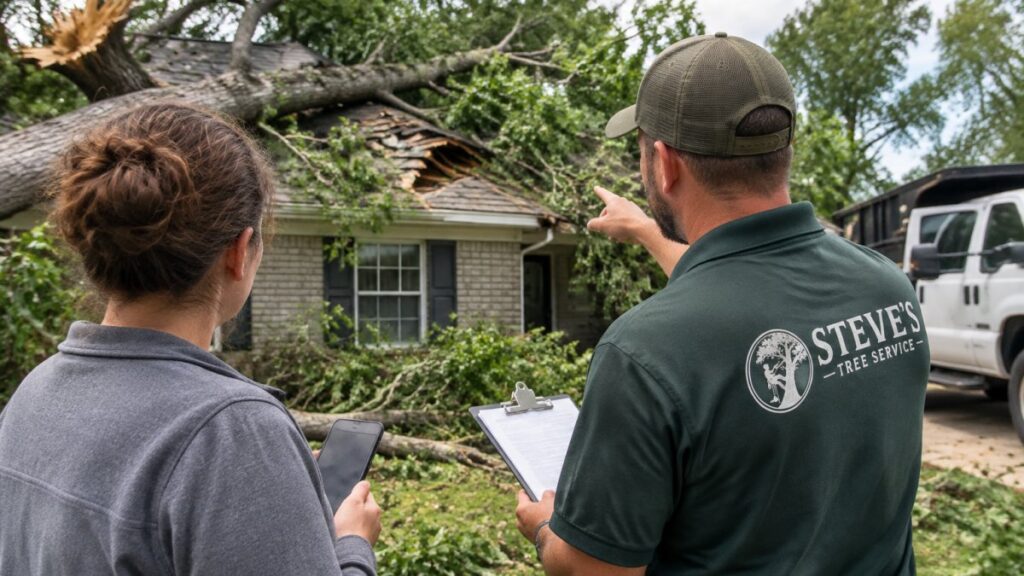
Storm damage is harm to your home or property caused by wind, hail, rain, falling limbs, or flying debris. Your first move is not to grab your phone. It is to make sure no one is in danger. Then start recording.
Here is what most guides skip: your insurer may ask for proof that the damage happened during a specific storm. That means dates, times, and weather details matter as much as the photos themselves.
Safety First: When to Stay Out of the Way
Never walk under a leaning tree, a cracked limb, or a downed power line. Trees can look stable and then shift without warning. If a line is down, stay far back and call your utility company first.
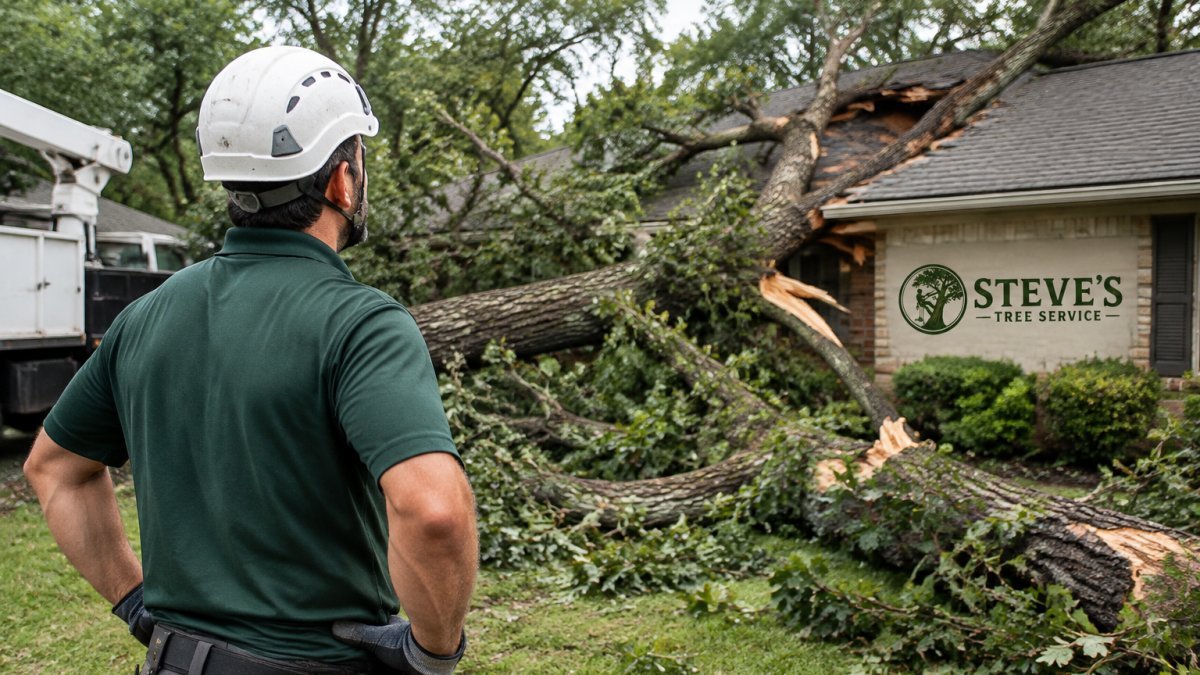
Watch out: a limb resting on a roof or against a fence can be under tension. Touching it or cutting it yourself can cause it to snap back and strike you.
If a fallen tree or hanging limb threatens your home, a car, or a person, do not wait. Get emergency tree service from a crew trained to work around hazards. Keep people and pets away from the area until help arrives.
Call Your Insurance Company Early
Call your insurer as soon as it is safe to do so, even before you start cleaning up. Many policies require you to report damage promptly, and a delay can complicate your claim.
When you call, have your policy number ready. Ask three questions:
- What is my claim number?
- What does my policy cover for this type of storm damage?
- Do I need to wait for an adjuster before making temporary repairs?
Write down the name of the person you speak with and the date. That call is the first entry in your record.
How to Take Storm Damage Photos for Insurance
Good storm damage photos for insurance do two jobs at once: they show the whole scene and they show the specific damage up close. Adjusters review many claims, so evidence that is easy to follow is harder to dispute. The goal is a set of images that a stranger could open in order and understand without calling you.
Start wide, then move close. For every damaged area, take one wide shot that shows where the damage sits on the house, one mid-range shot that shows the damaged component, and one close-up that shows the size and texture of the damage. Include something for scale in the close-up, a ruler, a coin, or your hand works. Scale references matter because a photo of a dent or a crack tells an adjuster nothing about size without a reference object.
Watch out: do not delete “bad” photos or retake them to look cleaner. Original files, including blurry or duplicate shots, carry timestamps and metadata that help prove when the damage was recorded. Keep the originals and add better shots alongside them.
A Room-by-Room and Exterior Photo Checklist
Work through this list in a consistent order so nothing gets missed. Check each box as you shoot.
Exterior
- Roof: missing shingles, lifted or curled tabs, dents, exposed underlayment, and granules collected in gutters or at downspout outlets
- Gutters and downspouts: dents, sagging, separation at seams, and downspouts pulled away from the house
- Siding: cracks, holes, loose panels, and impact marks
- Windows and doors: cracked glass, damaged frames, torn screens, and dents in storm doors
- Fences, sheds, garages, and detached structures: leaning posts, broken panels, and roof damage
- Vehicles: dents, broken glass, and damaged mirrors or trim
Interior
- Ceilings: stains, sagging, and active drips
- Walls: water marks, bubbling paint, and new cracks
- Floors: warping, soft spots, and standing water
- Attic and crawl spaces: daylight through the roof deck, wet insulation, and staining on rafters
Timestamps, Scale, and File Names
A photo is only as useful as its label. Rename files with the date, location, and what is shown, like “2026-11-12-roof-north-side-shingle-loss.” A consistent pattern, date first, then location, then damage type, lets an adjuster sort and review your evidence quickly and makes it hard for a file to be misplaced.
If your phone stamps the date on the image, keep that setting on. If it does not, photograph a piece of paper with the date and address written on it at the start of each session, then shoot the damage. Take a short narrated video walking the property in the same order as your checklist; narrate what you see and where you are standing.
Preserving and Backing Up Your Evidence
Upload your photos and videos to cloud storage or copy them to a computer the same day, and keep the originals on your phone until the claim closes. Share copies with your insurer rather than the only existing files. Keep a simple index, a spreadsheet or notebook listing each file name and what it shows, so you can point an adjuster to the right image in seconds.
How to Write a Storm Damage Report
A storm damage report is a written record of what happened, when, and what was damaged. It backs up your photos and gives your adjuster a clear picture.
What Goes in the Written Log
Start a simple notebook or spreadsheet and record:
- The storm date, approximate time, and weather you observed
- Each damaged item, room by room and outside
- Photos you took, with file names
- Temporary repairs you made and receipts for materials
- Every call with your insurer, including names and dates
- Any out-of-pocket expenses
Keep this log updated daily until the claim closes. It becomes your damage inventory and incident log in one place.
Storm Damage Insurance Claim Checklist
Work through this list in order and check items off as you go:
- Report the claim and get your claim number
- Photograph and video all damage
- Write your damage inventory
- Make safe temporary repairs, like tarping a roof
- Save every receipt for repairs and materials
- Meet the insurance adjuster on site
- Review the damage estimate carefully
- Keep copies of all claim forms and proof of loss
Before you haul anything to the curb, know what gets removed. Our guide on whether tree companies remove debris explains what typically gets hauled away.
The Storm Damage Claim Timeline
Most claims move through the same stages, though timing varies by insurer and policy. Expect to report the loss, document it, meet an adjuster, receive an estimate, and then settle.
Here is the general order:
| Stage | What Happens | Your Job |
|---|---|---|
| Report | You call your insurer | Get claim number |
| Document | You gather photos and logs | Save everything |
| Inspection | Adjuster visits | Be present, ask questions |
| Estimate | Insurer reviews damage | Compare with your log |
| Settlement | Claim is paid | Keep records |
Ask your insurer about deadlines for proof of loss and claim forms. Missing one can slow your claim.
Documenting Hidden Damage and Damage That Worsens
Some damage does not show up on day one. Water intrusion can appear as ceiling stains days after a storm. A crack in a wall can widen as the ground shifts.
Check these spots over the following weeks:
- Attic and crawl spaces for leaks
- Ceilings and walls for new stains
- Floors for warping or soft spots
- Foundation for new cracks
Photograph anything new and add it to your log with the date. Tell your insurer right away if damage worsens.
Separating Storm Damage from Normal Wear
Adjusters look closely at whether damage is new or pre-existing. Old shingle wear, rust, and rot are usually not covered. Fresh breaks, clean wood, and new dents are.
To show the difference, photograph the damage close up and include the surrounding area. Note the storm date next to it. Proactive care also helps: our guide on tree trimming for storm safety shows how regular pruning reduces future risk.
Booking Safe Storm Cleanup and Tree Care
Once your damage is documented, the next step is safe cleanup. Fallen limbs, leaning trees, and debris piles are risky to handle alone.
Weatherford homeowners trust Steve’s Tree Service LLC for safe tree removal, professional tree trimming, and dependable cleanup. With over 12 years of experience, Christian values, and 73+ five-star Google reviews, we take pride in treating every property like our own.
We offer free estimates and thorough cleanup. When you’re ready, book storm cleanup and let us handle the heavy work.
Storm damage is stressful, but a clear record protects your claim and your home. If fallen trees or hazardous limbs are part of the picture, do not risk it alone. Steve’s Tree Service LLC brings over 12 years of experience, free estimates, and a crew that cleans up completely before leaving. Get started with Steve’s Tree Service LLC and get your property safe and clear again.
Frequently Asked Questions
How long do you have to report storm damage to insurance?
Most homeowners insurance policies ask you to report a storm damage claim promptly, and many set a specific window in the policy documents, so read yours or call your agent to confirm the deadline. Report the damage as soon as you can safely inspect it, even if you are still gathering photos and receipts. Waiting too long can make an adjuster question whether the damage really came from that storm, which complicates the claim.
What should I photograph after storm damage?
Photograph the whole scene first, then move closer. Capture wide shots of the roof, gutters, downspouts, siding, windows, and any fallen debris, then take close-ups of shingles, dents, cracks, and water stains. Go inside for ceiling stains, active leaks, and damaged belongings. Include a photo of a ruler or a common object next to damage so size is clear, and record the storm date and approximate time alongside the images.
Should I make temporary repairs before the insurance adjuster arrives?
Yes, when it is safe to do so. Most policies expect you to take reasonable steps to prevent further damage, like tarping a damaged roof or boarding a broken window. Keep every receipt for materials and labor, and photograph the damage before you cover it. Do not make permanent repairs or throw away damaged materials until the adjuster has seen them, because that evidence supports your proof of loss.
What records should I keep for a storm damage insurance claim?
Keep your claim number, the date of loss, the approximate time the storm hit, and notes from every call or email with your insurer and adjuster. Save photos and videos with clear file names, repair estimates, receipts for temporary repairs and out-of-pocket expenses, and a written damage inventory of personal belongings. Back everything up to cloud storage so nothing is lost if your phone or computer is damaged.
