
Table of Contents
- Assessing Your Overgrown Land Before You Cut
- Land Clearing Tools and Equipment for Every Job Size
- How to Clear Land Without Heavy Equipment
- Forestry Mulching: When It Makes Sense for Your Property
- DIY Clearing vs. Hiring a Professional Land Clearing Service
- Land Clearing Timeline: How Long Each Method Takes
- Safety, Disposal, and Preventing Regrowth
- Frequently Asked Questions
Last Updated: October 14, 2026
Assessing Your Overgrown Land Before You Cut
The most common mistake we see on overgrown property is starting the chainsaw before walking the land. Knowing how to clear overgrown land starts with a slow lap around the property, not a fast cut. At Steve’s Tree Service LLC, we’ve cleared brush and storm debris across Parker County, and the jobs that go smoothly are the ones that get planned first.
Walk the Property and Map the Vegetation
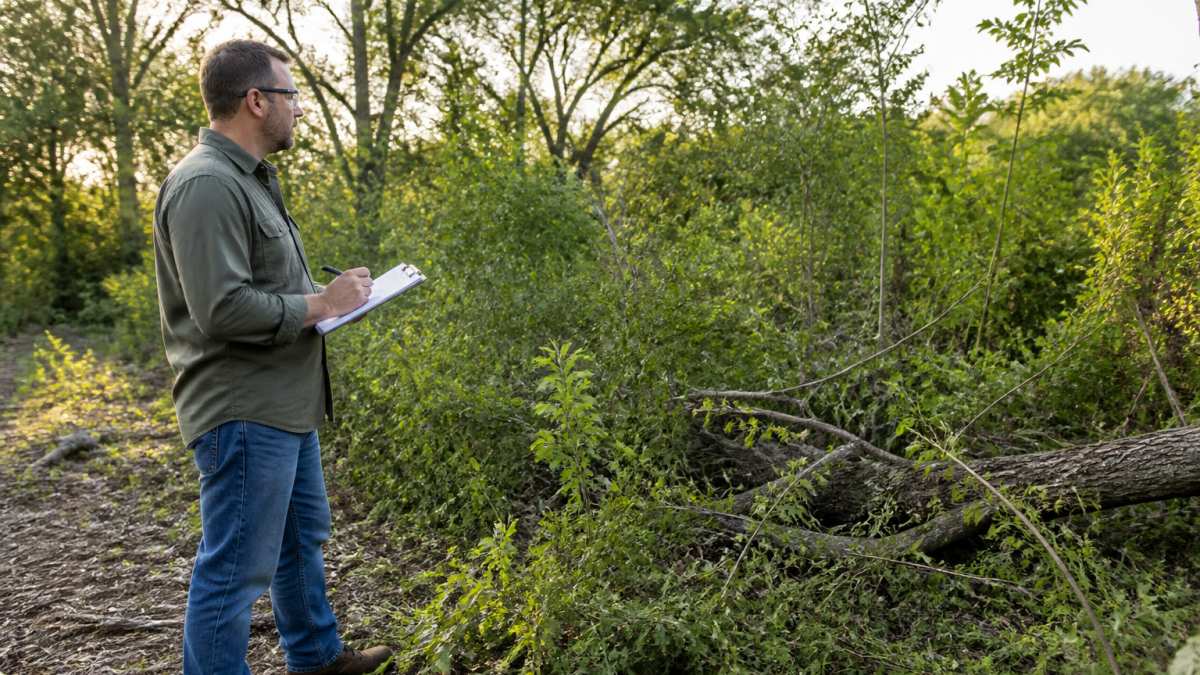
Walk the whole property before you cut anything. Note what’s growing and where it sits:
- Brush and weeds in open areas: mow or cut first
- Saplings and small trees under a few inches across: cut and treat stumps
- Mature trees you want to keep: flag them so nobody cuts them by mistake
- Dense vegetation near fences, sheds, or power lines: handle with care
Sketch a simple map. Mark wet spots, slopes, and anything you can’t see through. That map decides your tools later.
Check Boundaries, Permits, and Environmental Rules
Confirm your property lines before the first cut. A survey or county plat map settles disputes before they start.
Then check with your county and city on local rules. Many places limit clearing near waterways, wetlands, or protected trees. Some require a permit for larger jobs. A quick call to your county office saves fines later.
Cutting past a property line or into a protected area can bring fines and legal trouble. Verify boundaries and local rules before you cut, not after.
Land Clearing Tools and Equipment for Every Job Size
The right land clearing tools and equipment match the job, not your budget. Buying a brush mower for half an acre of weeds is overkill. Trying to clear two acres of saplings with hand tools is a waste of your summer. Match the tool to the acreage, the terrain, and how thick the growth is.
| Job Size | Growth Type | Best Tool | Who It Suits |
|---|---|---|---|
| Small yard, tight spots | Weeds, light brush | Hand tools | DIY homeowners |
| Half acre or less | Thick weeds, light brush | Walk-behind mower | DIY, moderate effort |
| One to three acres | Heavy brush, saplings | Brush cutter or skid steer | DIY with rental, or pro |
| Three acres plus | Dense vegetation, small trees | Forestry mulcher | Professional crews |
For a full breakdown of costs and methods, see our land clearing cost guide. The table above is the shortcut version.
How to Clear Land Without Heavy Equipment
You can clear land without heavy equipment on smaller lots. Hand tools and a walk-behind mower handle most residential jobs. The catch is time and sweat, not capability.
USDA Natural Resources Conservation Service guidance on invasive species control
Hand Tools for Small Areas and Tight Spots
Hand tools work best where machines can’t reach. Fence lines, garden beds, and steep banks all call for manual cutting.
Start with these:
- Loppers for branches up to about two inches
- Pruning saw for thicker limbs in tight spaces
- Chainsaw for saplings and small trees
- Brush axe or machete for weeds and vines
Cut low and close to the ground. Then treat the stumps so they don’t grow back. Skip that step and you’ll be back out there in a month.
Walk-Behind and Self-Propelled Mowers for Medium Brush
A walk-behind or self-propelled brush mower handles medium brush fast. These machines cut thick weeds and light saplings that a lawn mower can’t touch. They fit through gates and work on slopes where a tractor can’t go.
Expect to make two or three passes. The first knocks down the tall growth. The second and third get it even. Wear eye protection and boots. Brush mowers throw debris hard.
Cut brush in late fall or winter when growth is dormant. You’ll see the ground better, work cooler, and slow regrowth.
Forestry Mulching: When It Makes Sense for Your Property
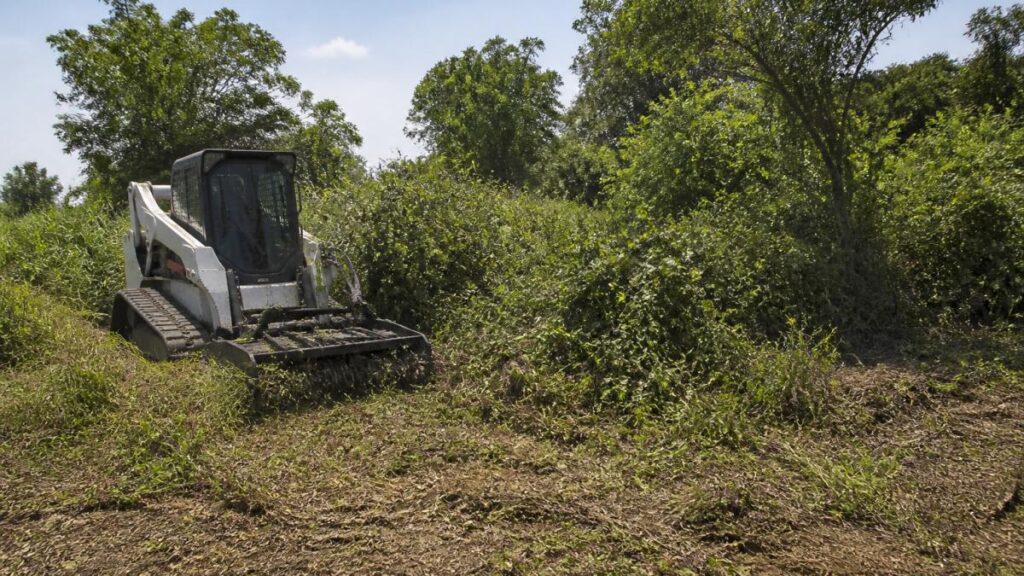
Forestry mulching grinds brush, saplings, and small trees into a layer of mulch on the spot. A mulcher on a skid steer does the work in one pass. No hauling, no burn piles, no debris to drag to the curb.
It makes sense when:
- You have dense vegetation across a large area
- You want to keep the soil and nutrients in place
- Burning isn’t allowed or isn’t safe
- You want a finished look without hauling
It costs more per acre than mowing. But the cleanup savings often close the gap. The mulch layer also slows erosion and holds moisture. For sloped or erosion-prone ground, that matters.
Forestry mulching leaves mulch in place, which cuts hauling and protects soil. It’s the fastest path to a clean, usable property on larger lots.
DIY Clearing vs. Hiring a Professional Land Clearing Service
DIY saves money on labor but costs you weekends. Hiring a professional land clearing service saves time and handles the risky parts. The right call depends on acreage, tree size, and how close growth sits to structures or power lines.
What DIY Actually Costs
DIY isn’t free, it’s a trade of money for time and risk. Common cost drivers:
- Tool rental: walk-behind brush mowers and skid steers rent by the day or week; chainsaws and hand tools are often bought outright
- Fuel and maintenance: small engines burn through gas and need sharpening, oil, and repairs
- Disposal: county collection sites may charge by the load; hauling fees add up fast
- Your time: weekends, not hours, for anything beyond a small yard
What Hiring a Pro Actually Costs
Professional land clearing is priced by the acre, the hour, or the job. Factors that move the number:
- Acreage and density, thicker growth takes longer per acre
- Terrain, slopes, wet ground, and rock slow machines
- Tree size, large trees and stumps add cost
- Access, tight gates and fences limit equipment size
- Debris handling, hauling away vs. mulching in place changes the price
Get at least two written estimates and ask what’s included: stumps, hauling, cleanup, and any permits.
A Simple Decision Guide
| Situation | Best Fit |
|---|---|
| Small yard, light brush, tight access | DIY with hand tools |
| Half acre or less, thick weeds | DIY with a walk-behind mower |
| One to three acres, heavy brush | Rental skid steer or a pro |
| Three acres plus, dense growth | Professional crew |
| Hazardous trees near structures or lines | Professional crew |
| Stumps that need grinding | Professional crew |
Go DIY when the job is small, the growth is light, and you have the tools and time. Hire a pro when you face large or hazardous trees, dense vegetation across multiple acres, stumps that need grinding, or storm damage you can’t safely reach.
At Steve’s Tree Service LLC, we handle land clearing, tree removal, and stump grinding for homeowners across Weatherford and Parker County. Every job comes with a free estimate and a full cleanup. As Betsy S. put it, “He does great work, professional and takes care of all the mess.”
Land Clearing Timeline: How Long Each Method Takes
The land clearing timeline depends on method, acreage, and terrain. Here’s what to expect for a typical residential lot:
| Method | Area | Time Estimate |
|---|---|---|
| Hand tools | Quarter acre or less | Several weekends |
| Walk-behind mower | Half acre | One to two days |
| Skid steer with mulcher | One to three acres | One to two days |
| Full professional clearing | Three acres plus | Two to five days |
Weather, rock, and slope all add time. Wet ground slows machines. Steep terrain slows everything. Build in a buffer before you promise yourself a finished yard by a set date.
Safety, Disposal, and Preventing Regrowth
Safety comes first on every clearing job, and the details matter more than the slogan. Brush cutters throw debris at high speed, chainsaws kick back, and dead limbs fall without warning. Most practitioners treat the following as non-negotiable.
Protective Equipment and Work Zones
Wear the right gear for the tool, not just the task:
- Chainsaw: chaps or cut-resistant pants, helmet with face shield, hearing protection, gloves, steel-toe boots
- Brush cutter or string trimmer: eye protection, face shield, hearing protection, long sleeves, boots
- Hand tools: eye protection and gloves at minimum
Set a work zone before you start. Keep bystanders, kids, and pets at least two tree-lengths back from any felling or mulching. Never work alone near heavy limbs, and never cut within ten feet of a power line, call the utility first.
Hidden Hazards in Overgrown Land
Overgrown ground hides what you can’t see. Before you cut, probe for:
- Stumps and rocks that dull blades or stop a mower
- Holes, wells, and old foundations that swallow a foot or a tire
- Fence wire, rebar, and trash that wrap around a brush cutter
- Bee, wasp, and hornet nests, check before you disturb brush
- Poison ivy, oak, and sumac, learn the leaf patterns and never burn them
- Ticks and wildlife, wear repellent and check yourself after
Burning poison ivy, oak, or sumac sends the irritant into the air and can cause serious lung reactions. Bag it and haul it, or check with your county about disposal.
Disposal Options for Cleared Vegetation
Disposal is the part most people underestimate. You can:
- Chip brush into mulch for beds and paths
- Build brush piles for wildlife habitat in a back corner, if local rules allow
- Haul debris to a county collection site or transfer station
- Burn only where local rules allow, never near structures, and never on a windy day
- Hire a crew that hauls everything away
Invasive Plants Need Special Handling
Invasive species spread by seed, root fragment, and cutting. If you cut them and leave the debris, you can make the problem worse. Identify what you’re dealing with before you start, your county extension office is the best local resource. Bag seed heads and root fragments, don’t compost them, and don’t move them to another part of the property.
U.S. EPA guidance on managing yard and invasive plant waste
Preventing Regrowth
Preventing regrowth takes one more step after cutting. Treat cut stumps with an approved herbicide, or grind them out. Left alone, many species sprout right back from the stump. Invasive plants need repeat treatment over a season or two, and follow-up mowing keeps woody seedlings from taking hold. Plan on at least one monitoring pass a few months after clearing to catch what comes back.
Frequently Asked Questions
What is the cheapest way to clear overgrown land?
The cheapest route is usually doing the work yourself with hand tools and a walk-behind brush mower for small lots under half an acre. For larger properties, renting a skid steer or hiring a forestry mulching crew often costs less per acre than buying equipment. If you clear overgrown land yourself, expect to spend weekends on labor and several hundred dollars on tool rentals. Get quotes from local land clearing services to compare against your DIY costs before deciding.
How long does it take to clear 10 acres of land?
A forestry mulching crew can clear 10 acres of light to medium brush in one to three days. Dense vegetation, saplings, and mature trees slow that down considerably. If you clear land without heavy equipment, expect weeks or months of weekend work depending on how thick the growth is. Terrain, access points, and how much debris you need to haul off all affect your land clearing timeline.
Is forestry mulching a good way to clear overgrown land?
Forestry mulching works well for most overgrown lots because it grinds brush, saplings, and small trees into mulch that stays on the ground, feeding the soil and reducing erosion. It leaves mature trees standing if you want them. The main limits are steep slopes, wet ground, and very large trees, which may need a chainsaw crew or excavator instead. Ask a land clearing professional whether the mulcher can safely reach your property.
Should you remove roots when clearing overgrown land?
Remove roots only where you plan to build, plant, or pave. Grinding stumps and pulling roots prevents regrowth and settles the soil, but it disturbs the ground and can cause erosion on slopes. For pasture, trails, or wildlife areas, leaving roots in place is usually fine and cheaper. If you want a functional property with a lawn or garden, stump grinding is worth the extra cost.