
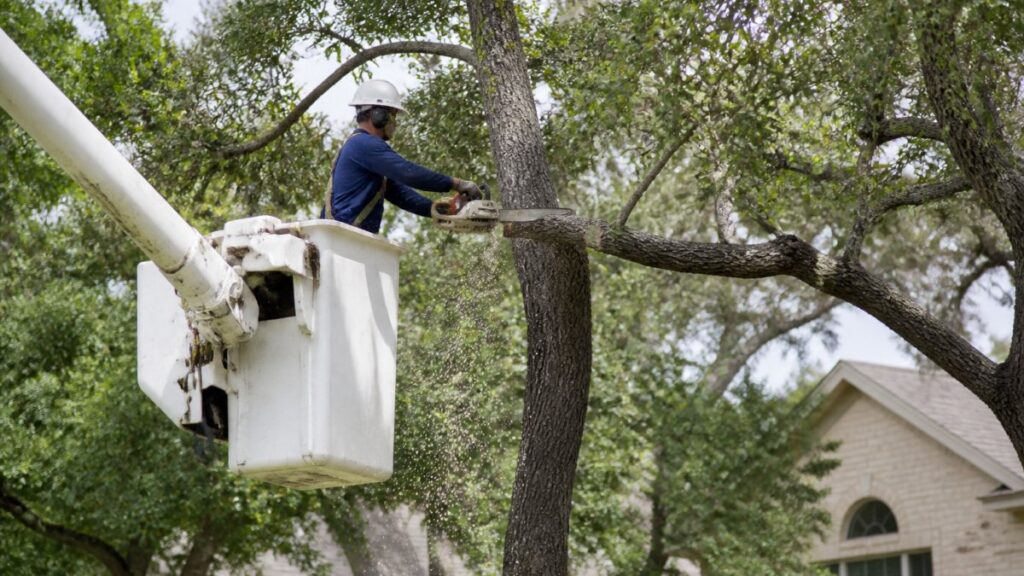
Table of Contents
- How to Tell If Your Tree Actually Needs Trimming
- Best Time to Prune Trees in Parker County
- What Tree Trimming Services Parker County Homeowners Need Most
- Tree Trimming Cost Parker County: What Drives Your Quote
- Your Tree Trimming Estimate Checklist
- Questions to Ask a Tree Trimming Company Before You Hire
- How to Choose a Tree Service You Can Trust
- Permits, Power Lines, and Local Rules
- Frequently Asked Questions
Last Updated: October 16, 2026
How to Tell If Your Tree Actually Needs Trimming
Tree trimming is the selective removal of branches to improve a tree’s structure, health, and safety.
Start with a slow walk around the tree. Most problems announce themselves long before they land on your roof.
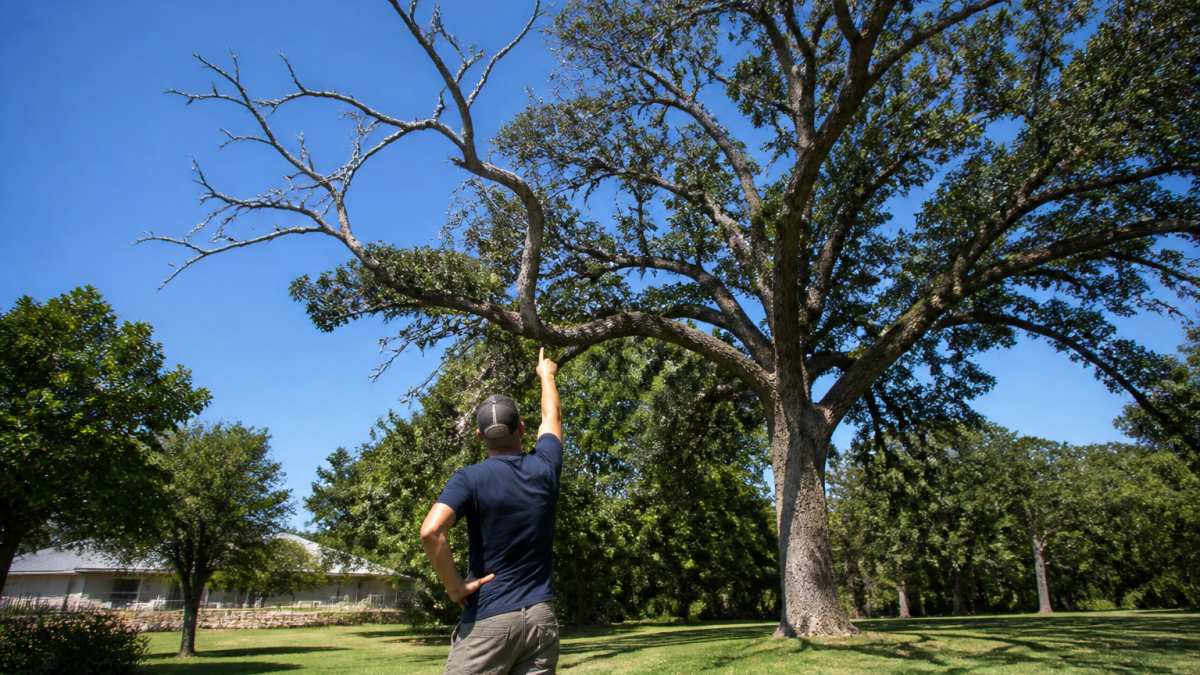
Warning Signs You Should Not Ignore
Dead wood is the clearest signal: if a branch snaps when you bend it and shows no green underneath, it should come down. Other signs worth a call:
- Branches crossing or rubbing against each other, which opens wounds
- Limbs hanging over your roof, driveway, or power lines
- A canopy that looks lopsided or unusually thin on one side
- Suckers sprouting from the trunk base or along major limbs
That last group matters most. A crack at the branch collar means the tree is already failing, and no amount of trimming will fix structural decay. In those cases, removal is the safer conversation. According to the USDA Forest Service guidance on tree hazards, recognizing defect indicators early is the single best way to prevent property damage and injury.
Never trim a limb within 10 feet of an energized power line, no matter how small it looks. Contact your utility first. Electrocution from tree work is entirely preventable, and it happens to experienced people, not just beginners.
Best Time to Prune Trees in Parker County
Late winter is the safest window for most trees here. From roughly December through February, most species sit dormant, insects are inactive, and the tree seals wounds faster once spring growth begins.
Spring bloomers are the exception: trim them right after flowering, or you cut off this year’s buds.
A quick rule of thumb:
| Tree Type | Best Pruning Window | Why |
|---|---|---|
| Oaks | December to February | Avoids oak wilt beetle activity |
| Spring bloomers | Right after bloom | Preserves next season’s flowers |
| Evergreens | Late winter | Shapes before growth flush |
| Storm-damaged limbs | Immediately | Removes hazard now |
If a limb is broken, dead, or threatening your home, the calendar does not apply. Safety work happens the day you notice it.
What Tree Trimming Services Parker County Homeowners Need Most
Residential tree trimming is the core of what most homeowners request, usually centering on clearance and safety rather than aesthetics alone. The work splits into a few categories.
Residential tree trimming covers routine pruning for health and curb appeal: raising low canopies, thinning dense growth, and removing dead wood. Tree removal handles trees that are dead, diseased, or too close to a structure to save. Stump grinding clears the leftover base so you can replant or mow over the spot. Shrub trimming keeps hedges and ornamentals shaped. Storm cleanup clears fallen limbs and leaning trees after a weather event.
For commercial properties and HOA communities, priorities shift toward liability and appearance. Regular maintenance keeps common areas safe and prevents one neglected tree from becoming a claim. Consistent care costs less than emergency response.
The cheapest tree work is the work you schedule. Emergency removal after a storm almost always costs more than a planned trim, and it comes with the risk of damage that was avoidable.
Tree Trimming Cost Parker County: What Drives Your Quote
Pricing depends on the job, not a flat rate, so any honest estimate starts with an on-site look. Tree trimming cost in Parker County varies with the tree’s size and condition, accessibility, and how much debris must be hauled away.
A small ornamental tree reached from the ground sits at the low end. A large oak with limbs over a roof, fence, or power line sits at the high end, because the crew must rig and lower branches instead of dropping them. Stump grinding is often quoted separately, so ask whether it is included before comparing numbers.
Factors That Change the Price
- Tree height and canopy spread, since bigger trees need more time and equipment
- Proximity to structures or lines, which requires careful rigging
- Condition, because dead or hazardous trees carry more risk
- Access, including tight gates, slopes, or landscaping to protect
- Debris removal, which is the difference between a clean yard and a pile of branches
How to Read a Quote Without a Flat Rate
Because no two trees present the same risk, a responsible provider will not publish a single number that fits every yard.
A common pattern: the lowest bid omits debris hauling or stump grinding, then adds them back on site. The second-lowest bid that lists everything up front is often the better deal. Compare scopes side by side, not just totals.
What Actually Moves the Number
Three things drive most of the variation. Height and spread: a tree reached with a pole saw from the ground takes a fraction of the time of one needing a climber or bucket truck.
Condition matters too: a dead or leaning tree is more dangerous to work on, and crews price that risk in. Access is the quiet factor, a tight gate, steep slope, or landscaped bed all slow the job down.
Getting a Real Number
Because we do not publish flat rates that would not fit your specific tree, the fastest path to a real number is a free on-site estimate. Steve’s Tree Service LLC provides free estimates and competitive pricing, and we quote the whole job, including cleanup, so there are no surprises. When you call, have a rough idea of how many trees are involved, what you want done, and whether you want debris hauled away.
Ask every provider to quote the same scope: same trees, same work, same cleanup, same stump grinding. Apples-to-apples quotes are the only ones worth comparing.
Your Tree Trimming Estimate Checklist
Use this checklist during every estimate. It turns a vague conversation into a written scope you can compare across providers.
- Written scope listing each tree and the exact work planned
- Whether stump grinding is included or priced separately
- Debris removal and cleanup explicitly stated
- Total price in writing, with no open-ended hourly language
- Proof of insurance, including liability and workers’ compensation
If a provider hesitates on insurance paperwork, that is your answer. Move on.
Ask each provider to walk the property with you and mark the trees in question. Two crews describing the same tree differently tells you more about their competence than any review page will.
Questions to Ask a Tree Trimming Company Before You Hire
These questions protect your property and your wallet. Ask them before anyone touches a saw.
- Are you insured, and can I see the certificate? Liability and workers’ compensation coverage matter if a limb hits your roof or a crew member is injured on your property.
- Who will actually do the work? Some companies subcontract. You want to know who shows up.
- Is cleanup included? Get it in writing. Thorough cleanup is the difference between a finished job and your weekend spent raking.
- What happens if the tree is more hazardous than expected? Agree on how changes get approved before work starts.
- Do you handle stump grinding? Confirm whether it is bundled or separate.
- How soon can you schedule? Fast scheduling matters when a storm has left a limb hanging.
- Can you provide references or reviews? A track record of customer reviews and service ratings tells you what to expect.
A provider who answers all seven without flinching is worth a second look. One who dodges the insurance question is not.
How to Choose a Tree Service You Can Trust
Trust comes down to credentials, communication, and follow-through. Look for an experienced crew with modern equipment, clear scheduling, and a written estimate that matches the final bill.
Reviews are a useful filter. Steve’s Tree Service LLC carries more than 73 five-star Google reviews, and the pattern is consistent: fair pricing, fast scheduling, and a clean yard when the crew leaves.
That consistency is the point. For guidance on hiring qualified professionals, the International Society of Arboriculture’s consumer resources explains what credentials to look for, including ISA-certified arborists.
Permits, Power Lines, and Local Rules
Most routine trimming on private property does not require a permit, but a few situations do. Trees in a public right-of-way, work near utility easements, and protected or heritage trees may fall under local rules. Rules vary by city and HOA, so call your city’s code office or HOA board before scheduling work.
When You Likely Need a Permit
A permit is usually triggered when the tree is not entirely yours to cut:
- Street trees and right-of-way trees. The strip between your sidewalk and the curb is often a public right-of-way, even though it looks like your yard. Trimming there may require city approval.
- Protected or heritage trees. Some municipalities designate certain species or large-diameter trees as protected, meaning removal or heavy pruning needs a permit and sometimes a replacement plan.
- Trees in a recorded easement. If a utility or drainage easement crosses your lot, the tree may fall under that easement’s rules.
- HOA-governed properties. Even where the city does not require a permit, your HOA covenants may require architectural review before you cut.
When in doubt, call before you cut. A five-minute call to your city’s code office or HOA board can save a fine and a headache.
Power Lines: The One Rule You Never Bend
Power lines are the one area where you should never guess. Only the utility or a line-clearance qualified crew should work within the minimum approach distance of an energized line. If a branch is touching or near a line, call your utility first.
Utilities generally handle line clearance on their own easements at no cost to you, because keeping lines clear is their responsibility. For broader safety standards on tree work near electrical hazards, the Occupational Safety and Health Administration guidance on tree care outlines the distances and precautions that apply.
Storm Damage and Insurance
Storm damage adds urgency but not an exemption. After a major weather event, get a hazard assessment before cutting and document damage with photos for your insurer. If a limb rests on a structure or line, treat it as live until the utility says otherwise. Most policies cover removal of a tree that lands on a covered structure, but not routine trimming or removal of a tree that was already a known hazard, another reason to address dead and leaning trees before the next storm.
A Simple Pre-Work Checklist
Before any crew starts, confirm:
- Whether the tree sits in a right-of-way, easement, or protected status
- Whether your city or HOA requires approval
- Whether any limb is within the minimum approach distance of an energized line
- Who is responsible for line clearance versus the rest of the tree
- Whether storm-related work needs documentation for insurance
Getting these answers first keeps the job legal, safe, and insurable, and tells you whether your provider understands the rules or is just guessing.
Frequently Asked Questions
How much does tree trimming cost in Parker County?
Tree trimming cost Parker County depends on tree height, limb count, proximity to structures, and whether stump grinding is included. A small ornamental tree may cost less than a large oak near a roofline. Request a written estimate that itemizes trimming, debris cleanup, and stump work separately so you can compare quotes fairly. Steve’s Tree Service LLC offers free estimates and competitive pricing for Parker County homeowners.
What should I ask before hiring a tree service?
Ask whether the crew carries liability insurance and workers’ compensation, and whether stump grinding is included or extra. Request a written estimate listing every task, confirm the cleanup scope, and ask for local references. A trustworthy tree trimming company will answer all of these without hesitation and provide proof of insurance on request.
How often should trees be trimmed?
Most mature shade trees benefit from trimming every three to five years, while fast-growing species may need attention every two to three years. Dead, diseased, or storm-damaged limbs should be removed promptly regardless of schedule. A professional can assess your tree condition and recommend a maintenance interval based on species, age, and location on your property.
Do I need a permit to trim or remove a tree in Parker County?
Permit requirements vary by municipality and HOA. Some HOAs require approval before removing protected or heritage trees. If a tree is near utility lines, the utility company may need to be involved before any work begins. Always confirm local rules and HOA covenants before scheduling work, and ask your tree service whether they handle utility-line coordination.