
Table of Contents
- How Tree Trimming Improves Curb Appeal
- Tree Trimming Ideas for Curb Appeal That Transform a Front Yard
- How to Prune Trees: A Step-by-Step DIY Guide
- The Best Time to Trim Trees for Appearance and Health
- Tree Pruning vs. Trimming: What’s the Difference?
- Safety First: Hazardous Branches and When Not to DIY
- What Tree Trimming Costs and How to Compare Estimates
- Frequently Asked Questions
Last Updated: October 18, 2026
How Tree Trimming Improves Curb Appeal
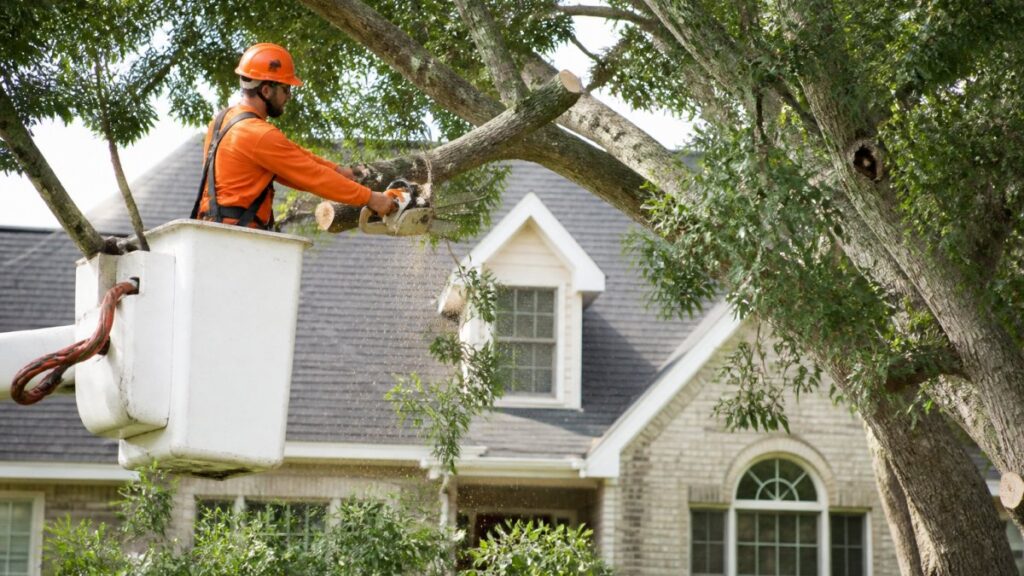
Tree trimming for curb appeal is the practice of cutting back branches to improve how your home looks from the street.
At Steve’s Tree Service LLC, we’ve spent more than 12 years watching what a single afternoon of careful pruning does to a front yard.
Here’s the part most homeowners miss: trimming doesn’t just make trees shorter. It changes how light, sightlines, and shape work together.
The benefits stack up in a few clear ways:
- Shape and structure come back to trees that have grown wild
- Sightlines open up so the house shows through
- Sunlight reaches lawns, windows, and garden beds
Restoring Shape to Overgrown Trees
Overgrown trees lose their form. Branches cross, crowd, and shoot out at odd angles. The tree still grows, but it stops looking like a tree.
Selective pruning brings back the natural silhouette. We remove deadwood and crowded limbs so the remaining branches have room.
The International Society of Arboriculture’s pruning guidance is clear on one point: proper cuts help trees heal. Bad cuts invite decay.
Opening Up Sightlines and Natural Light
A front yard buried in shade feels closed off. Thick lower branches block windows and hide the entry.
Crown raising fixes this. We remove the lowest limbs to lift the canopy and open the view. Crown thinning lets more light filter through the rest of the tree.
Both changes make the home easier to see from the curb. That matters more than most people think.
Walk to the street and look at your house from three spots: the sidewalk, the driveway, and across the road. If branches block the front door or main windows from any of those angles, that’s your first pruning target.
Tree Trimming Ideas for Curb Appeal That Transform a Front Yard
Good trimming ideas start with one question: what should the eye land on first? Your answer shapes every cut.
Highlighting Ornamental Trees and Branching Patterns
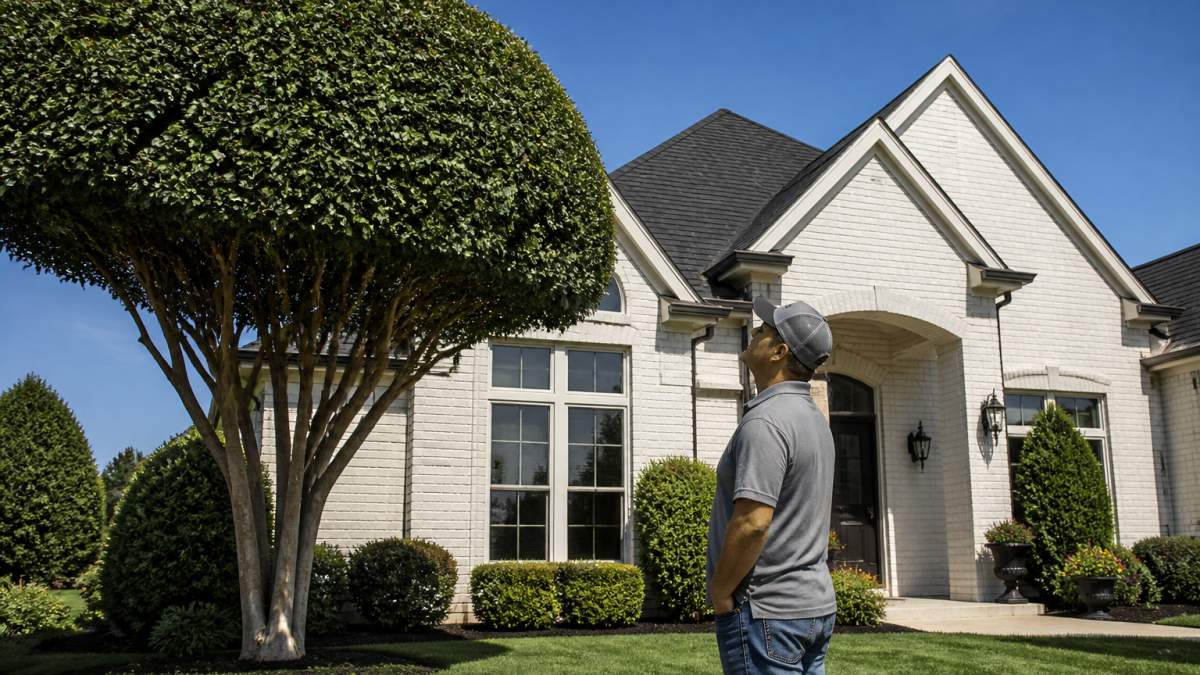
Some trees earn their spot as the centerpiece. Ornamental trees with striking branching patterns deserve careful shaping, not heavy cutting.
We thin rather than top these trees. Thinning shows off the branch structure. Topping destroys it.
The same logic applies to trees with artistic forms. A little restraint keeps the shape that made the tree worth planting.
Planning Before-and-After Results for the Whole Yard
Before-and-after planning means deciding the finished look before anyone touches a saw. Start with a simple list:
- Which trees frame the house?
- Which ones block it?
- Where do you want sunlight to reach?
Snap photos from the street before work begins. Compare them after. You’ll see the visual impact in a way words can’t capture.
That planning step separates a tidy yard from a transformed one.
How to Prune Trees: A Step-by-Step DIY Guide
Light pruning on small, healthy trees is a reasonable DIY job. Here’s how to prune trees safely and cleanly.
- Check for hazards first. Look for power lines, dead limbs overhead, and rot at the base. Stop if anything looks risky.
- Pick your tools. Bypass pruners for small branches, a pruning saw for limbs up to about 2 inches, and loppers for reach.
- Make the three-cut method your habit. Cut partway under the branch, then from the top, then remove the stub. This stops bark tearing.
- Cut at the branch collar. Leave the swollen collar intact. Flush cuts and stubs both harm the tree.
- Remove deadwood, crossing branches, and suckers first. These are the easy wins.
- Step back every few cuts. Look from the street. Trim to shape, not to a fixed number.
- Clean up as you go. Bag cuttings and rake debris before it builds up.
Pruning Mistakes That Hurt Tree Health
A common mistake is topping. Cutting main limbs back hard forces weak, bushy regrowth and shortens the tree’s life.
Other frequent errors:
- Leaving stubs that rot into the trunk
- Cutting too much in one season
- Pruning during a drought or right after a storm wound
The USDA Forest Service tree care resources stress matching the cut to the tree, not the calendar convenience.
Never prune a tree near power lines yourself. Contact your utility first. A limb touching a live line can kill, and it’s the most common serious trimming injury.
The Best Time to Trim Trees for Appearance and Health
The best time to trim trees is late winter, while the tree is dormant and before spring growth starts. That timing limits stress and speeds healing. But “late winter” is a default, not a rule, and the trees in your yard may not follow it.
Timing depends on three things: when the tree sets its buds, how it grows, and where you live. Get those right and you protect flowers, fruit, and long-term health at the same time.
Match the Timing to the Tree
- Spring bloomers like dogwood, cherry, and crabapple set buds the year before. Trim them right after they flower, or you cut off the show.
- Summer bloomers like crape myrtle bloom on new wood. Trim them in late winter or early spring before growth pushes.
- Oaks are best pruned in winter to reduce oak wilt risk. In much of the country, avoid pruning oaks from spring through midsummer when the beetle vectors are active.
Let Your Climate Set the Window
Dormancy is not a date on the calendar; it is a condition. In colder regions, late winter means the stretch after the worst cold but before buds swell.
A practical test: prune when the tree is not pushing new growth and not recovering from a wound, storm damage, or drought. If you are unsure, a light shaping pass in early summer is safer than a heavy cut at the wrong moment.
Appearance Trimming vs. Health Pruning
Light shaping for appearance can happen in early summer, after the first flush of growth has hardened. Heavy structural cuts wait for dormancy. The distinction matters because appearance trimming removes small growth, while structural pruning removes wood the tree has invested in.
If you are unsure about your species, ask before you cut. Wrong timing costs you flowers this year or invites disease for years.
Tree Pruning vs. Trimming: What’s the Difference?
Pruning is the selective removal of specific branches to improve tree health, structure, and safety. Trimming is the general cutting back of growth, usually for shape and appearance.
The line is blurry in everyday use, but it matters for tree care:
| Factor | Pruning | Trimming |
|---|---|---|
| Main goal | Health and structure | Shape and appearance |
| What’s removed | Dead, weak, crossing limbs | Overgrowth and stray growth |
| Skill level | Higher, more precise | Moderate |
| Typical timing | Dormant season | As needed for looks |
Pruning asks “what does this tree need?” Trimming asks “what does this yard need?” Good tree work does both.
Safety First: Hazardous Branches and When Not to DIY
Hazardous branches are the ones that fail without warning. Deadwood, split limbs, and branches overhanging a roof all belong on a professional’s list.
Know when to call for help:
- The limb is above a power line
- The tree leans toward the house
- The trunk shows rot or a hollow
Storm damage adds urgency. Hanging limbs can drop days later.
Steve’s Tree Service LLC handles hazardous removals with the gear and experience these jobs demand. Betsy S. put it plainly: “Love Steve and his service. He does great work, professional and takes care of all the mess.”
If a branch could hit a person, a car, or your roof when it falls, it’s not a DIY job. The risk isn’t worth the savings.
What Tree Trimming Costs and How to Compare Estimates
Tree trimming cost depends on tree size, limb count, access, and how much debris needs hauling. Small ornamental shaping and large canopy work sit at very different price points. Pricing is local, and any quote you see online is a starting point, not a promise.
That said, the cost drivers are predictable. Use them to sanity-check any estimate you receive.
The Five Cost Drivers
- Tree size and height. A 15-foot ornamental takes minutes; a 60-foot oak takes a crew, a climb, and rigging. Height is the single biggest multiplier.
- Limb count and canopy density. A light shaping pass on an open canopy is far cheaper than a heavy reduction on a dense, overgrown tree.
- Access. A tree in an open front lawn is easy. A tree behind a fence, between the house and a power drop, or over a driveway requires rigging, a bucket truck, or both.
Typical Price Bands
Exact rates vary by market, but the structure is consistent. Small ornamental shaping and mid-size canopy work typically run into the several-hundred to low-four-figure range depending on density and access. Large hazardous removals or heavy reductions on mature trees are quoted individually and can reach four figures.
Treat those bands as a filter, not a quote. If an estimate is far below the band for the scope described, ask what is being left out.
How to Compare Estimates Line by Line
Two quotes for “trim the front trees” are not comparable until you break them down. Ask every bidder to itemize:
- Scope: which trees, which limbs, and what the finished canopy should look like
- Cleanup: is debris removal included, and is it chipped and hauled or left on site?
- Stump grinding: quoted separately or bundled?
A low bid that excludes hauling or insurance is not a low bid. It is an incomplete one.
Ask each bidder to walk the yard with you and point at the specific limbs they plan to cut. A crew that cannot describe the cuts in person is guessing, and you will pay for the guess.
Ask for a free estimate and compare on the line items above, not on the bottom number alone.
James F. noted: “Great work at a very fair price and these gentlemen were done as quickly as quoted- including cleanup.” That is the standard to hold any estimate against: scope honored, timeline honored, cleanup included.
For current rates, check our pricing page or request a quote.
Frequently Asked Questions
How does tree trimming improve curb appeal?
Tree trimming improves curb appeal by restoring a clean silhouette, opening sightlines to your home’s exterior and architectural features, and letting more natural light reach the yard. Removing deadwood and crowded branches makes the whole landscape look maintained rather than neglected. On a residential property, that visible upkeep signals care to neighbors and buyers alike, and it protects the healthy growth of the trees themselves. A single well-timed trim can change how the front of a house reads from the street.
What is the best time to trim trees for appearance?
Late winter, while trees are still dormant, is usually the best time to trim for structure and shape. You can see the tree’s silhouette clearly without leaves, and cuts heal quickly as growth resumes in spring. Light shaping of dead or damaged branches can happen most of the year. Avoid heavy pruning right after new growth flushes, and never trim flowering ornamentals during bloom if you want the flowers. Species vary, so confirm timing for your specific trees before you cut.
What does tree trimming cost, and should I hire a professional?
Tree trimming cost depends on tree size, height, branch density, and how close the work is to your home or power lines, so pricing varies by job. Get a written estimate with the scope spelled out, including debris removal and stump grinding if you need it. Hire a professional for large trees, anything near overhead lines, or hazardous limbs. For small, reachable branches, DIY pruning is reasonable. Steve’s Tree Service offers free estimates.
Which branches should I trim to make my yard look neater?
Start with deadwood removal and any branches crossing or rubbing together, since those look messy and invite disease. Then raise the crown by removing low limbs that block windows or walkways, and thin dense areas so light passes through. Keep the tree’s natural shape rather than shearing it into a box. Cut back branches that crowd the roofline or power lines, and clear suckers from the base. A clean, open canopy reads as well-maintained from the street.
Your trees shape the first impression your home makes, and the wrong cut can undo years of growth. Steve’s Tree Service LLC brings more than 12 years of experience, free estimates, and thorough cleanup to every job, backed by 73+ five-star Google reviews. We treat your property with respect and leave it looking better than we found it. Get a quote today and see what proper tree trimming does for your curb appeal.