
Table of Contents
- Is Stump Grinding Included in Removal? The Direct Answer
- Stump Removal vs. Stump Grinding: What’s the Difference?
- Tree Removal Quote Inclusions: What to Look For
- Stump Grinding Cost: What Drives the Price
- What Happens to Stump Grindings and Wood Chips?
- Cleanup, Backfill, and Site Restoration After Grinding
- Site Factors That Change Whether Grinding Is Feasible
- Conclusion
- Frequently Asked Questions
Last Updated: October 21, 2026
Is Stump Grinding Included in Removal? The Direct Answer
No, stump grinding is usually not included in a standard tree removal quote.
Our 12 years of work in Parker County has taught us one thing: surprise charges damage trust faster than any storm.
Here is the honest version. Tree removal covers cutting the trunk and limbs, lowering the wood, and cleaning up the brush.
Below, we break down what each service covers, how quotes are built, and the exact questions to ask before you sign.
The tree coming down and the stump coming out are two separate jobs. A quote that lists only one of them leaves the other unpaid.
Stump Removal vs. Stump Grinding: What’s the Difference?
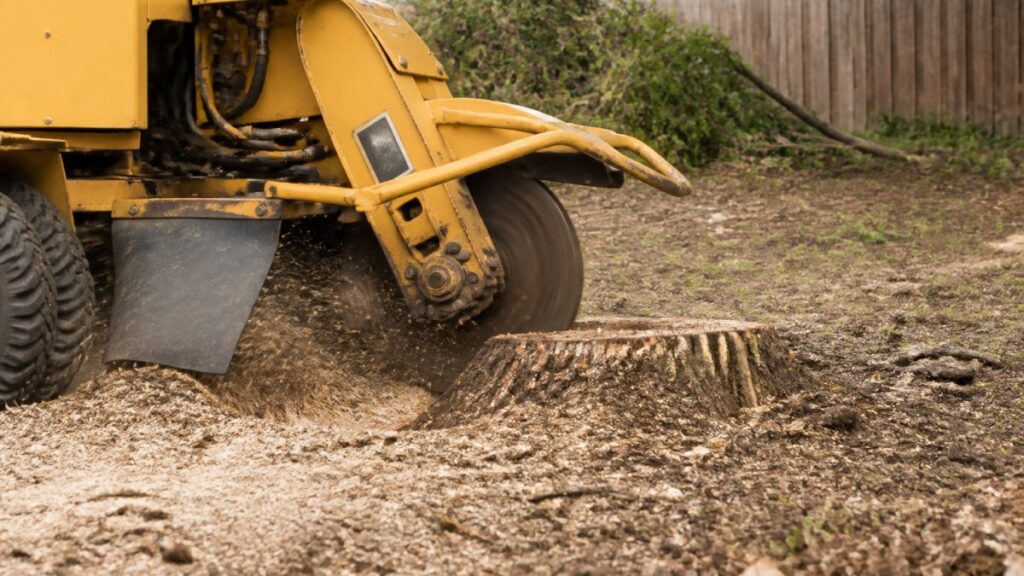
Stump grinding is the process of cutting a tree stump down below grade with a rotating carbide wheel. Stump removal means pulling the entire stump and root ball out of the ground.
The two terms get used interchangeably, and that causes real confusion. They are not the same service, and they do not cost the same.
Grinding leaves the root system in the soil. The stump disappears, but the roots stay and decay over time.
How a Stump Grinder Actually Works
A stump grinder is a tracked or wheeled machine with a spinning cutting wheel.
Most jobs grind 15 to 30 centimeters below the soil line. That depth clears the stump for sod, a patio, or a new planting bed.
A common mistake is assuming a shallow grind is enough for a driveway or shed pad. It is not. Tell your contractor what you plan to put there.
Full Stump Extraction: When Grinding Isn’t Enough
Full stump extraction makes sense in a few clear cases:
- The stump sits where a foundation, pool, or driveway will go
- The tree had a root disease that could spread
- You need the root mass gone before replanting in the same spot
- The stump is too close to a sewer line or utility
Extraction costs more and disturbs more ground. For most yards, grinding is the practical choice.
Tree Removal Quote Inclusions: What to Look For
A good tree removal quote names every task in writing. If a task is not listed, assume it is not included. That single rule prevents most billing disputes, because the estimate becomes the scope of work.
Here is what most written estimates should spell out:
- Removal scope: trunk, limbs, and brush, with the number of trees listed
- Grinding: stump size and grinding depth, or a note saying it is excluded
- Debris handling: haul away or leave on site
- Cleanup: raking, blowing, and final walkthrough
Ask for the estimate by email or text. Verbal numbers are hard to hold anyone to.
A Realistic Itemized Sample Quote
Below is how a clear estimate separates included work from optional add-ons. The line items are typical; the dollar figures are illustrative placeholders, not a price list. Your contractor fills in their own numbers.
| Line Item | Typical Status | What to Confirm |
|---|---|---|
| Cut and lower trunk and limbs | Included | Number of trees and height |
| Brush chipping and haul away | Usually included | Whether chips leave the property |
| Stump grinding | Separate line item | Stump diameter and grinding depth |
| Grindings hauled off | Often extra | Disposal fee and dump location |
| Topsoil or backfill | Rarely included | Depth of fill and soil source |
| Permit fees | Sometimes | Who pulls the permit |
| Emergency or storm surcharge | Not included | After-hours and weekend rates |
| Sales tax | Varies by state | Whether tax appears on the final bill |
The pattern matters more than the numbers. Removal and grinding sit in different rows because they are different services. A quote that bundles them without saying so is not necessarily wrong, but you should be able to point to the line where grinding is covered.
What ‘Stump Removal’ Means in an Estimate
The phrase “stump removal” is ambiguous in contractor estimates. It can mean:
- Grinding the stump below grade, leaving roots in the soil
- Physical extraction of the stump and root ball with an excavator or stump puller
- Cutting flush to the ground surface and nothing more
Each method leaves a different site and carries a different price. Before you accept a bid, ask the estimator to state the method in writing and to note the target depth. A quote that says only “stump removal” without a method or depth is not a promise to grind.
Questions to Ask Before Accepting an Estimate
Run through this checklist before you sign anything:
- Is stump grinding included, or is it a separate line item?
- What grinding depth do you work to, and is it measured from grade?
- Are the grindings hauled away or left on site?
- Do you backfill the hole with topsoil, and how deep?
A quote that says “stump removal” without a depth or method is not a promise to grind. Some contractors mean “cut flush to the ground” and nothing more. Get the method in writing.
Site-Specific Factors That Change the Scope
Two properties with the same stump can produce very different quotes. The variables that most often change whether grinding is feasible or priced separately are:
- Access for equipment: gate width, fence lines, and driveway clearance decide which grinder can reach the stump
- Stump size and root flare: wider stumps and surface roots mean more passes and more time
- Buried utilities: gas, water, and power lines near the stump require a locate before grinding
- Surface conditions: slopes, soft ground, and saturated soil can stop a tracked machine
- Proximity to structures: foundations, walls, and driveways need clearance
Tell the estimator about gates, pets, and anything buried before the visit. A scope that accounts for these factors up front is less likely to change price after work begins.
Stump Grinding Cost: What Drives the Price
Stump grinding cost depends on the stump, not on the tree. A tall pine and a short oak with the same diameter stump grind for similar money. That is the first thing to understand when you compare a grinding quote to the removal quote sitting next to it.
The main price drivers are:
- Stump diameter: the wider the stump, the more passes the wheel makes and the longer the machine runs
- Grinding depth: deeper costs more, especially when the hole will be planted or built over
- Root spread: surface roots may need extra grinding beyond the stump face
- Site access: a gate, fence, or slope slows the machine down and may require a smaller grinder
- Debris removal: hauling grindings adds labor and disposal fees
How the Price Is Actually Built
Most grinding quotes combine three components: a minimum charge to bring the machine and operator to the site, a per-stump charge based on diameter and depth, and add-ons for haul-away, backfill, or difficult access.
Depth is the variable homeowners most often underestimate. A shallow grind that clears the stump for sod is a different job from a deep grind that clears the root mass for a patio or shed pad.
What Changes the Price After the Quote
A written quote should hold, but a few conditions can legitimately change it:
- Hidden obstacles: rocks, buried concrete, or old fence posts in the stump
- Utility locates: a line near the stump may require hand work or a wait
- Weather: saturated soil can stop a tracked machine and push the job to another day
- Access surprises: a gate narrower than described means a different machine
Ask whether the price is fixed or subject to change, and get any change approved in writing before work continues.
Pricing varies by company and property, so ask for a written quote rather than a phone estimate. You can review current pricing and request a free estimate before you commit.
Ask whether the grinder can reach the stump through your gate before the crew arrives. A machine that cannot fit means a smaller grinder, more time, and sometimes a higher price.
Grinding Versus Full Removal: The Cost Trade-Off
Grinding is almost always the lower-cost option because it leaves the root system in the soil. Full extraction removes the root ball, which means bigger equipment, a larger hole, and more restoration work. The trade-off is site use: if the spot will hold a foundation, pool, or driveway, grinding may not go deep enough and extraction becomes the practical choice.
What Happens to Stump Grindings and Wood Chips?
Grindings are the shavings and wood chips the grinder throws off as it cuts. A single stump can produce several wheelbarrows of them.
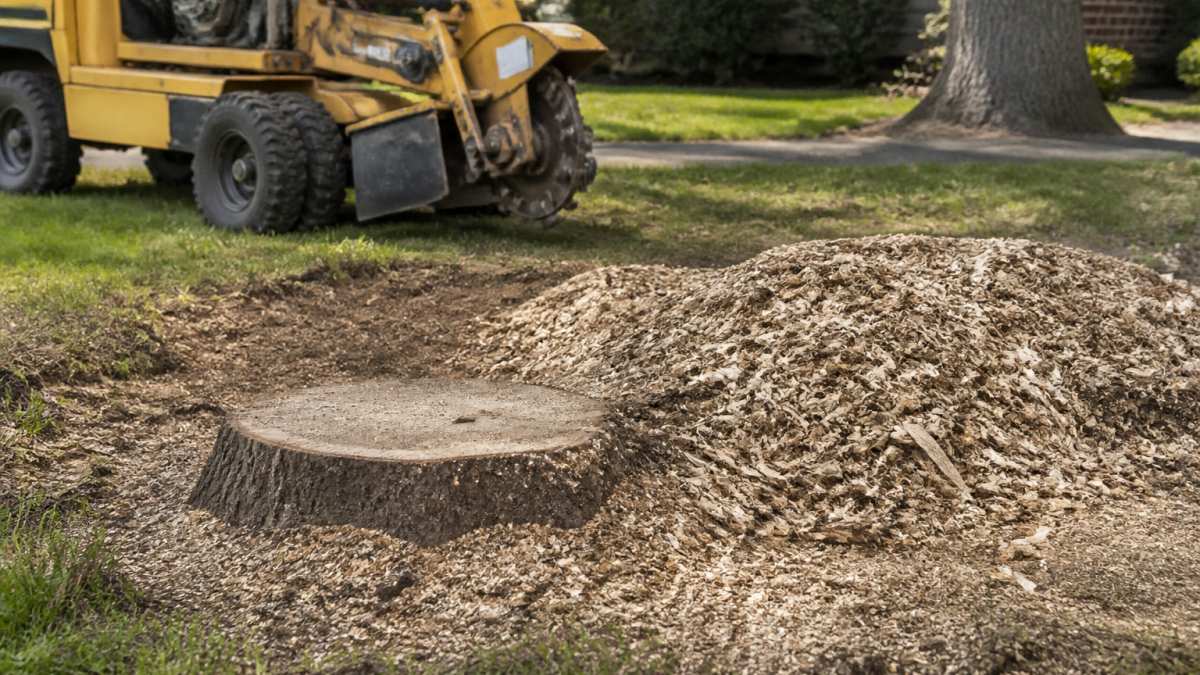
You have three options:
- Leave them on site as a pile, often around the stump hole
- Spread them as mulch in beds or around trees
- Haul them away for an extra fee
Fresh grindings are not good topsoil. They tie up nitrogen as they break down, so they work better as mulch than as fill.
If you want them gone, say so before the job. Haul-away is usually priced separately.
Cleanup, Backfill, and Site Restoration After Grinding
Cleanup is where cheap quotes show their seams. Grinding leaves a hole, a chip pile, and a dusting of sawdust across the lawn.
A complete finish includes:
- Raking and blowing the work area
- Backfilling the stump hole with topsoil
- Tamping the soil so it does not settle into a dip
- Removing or spreading the grindings
- A final walkthrough with you
Backfill matters more than people think. A hole left open becomes a trip hazard and a low spot that holds water. Ask whether topsoil is included or billed as an add-on.
Site Factors That Change Whether Grinding Is Feasible
Some properties make grinding easy. Others make it a puzzle. These are the factors that decide it:
- Gate width and fence lines: the grinder has to physically reach the stump
- Slope and soft ground: steep or soggy yards limit machine access
- Buried utilities: gas, water, and power lines near the stump need checking
- Proximity to structures: foundations, walls, and driveways need clearance
- Root flare and surface roots: wide roots mean more grinding
If access is tight, a contractor may need a smaller grinder or hand work, and that changes the price. Tell the estimator about gates, pets, and anything buried before the visit.
Conclusion
The clearest answer to whether stump grinding is included in removal is this: sometimes, but never assume it. Read the estimate line by line, ask about depth and debris, and get the method in writing.
Steve’s Tree Service LLC offers free estimates, 12 years of experience, and a full cleanup that leaves your yard ready to use. We are Christian-owned and have earned 73+ five-star Google reviews from neighbors who expected honesty and got it.
Frequently Asked Questions
Is stump grinding usually included in tree removal?
In most cases, no. Stump grinding is typically priced as a separate line item on a tree removal quote. The standard practice is to charge for cutting down and hauling away the trunk and canopy, then quote stump grinding separately because it requires different equipment and time. Some companies bundle it into a package price, but you should confirm in writing whether stump grinding appears as an included service or an optional add-on before you sign the estimate.
How can I tell if stump grinding is included in my tree removal quote?
Read the written estimate line by line. Look for the words ‘stump grinding,’ ‘grind stump to grade,’ or ‘stump removal’ as a distinct line item with its own price. If the quote only lists tree removal, debris hauling, and cleanup, grinding is almost certainly excluded. Ask the contractor to state the grinding depth and whether cleanup of grindings is included. Getting that in writing protects you from surprise charges after the job.
Does stump grinding remove the entire stump and roots?
No. A stump grinder chips the stump down to a set depth, usually 6 to 12 inches below grade, but the root system stays in the ground. Roots decay over time and are not extracted. If you need the roots gone, for example to pour a foundation or install a driveway, that requires full stump extraction with an excavator, which costs more and is a different service. Ask your contractor which method the quote covers.
What happens to the wood chips after stump grinding?
Grinding produces a mix of wood chips, shavings, and soil. Contractors typically either leave the grindings on site for you to use as mulch or haul them away for an extra fee. Left in place, the chips can be spread in planting beds or worked into the soil after they decompose. If you want a clean, backfilled hole, ask whether haul-away and topsoil backfill are included or priced separately.