
Last Updated: November 15, 2026
Quick Summary
To choose a tree service you can trust, verify liability insurance and workers’ compensation directly with the insurer, confirm an ISA Certified Arborist is on staff, and get at least three written estimates that list exactly what is included. Compare scope, not just price, and never pay a large cash deposit up front.
- Ask which tasks are included, because removal, stump grinding, and debris hauling are often quoted separately.
- Confirm the company is based locally and will service your specific address before you book.
- Read reviews for patterns like cleanup and punctuality, then call two or three references from similar jobs.
- A quote much lower than the others often signals missing scope or an uninsured crew.
- Walk the property with the crew lead after the job and get any remaining work in writing.
Table of Contents
- Start With the Basics: What a Tree Service Actually Does
- Tree Service Insurance and Credentials: What to Verify First
- How to Choose a Tree Service Near Me: Local Knowledge Counts
- Questions to Ask a Tree Service Before You Sign Anything
- Reading Tree Service Reviews and Checking References
- Comparing Written Estimates and Scope of Work
- Spotting Red Flags: Storm Chasers and Door-Knockers
- What to Expect on Work Day and After the Job
- Frequently Asked Questions
Start With the Basics: What a Tree Service Actually Does
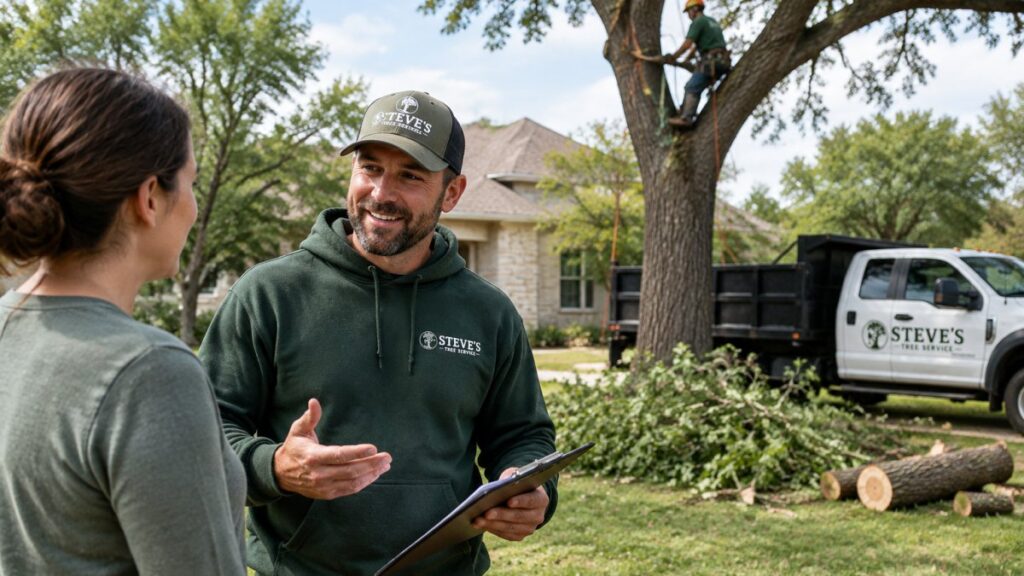
Learning how to choose tree service starts with knowing what the crew should be doing on your property. A tree service is a company that removes, prunes, and maintains trees, and clears the debris afterward.
Those four tasks are not automatically bundled. A company might quote removal but charge separately to grind the stump or haul the wood. Ask up front which tasks are included, because that answer shapes every estimate you compare.
Key Terms Every First-Time Homeowner Should Know
An arborist is a trained tree-care professional who understands tree health, species, and safe cutting methods. An ISA Certified Arborist has passed a credentialing exam through the International Society of Arboriculture, which is a useful signal that someone has real training. Liability insurance covers damage to your property or a neighbor’s if something goes wrong. Workers’ compensation covers the crew if someone is injured on your job.
For a step-by-step walkthrough of finding a company, see our guide on how to find reliable tree services.
Tree Service Insurance and Credentials: What to Verify First
Insurance and credentials come first because they protect you, not the company. Ask for a certificate of insurance showing both liability coverage and workers’ compensation, and call the insurer to confirm it’s current.
Why does this matter so much? If an uninsured crew drops a limb on your roof, your homeowner’s policy may end up paying.
Credentials to check:
- ISA Certified Arborist on staff, especially for hazardous trees
- State or local licensing where your area requires it
- Proof of insurance, verified directly with the insurer
A company that dodges any of these is telling you something. We’re happy to show ours; any reputable crew should be.
How to Choose a Tree Service Near Me: Local Knowledge Counts
Searching “how to choose tree service near me” usually means you want someone who knows your area. Local knowledge is not a marketing line.
A local company also has a reputation to protect. They live here, they work here, and they answer the phone next season if something needs a second look.
Ask where the company is based, how long they’ve worked in your county, and whether they service your specific address.
Questions to Ask a Tree Service Before You Sign Anything
The right questions separate a professional outfit from a gamble. Ask these before anyone touches a saw:
- Are you insured, and can I see the certificate?
- Who will actually be on my property, and are they trained?
- Is the stump grind included, or is that extra?
- What exactly gets hauled away, and what stays?
- How do you protect my lawn, driveway, and fence?
- What happens if something gets damaged?
- When can you start, and how long will it take?
Write the answers down. Vague replies to any of these are a warning sign. A company confident in its work gives you straight answers and puts the important ones in writing. When you’re ready to talk it through, you can contact our team for a free estimate.
Reading Tree Service Reviews and Checking References
Reviews tell you how a company behaves when the work is done and the bill is paid. Read for patterns, not single complaints. Look for repeated mentions of cleanup, punctuality, and how the crew treated the property.
Our customers tend to mention the same things.
Beyond reviews, ask for two or three references from jobs similar to yours, then actually call. Ask whether the crew showed up when promised and whether the yard was left clean. You can also view our gallery of completed projects to see the kind of work a company actually finishes.
Comparing Written Estimates and Scope of Work
A written estimate is only useful if you compare the scope, not just the bottom line. Two quotes can look similar and cover completely different work.
Get at least three written estimates, and make sure each one lists what’s included: removal, stump grinding, debris hauling, and cleanup. Before you compare, read our breakdown of what tree companies haul away so you know what to expect.
A Practical Estimate-Comparison Worksheet
Use this worksheet to line up quotes side by side. It goes beyond price to capture the details that actually determine the job.
| What to Compare | Company A | Company B | Company C |
|---|---|---|---|
| Insured and verified (liability + workers’ comp) | Yes / No | Yes / No | Yes / No |
| ISA Certified Arborist on staff | Yes / No | Yes / No | Yes / No |
| Crew size and who will be on site | # | # | # |
| Equipment listed (bucket truck, chipper, crane) | List | List | List |
| Stump grind included | Yes / No | Yes / No | Yes / No |
| Debris hauled away | Yes / No | Yes / No | Yes / No |
| Cleanup described in writing | Yes / No | Yes / No | Yes / No |
| Exclusions (e.g., permit fees, utility coordination) | List | List | List |
| Start date confirmed | Date | Date | Date |
| Payment terms (deposit, milestones) | Terms | Terms | Terms |
How to read the worksheet: A company that checks the most boxes at a fair price is usually the right call, even if it isn’t the cheapest.
Payment terms. Avoid large upfront cash deposits.
When you’re ready to compare a written estimate from a company that puts the scope in writing, you can contact our team for a free estimate.
Spotting Red Flags: Storm Chasers and Door-Knockers
Storm chasers are out-of-town crews who appear after a big storm, offer quick work, and vanish.
Watch out: paying a large deposit in cash before any work begins is the single most common way homeowners get burned.
If a storm has already left branches across your yard, our storm cleanup service handles fallen limbs and debris, and we’ll give you an honest read on what needs to come down versus what can stay.
What to Expect on Work Day and After the Job
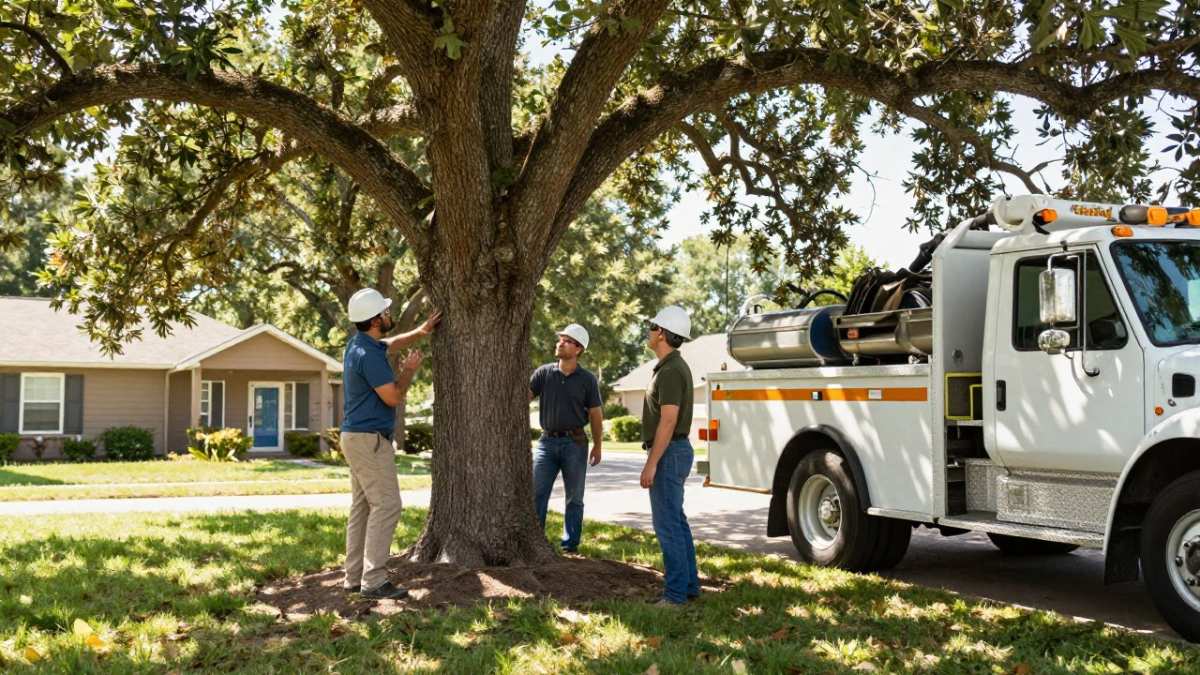
On work day, a professional crew protects the area before cutting: moving lawn furniture, laying mats or plywood to guard the lawn, and setting a clear drop zone. You should know who’s in charge and have a way to reach them. But safety practices go beyond mats and drop zones, and most homeowners don’t know what to ask. This section translates safety credentials and equipment into practical questions you can ask any crew.
Safety Practices to Ask About Before Work Begins
Safety is not just about hard hats. Ask these questions when you review estimates or before the crew starts:
- Who is the crew leader, and what training do they have? A crew leader with ISA Certified Arborist credentials or formal safety training (such as tree-care safety courses) is a good sign. Ask how they handle hazardous limbs and what they do if a tree is too close to power lines.
- How do you control traffic and keep bystanders safe? For work near a street or driveway, ask whether they use cones, flaggers, or signs. A professional crew sets a clear perimeter and keeps homeowners and pets out of the drop zone.
- What is your procedure for working near power lines? Never let a crew work near live lines without utility coordination. Ask whether they contact the utility company and whether they have the equipment and training for line-adjacent work. If they hesitate, that’s a red flag.
Watch out: If a crew cannot explain their safety procedures or dismisses your questions, do not hire them. Safety shortcuts are the most common cause of preventable accidents on residential tree jobs.
After the Job: The Walk-Through and Final Inspection
After the job, walk the property with the crew lead. Check the stump, the cleanup, and the driveway. Confirm the debris is gone and nothing was damaged. A company that stands behind its work wants that walk-through as much as you do.
Ask these questions during the walk-through:
- Is the stump ground below grade, and are the grindings removed or raked out?
- Are all cut limbs and logs hauled away, or is firewood left behind?
- Is the lawn raked and free of sawdust and small debris?
- Are there any ruts or damage to the driveway or fence?
Get any remaining work in writing before the crew leaves. A reputable company will schedule a return visit if something was missed.
Stump Handling and Follow-Up
Stump grinding leaves a hole and a pile of grindings. Ask whether the company hauls away the grindings or leaves them for you to use as mulch.
If you notice a problem after the crew leaves, a missed limb, a damaged gutter, or an incomplete cleanup, call the company promptly.
When you’re ready to schedule a crew that puts safety and cleanup in writing, you can contact our team for a free estimate.
Frequently Asked Questions
How can I choose a reliable tree service?
Start by verifying that the company carries liability insurance and workers’ compensation, then confirm its crew has real experience with the type of work you need. Ask for a written estimate that spells out the scope of work, cleanup, and stump removal. Check online reviews and call a couple of references. A reliable tree service will answer your questions clearly, show proof of insurance without hesitation, and put everything in writing before any work begins.
What should I look for when hiring a tree service?
Look for proof of liability insurance and workers’ compensation, a written scope of work, and a crew with experience on trees like yours. Ask whether an ISA Certified Arborist is involved, especially for hazardous or diseased trees. Read tree service reviews and ask for local references. Confirm how cleanup and debris removal are handled, and never pay the full amount upfront. A trustworthy company welcomes these questions and provides clear answers in writing.
How can I verify a tree service company’s insurance and credentials?
Ask the company to send a certificate of insurance directly from its insurer, then call the insurer to confirm the policy is active and covers tree work. For credentials, ask about ISA certification and any industry memberships, and check the certifying organization’s directory. Confirm the crew has experience with hazardous removals and proper safety practices. A legitimate tree service will provide this information quickly and without pressure.
Should I get written estimates from multiple tree services?
Yes. Get at least two or three written estimates so you can compare the scope of work, not just the bottom line. One quote may exclude stump removal, debris hauling, or permits, which makes it look cheaper than it is. Use a simple worksheet to list what each estimate includes. If one bid is far below the others, ask why. The lowest number is not always the best value once cleanup and follow-up work are factored in.
What should a tree service include in its cleanup?
Ask the company to state in writing exactly what cleanup includes: branch and trunk removal, raking, debris hauling, and whether stump grinding is separate. Confirm whether the crew will protect your lawn, driveway, and fencing during the work. A thorough cleanup should leave your yard ready to use, not covered in sawdust and limbs. Get the cleanup terms in the written scope of work so there are no surprises after the crew leaves.
How do I know whether a tree service is qualified to remove a tree?
Ask about the crew’s experience with removals like yours, especially if the tree is dead, leaning, or near power lines. A qualified tree service will explain its work methods, the equipment it uses, and how it plans to protect your home and nearby structures. Confirm insurance and credentials, and ask whether an ISA Certified Arborist assesses hazardous trees. Vague answers or pressure to skip the written estimate are signs to keep looking.
