
Last Updated: November 17, 2026
Quick Summary
Storm cleanup starts with safety, not a rake: check for injuries, stay away from downed power lines, photograph damage before moving anything, and keep children and pets away from debris. Wear sturdy boots, heavy gloves, safety glasses, and long sleeves, and sort debris into separate piles before pickup.
- Treat every downed wire as live, call your utility company, and wait.
- Photograph all damage before you move or toss anything for your insurance claim.
- Remove and bag porous items like carpet and mattresses soaked by floodwater.
- Never mix chemicals, and keep hazardous waste out of regular curbside trash.
- Call a professional for any tree on a structure, near wires, or under tension.
Table of Contents
- Your First 24 Hours: A Storm Cleanup Checklist
- Storm Cleanup Safety Equipment You Need Before You Start
- How to Clean Up a Flooded Floor Without Making It Worse
- Fallen Tree Cleanup: What Homeowners Can Handle and What They Can’t
- Documenting Damage for Your Insurance Claim
- Sorting Debris and Following Local Pickup Rules
- When to Call a Professional for Storm Cleanup
- Getting a Free Estimate for Storm Damage Cleanup
- Frequently Asked Questions
Your First 24 Hours: A Storm Cleanup Checklist
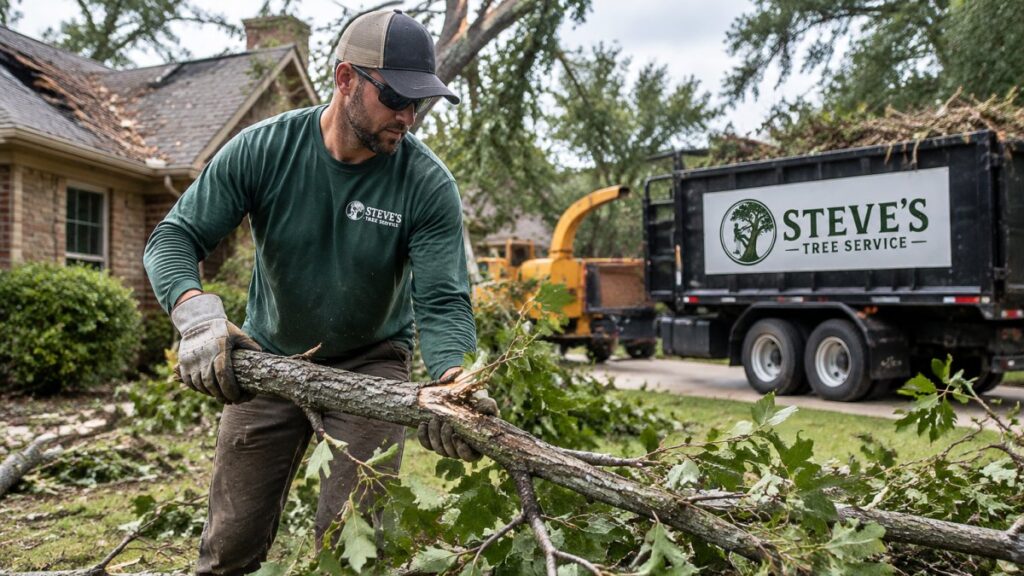
Storm cleanup starts with safety, not a rake. Before you touch a single branch, walk your property and look for hazards that can hurt you. This guide from Steve’s Tree Service LLC covers the best practices for storm cleanup, from the first hour to the final debris pickup.
The first day sets the tone for everything that follows. Move fast on the safe stuff. Slow down on anything that could bite back.
Here is your storm cleanup checklist for the first 24 hours:
- Check yourself and your family for injuries first
- Look for downed power lines and stay far away
- Photograph damage before you move anything
- Check for gas smells or water leaks
- Keep children and pets away from debris piles
- Clear a safe path to your doors and driveway
- Move wet items outside to start drying
One rule matters more than the rest: never walk near a downed line. Treat every wire as live. Call your utility company and wait.
If you want a step-by-step walkthrough before you start, our guide on how to prepare for storm cleanup breaks it down in order.
Storm Cleanup Safety Equipment You Need Before You Start
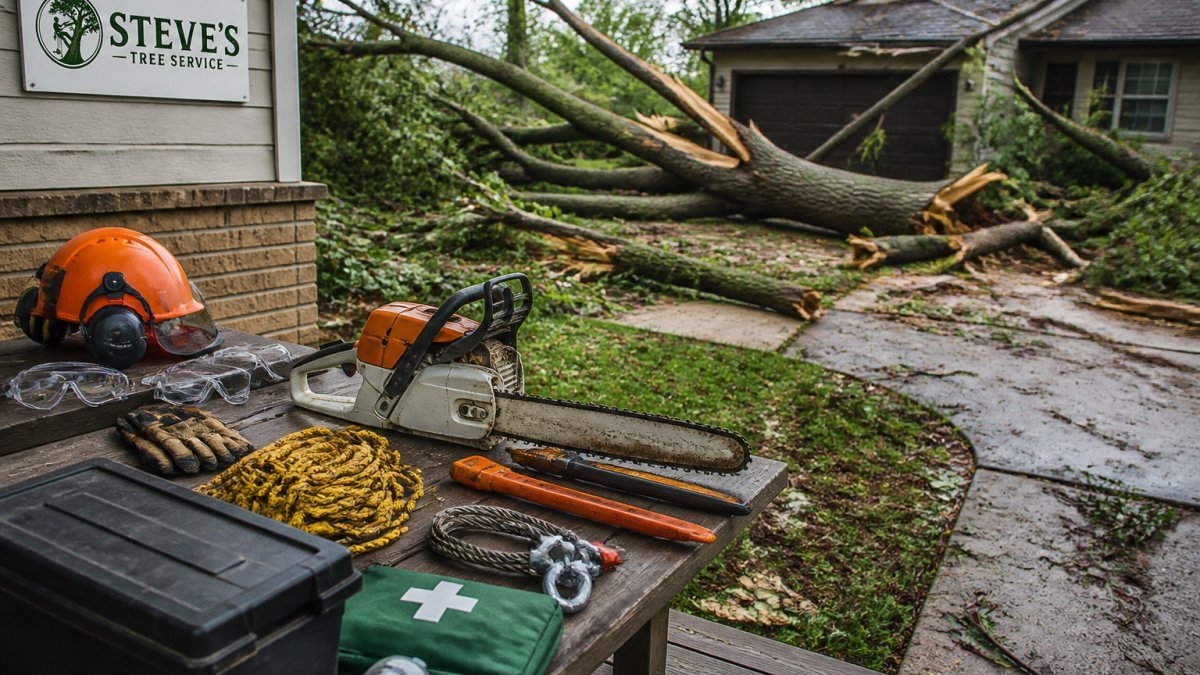
You need six basics before any storm cleanup begins. Skipping gear is how minor jobs turn into hospital visits.
Here is what to put on and grab:
- Sturdy boots with thick soles
- Heavy work gloves
- Safety glasses
- Long sleeves and long pants
- A hard hat if you work under limbs
- Ear protection for power equipment
Watch out: open-toed shoes and bare hands are the most common mistake we see. A single splinter or hidden nail can end your day fast.
How to Clean Up a Flooded Floor Without Making It Worse
Floodwater is not the same as a spilled bucket. It is “gray water” or “black water”, terms the cleanup industry uses to describe water that has picked up dirt, sewage, chemicals, or germs along the way.
Before you touch anything wet, put on the same protective gear you would wear for tree work: rubber boots, heavy gloves, safety glasses, and long sleeves.
Work in this order so you do not spread contamination:
- Stop the water source. If a pipe is still leaking or the storm drain is backing up, shut off the water at the main valve or call your utility. Cleaning a floor that is still filling is wasted effort.
- Get air moving. Open windows and doors and run fans and dehumidifiers. Mold can begin growing on wet drywall, wood, and fabric in a warm, damp house, so airflow in the first day matters.
- Remove and bag porous items. Carpet, carpet padding, upholstered furniture, mattresses, cardboard, and paper insulation soak up contaminants and usually cannot be saved after black water. Cut carpet into manageable strips, bag it, and set it outside for pickup. Hard items like tile, concrete, and metal can often be cleaned and dried.
- Pull out wet drywall and insulation where it stayed wet. Drywall acts like a sponge; if it has been wet for more than a day or two, cut away the wet section a few inches above the water line so the wall cavity can dry. This is a job many homeowners can do with a utility knife and pry bar, but stop if you hit wiring or a load-bearing wall.
- Clean hard surfaces with soap and water first. Scrub floors, counters, and studs with detergent and warm water, then rinse. Bleach is a disinfectant, not a cleaner, it does not work well on dirt, and it is dangerous when mixed with ammonia, vinegar, or other cleaners. Read the label and mix only as directed, and never mix bleach with anything except water.
- Dry everything completely before rebuilding. Run dehumidifiers and fans until wood and drywall read dry with a moisture meter. Rebuilding over damp framing traps moisture and starts the mold cycle again.
Watch out: the biggest mistake is drying the air but not the structure. A floor that feels dry on top can hold water underneath for weeks.
Keep every wet item you throw out in a separate pile from yard debris.
Fallen Tree Cleanup: What Homeowners Can Handle and What They Can’t
Small branches and limbs on open ground are fair game for most homeowners. A tree leaning on a house, touching a power line, or blocking a road is not.
Here is the simple split:
- You can handle: twigs, small limbs, and loose debris in the open
- Call a pro: any tree on a structure, near wires, or under tension
- Never touch: a limb caught in another tree or a split trunk
A leaning or hung-up tree can kick back without warning. Chainsaws add fatigue and kickback risk on top of that. Take regular breaks and stay hydrated.
Documenting Damage for Your Insurance Claim
Photos are your proof. Take them before you move or toss anything.
Follow these steps:
- Shoot wide shots of each room and each side of the house
- Take close-ups of every damaged item
- Photograph debris piles before removal
- Keep receipts for any emergency repairs
- Save a written list of what was damaged
Our guide on how to document storm damage for insurance walks through the full process, including what your adjuster will want to see.
Sorting Debris and Following Local Pickup Rules
Sorting debris is not busywork. Mixed piles slow pickup, can injure collection crews, and can send hazardous items into the regular waste stream where they are not allowed.
Use these groups as your starting point:
- Vegetative debris: branches, limbs, leaves, and logs. Most communities collect this separately and may chip or compost it.
- Construction and demolition debris: drywall, lumber, roofing, fencing, and siding. This is usually a separate pickup or drop-off from yard waste.
- Household waste: spoiled food, ruined clothing, and general trash. Bag this so it does not blow around.
- Appliances and electronics: refrigerators, washers, dryers, TVs, computers, and anything with a cord or battery. These often need a special drop-off because of refrigerants, metals, and batteries.
- Household hazardous waste: paint, solvents, fuel, pesticides, pool chemicals, cleaning products, and propane cylinders. Never put these at the curb with regular trash.
- Flood-soaked porous materials: carpet, padding, mattresses, and upholstered furniture. Bag these separately because they may carry contaminants.
Handling the hazardous group is where most homeowners get into trouble.
Appliances need their own precautions. A refrigerator or freezer that sat in floodwater can hold contaminated water in its insulation, and many communities will not pick it up curbside.
Local rules are the part no national guide can answer for you. Before you drag anything to the curb:
- Call or check your city or county solid-waste office. Ask which debris types are collected curbside after a storm, whether pickup is scheduled by neighborhood, and where drop-off sites are located.
- Ask about size and bundling limits. Many communities limit limb length and diameter and require branches to be bundled or stacked in one direction.
- Ask about separation requirements. Some areas want vegetative debris in one pile and construction debris in another, with a set distance between them.
- Ask about hazardous-waste events. Many counties hold special collection days for paint, chemicals, and electronics after a storm.
- Keep debris off the street and away from storm drains. Piles in the roadway block emergency vehicles and can wash into drains and cause flooding.
Watch out: piling mixed debris at the curb and hoping it gets taken is the most common mistake after a storm.
When to Call a Professional for Storm Cleanup
Call a professional when a tree is on your home, near power lines, or too big to move safely. Those jobs need the right gear and training.
Signs it is time to call:
- A tree is resting on a roof or fence
- Limbs are tangled in power lines
- A trunk is cracked or split
- The tree is leaning and unstable
- The job needs a chainsaw and climbing
Weatherford homeowners trust Steve’s Tree Service LLC for safe tree removal, professional tree trimming, and dependable cleanup. With over 12 years of experience, Christian values, and 73+ five-star Google reviews, we take pride in treating every property like our own.
If a tree is blocking your home or driveway, you can book emergency tree service and get help fast.
Getting a Free Estimate for Storm Damage Cleanup
A free estimate tells you what the job involves before anyone starts. Ask what is included, especially cleanup and stump removal.
Bring these to the conversation:
- Your damage photos
- A rough list of what you want removed
- Questions about debris hauling
Before you hire anyone, read our guide on how to choose a tree service you can trust. It covers the questions that separate real pros from storm chasers.
When you are ready, you can request storm cleanup service and get a free estimate.
Storm damage is stressful, and the cleanup can feel endless. You do not have to face a dangerous tree alone. Steve’s Tree Service LLC brings over 12 years of experience, Christian-owned values, free estimates, and a thorough property cleanup on every job. Get started with Steve’s Tree Service LLC and put your yard back in safe, clean shape.
Frequently Asked Questions
What should homeowners do first after a storm?
Before touching anything, walk the property and look up. Check for downed power lines, leaning trees, cracked limbs hanging over the roof, and sagging fences. Stay at least a full driveway’s length from any wire and call your utility company if one is down. Once the yard is confirmed safe, photograph the damage for insurance, then start a storm cleanup checklist: clear walkways, remove wet items from floors, and sort debris. If a large tree is leaning toward the house, stop and call a professional for an assessment.
What safety equipment should I use during storm cleanup?
At minimum, wear sturdy closed-toe boots with thick soles, heavy work gloves, safety glasses, and long sleeves and pants. Add hearing protection and a hard hat if you are using a chainsaw or working under damaged limbs. Keep a first aid kit, drinking water, and a working flashlight nearby, and never run a generator indoors. Fatigue causes most injuries, so take regular breaks and stay hydrated. If you do not own chainsaw chaps and a hard hat, that is your signal to leave tree cutting to a pro.
When should I call a professional for a fallen tree?
Call a professional when a tree or large limb is touching the house, resting on a fence or vehicle, hung up in another tree, or anywhere near power lines. The same goes for any tree that is uprooted but still standing, since the root plate can shift without warning. A certified crew has the rigging, insurance, and experience to bring it down without further damage. For small branches on open ground, fallen tree cleanup is usually safe to do yourself with loppers and a wheelbarrow.
How do I clean up a flooded floor safely?
First, shut off power to any wet rooms at the breaker if you can do so without standing in water. Remove wet carpets, rugs, and furniture, then use fans and dehumidifiers to dry the space promptly to limit mold growth. Scrub hard surfaces with soap and water, then disinfect. Never mix bleach with other cleaners, and open windows for ventilation. If the water came from outside or from a sewer backup, treat it as contaminated and wear gloves and boots, or bring in a water damage professional.
