
Last Updated: November 2, 2026
Quick Summary
Tree debris removal is included only if the written estimate says so. Some quotes cover cutting, hauling, disposal and cleanup, while others cover only cutting and leave hauling or raking to you. Ask about each task before you sign.
- A quote that says only tree removal may not include cleanup of brush or sawdust.
- Confirm whether hauling and disposal are covered, or billed as separate line items.
- Ask what happens to logs and large wood: left, stacked, or taken away.
- Check whether stump work is included or billed separately.
- Get a written estimate that lists each cleanup task before work begins.
Table of Contents
- What Tree Debris Removal Actually Includes
- Tree Removal Versus Debris Cleanup: Two Different Services
- Tree Removal Cleanup: What a Standard Job Covers
- Fallen Tree Cleanup Responsibility: Who Pays and Who Clears It
- Homeowners Insurance Tree Removal Coverage and Documentation
- Tree Service Cleanup Checklist: What to Confirm in Your Written Estimate
- Book a Free Estimate Before the Cleanup Question Gets Expensive
- Frequently Asked Questions
What Tree Debris Removal Actually Includes
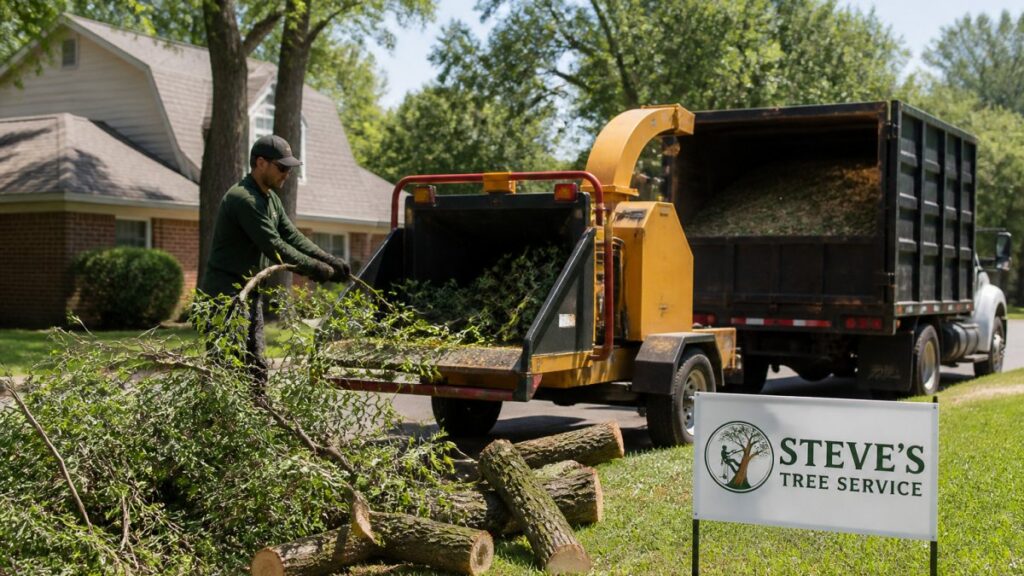
Tree debris is everything left behind after a tree is cut down or damaged. That means trunk sections, large limbs, smaller branches, leaves, brush, and sawdust. Whether removing that debris is part of the job is a question many homeowners ask, and the honest answer is that it depends on the written estimate.
At Steve’s Tree Service LLC, we have helped Weatherford homeowners through this question for over 12 years. A clear estimate tells you exactly what is being cut, what is being hauled, and what is being left for you.
Here is a simple way to think about it:
- Cutting: Taking the tree down in manageable pieces
- Hauling: Carrying debris off your property
- Disposal: Taking debris to a place where it can be processed
- Cleanup: Raking, sweeping, and leaving the yard in order
Some quotes include all four. Readers who want to see which companies actually haul debris away can check our debris cleanup article for more detail. Others include only cutting, or cutting and cleanup on site, with hauling left to you. Knowing which one you have is what protects you from surprises.
Tree Removal Versus Debris Cleanup: Two Different Services
Tree removal and debris cleanup are related, but they are not always the same service. Tree removal is the work of taking a tree down safely. Debris cleanup is the work of clearing away what the tree leaves behind.
Many homeowners assume that once a tree is down, the job is finished. In practice, the cutting crew may stack logs at the curb, leave brush in a pile, or leave sawdust across the lawn. Each of those is a separate task.
Watch out: A quote that says “tree removal” alone may not mention cleanup at all. Ask the question directly before you agree to the work.
Tree Removal Cleanup: What a Standard Job Covers
A standard tree removal job often covers the cutting and the removal of the main trunk and limbs. Cleanup of small brush, raking of sawdust, and hauling of debris may or may not be included. This is why the written estimate matters so much.
Stump work is another common question. Readers wondering whether stump work is part of the cleanup or billed separately can review our article on stump grinding.
Branches, Logs, and Brush Handling
Branches, logs, and brush each need different handling:
- Large logs: Often cut into sections that can be lifted by hand or machine
- Branches: Usually chipped, bundled, or hauled away
- Brush: Smaller material that is often raked into piles
Ask how each category will be handled. You can also see what a professional tree trimming service covers before requesting a written quote. A good provider can tell you whether logs will be left in your yard, stacked, or taken with the crew.
Hauling and Disposal Options
Hauling means the debris leaves your property on a truck. Disposal means the debris is taken to a facility such as a landfill, a yard waste site, or a wood recycler. Some companies include disposal in their price. Others add it as a separate line item.
If you plan to handle hauling yourself, check your local rules. Many cities and counties have specific guidelines for yard waste and brush (the EPA).
The table below sums up the main cleanup tasks a standard tree removal job may or may not include.
| Task | Typical status | What to ask |
|---|---|---|
| Cutting | Usually included in tree removal | Is cutting part of the quote? |
| Hauling debris | May or may not be included | Is hauling listed in the estimate? |
| Disposal | Included or billed separately | Where does the debris go? |
| Raking sawdust and brush | Not always included | Is sweeping or raking covered? |
| Logs and large wood | Left, stacked, or taken away | What happens to logs? |
| Stump work | Often billed separately | Is stump work in the estimate? |
Fallen Tree Cleanup Responsibility: Who Pays and Who Clears It
After a storm, a fallen tree raises two questions: who is responsible for the tree, and who pays for cleanup? The answer depends on where the tree was growing and what it damaged. Here is a breakdown by location and ownership.
Tree on your own property: If a tree falls entirely within your yard, you are generally responsible for cleanup and any resulting damage, even if the tree was healthy before the storm. Your homeowners insurance may cover removal if the tree hit a covered structure, but otherwise you may pay out of pocket.
Get a Free Tree Service Estimate →
Tree on the public right-of-way or curb strip: The strip of land between the sidewalk and the street is often owned by the city or county. If a tree falls there, local rules determine who cleans it up. Some municipalities handle removal on public property, while others require the adjacent homeowner to arrange and pay for it.
Tree owned by a neighbor: If your neighbor’s tree falls on your property, responsibility usually depends on whether the tree was diseased or neglected. If the neighbor knew the tree was a hazard and did nothing, they may be liable for damage. Otherwise, each property owner is typically responsible for debris on their own land.
Tree on utility lines: If a tree or branch is touching or near power lines, do not attempt to remove it yourself. Call your utility company immediately. Utilities are responsible for clearing lines on public easements, but may not handle debris on private property. Never approach a downed line.
Storm debris and emergency declarations: After a major storm, local governments sometimes offer curbside debris pickup or designate drop-off sites. These programs are usually announced through city or county channels and may have specific rules about how to separate yard waste from other debris. Check official sources for your area.
Do not assume a fallen tree is someone else’s problem. Confirm responsibility with your city or county before you act, and keep records of any communication.
Our storm cleanup service can help with fallen trees, broken limbs, and storm debris. We work with homeowners to clear debris safely and provide free estimates. Weatherford homeowners trust Steve’s Tree Service LLC for safe tree removal, professional tree trimming, and dependable cleanup. With over 12 years of experience, Christian values, and 73+ five-star Google reviews, we take pride in treating every property like our own.
Homeowners Insurance Tree Removal Coverage and Documentation
Homeowners insurance may help pay for tree debris removal after a covered event, but the rules are specific and often misunderstood. Most policies cover removal when a tree falls on a covered structure, such as your house, garage, or fence, or when it blocks a driveway or ramp needed to access the home. Some policies also cover removal when a tree damages other property, like a car or outdoor furniture. However, if a tree simply falls in your yard without damaging anything, removal is often not covered. Always read your policy or call your insurer to confirm what applies to your situation.
If you plan to file a claim, documentation is critical. Follow this step-by-step process:
- Document the damage immediately. Take clear photos and videos of the fallen tree, any damaged structures, and the surrounding area before anything is moved. Include close-ups of damage and wide shots showing the tree’s position.
- Call your insurer before you hire anyone. Most companies require pre-approval or will send an adjuster to assess the damage. Ask what documentation they need and whether they have preferred contractors.
- Get a written estimate from the tree service. The estimate should detail the scope of work: cutting, hauling, disposal, and any stump work. Insurers often want to see that the work is necessary and reasonably priced.
- Keep all receipts and invoices. This includes the tree service invoice, disposal fees, and any emergency repairs like boarding up a window. Proof of payment helps with reimbursement.
- Submit your claim promptly. Follow your insurer’s deadline and keep copies of everything you send. Note the claim number and the name of any representative you speak with.
Ask your insurer whether they cover debris removal up to a certain limit. Many policies have a separate cap for tree debris, which may be lower than your overall coverage.
Remember that insurance covers the cost of removal, not the tree itself. Trees, shrubs, and landscaping are typically considered part of your property, but removal coverage is triggered by damage to a covered structure or by a covered peril like windstorm or hail. If you are unsure, a quick call to your insurer can save you from unexpected bills.
At Steve’s Tree Service LLC, we provide written estimates. With over 12 years of experience and 73+ five-star Google reviews, we can help you document the work. Free estimates are available.
Tree Service Cleanup Checklist: What to Confirm in Your Written Estimate
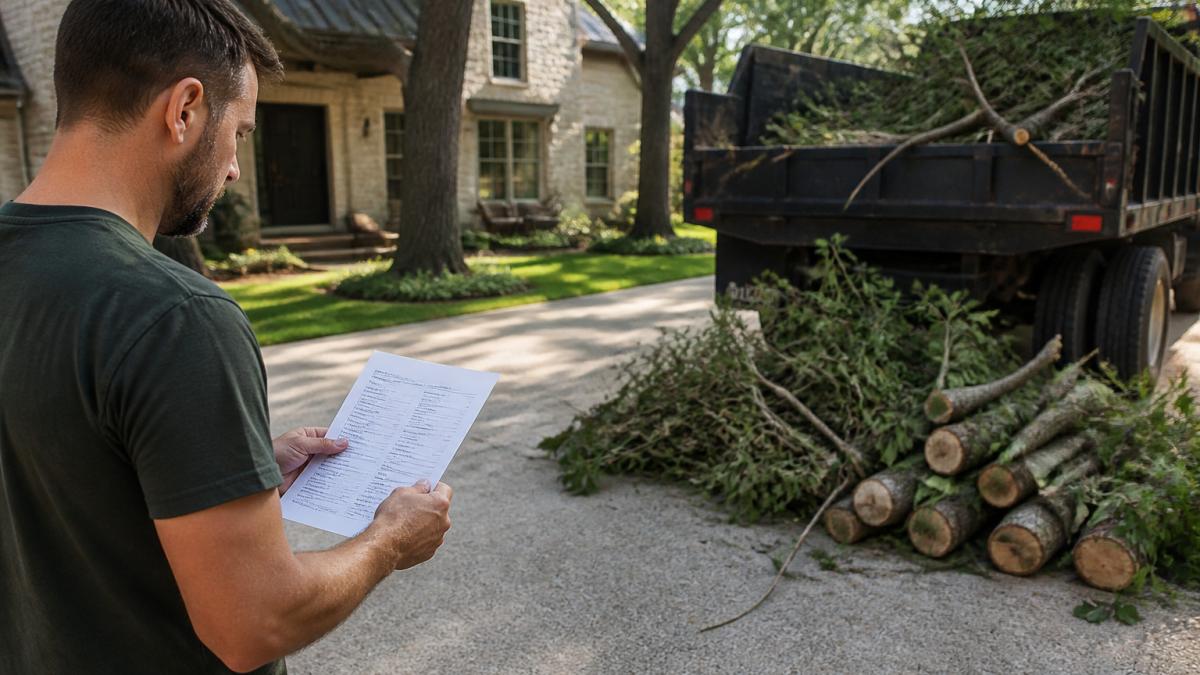
Use this checklist before you sign any estimate:
- Is tree cutting included?
- Is debris hauling included?
- Is disposal included?
- Is stump work included or billed separately?
- Is raking or sweeping of sawdust and brush included?
- What happens to logs and large wood?
- Who is responsible for any damage to lawn or landscaping?
- Is the crew insured?
If any answer is unclear, ask for it in writing. A written estimate protects both you and the provider.
For help with a specific job, you can learn more about our tree trimming service in Weatherford, TX.
Book a Free Estimate Before the Cleanup Question Gets Expensive
The cleanup question is easiest to settle before the work begins. Once the crew has finished, changing the terms is much harder.
At Steve’s Tree Service LLC, we offer free estimates. You can browse our gallery of completed projects and then request a free estimate to confirm the cleanup details directly with us.
Frequently Asked Questions
Is tree debris removal usually included with tree removal?
Not always. Some tree services include hauling away branches, logs, and brush in the quoted price, while others only cut the tree down and leave the debris in your yard. The only reliable way to know is to read the written estimate. Look for a line that says debris removal, haul-away, or cleanup is included, and ask whether wood chips, stumps, and small brush are part of that scope. If the estimate is silent on cleanup, ask the company to confirm in writing before you sign.
Who is responsible for cleaning up a fallen tree?
Responsibility usually depends on where the tree landed and who owns it. On private property, the homeowner who owns the tree or the land generally handles cleanup, either directly or by hiring a service. If a tree falls onto a public right-of-way, such as a street or sidewalk, local government may clear the public portion. Check with your city or county about collection rules, since curbside pickup limits and schedules vary.
Will my homeowners insurance pay for tree removal?
It depends on your policy and the cause of the damage. Many policies cover removal of a fallen tree when it damages an insured structure, and some cover debris removal as part of that claim. Coverage for a tree that was simply dead or unhealthy and did not cause damage is often limited. Keep photos, written estimates, and itemized receipts for all tree work and cleanup, and contact your insurance agent before hiring anyone for a large claim.
What should I ask before hiring a tree service for cleanup?
Ask whether debris removal is included in the quote, and get the answer in writing. Confirm how branches, logs, and brush will be handled, whether they will be hauled away or cut and left on site, and whether stump grinding is included. Ask what happens to wood chips and how the crew will clean the lawn afterward. Request a free estimate that lists the full service scope so you can compare bids on equal terms.
Ready to confirm what your job includes? Contact Steve’s Tree Service LLC today for a free estimate. We are a Christian-owned, 5-star rated team with over 12 years of experience serving Weatherford and Parker County homeowners.
