
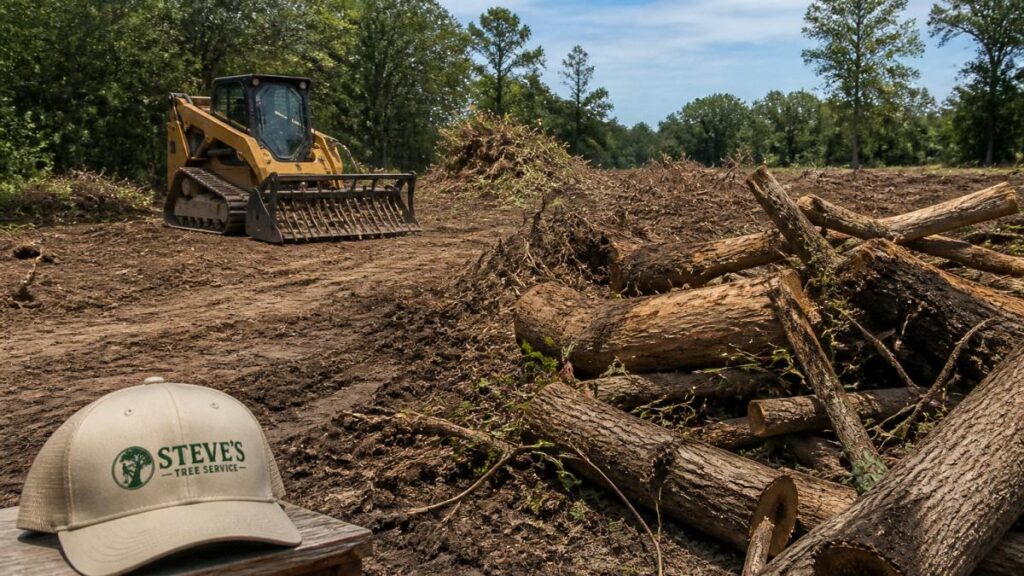
Last Updated: November 1, 2026
Quick Summary
Land clearing in Parker County is the removal of trees, brush, stumps and other vegetation so the ground can be used for a home site, garden, pasture or open space. Clearing can be partial or complete, and the method depends on your terrain, vegetation density and end goal. Forestry mulching, hauling and conventional clearing are the main options.
- Confirm your property boundaries and mark them before the crew arrives.
- Flag every tree, fence and structure you want protected with bright ribbon.
- Call 811 before any digging so underground utilities can be located and marked.
- Check with your city or county planning office about permits and protected trees before signing.
- Ask your contractor how debris will be handled: hauled off-site, mulched on-site, or stacked for burning.
Table of Contents
- Land Clearing Explained for First-Time Property Owners
- Land Clearing Preparation Checklist Before the Crew Arrives
- Choosing Between Forestry Mulching, Hauling, and Conventional Clearing
- Forestry Mulching: What It Is and When It Makes Sense
- How Long Does Land Clearing Take?
- Permits, Protected Trees, and Erosion Control to Plan For
- Land Clearing Contractor Questions to Ask Before You Book
- Booking Your Parker County Land Clearing Estimate
- Frequently Asked Questions
Land clearing in Parker County, TX, can look like a daunting project from the outside. Brush, cedar, mesquite and fallen limbs cover ground you may want to use for a home site, a garden, a pasture or simply open space. This guide walks through the land clearing process one step at a time so you know what to expect before a crew arrives.
Land Clearing Explained for First-Time Property Owners
Land clearing is the removal of trees, brush, stumps and other vegetation from a piece of ground so it can be used for something new. Think of it as preparing a blank canvas.
Clearing can be partial or complete. Selective clearing removes only certain trees or brush and keeps the rest. Full clearing takes almost everything down to bare soil.
Your reasons for clearing shape the approach. A homesite needs a flat, stable area for a house and driveway. A pasture needs open grazing ground with manageable brush. Simple overgrowth control may only need periodic cutting and removal.
The work usually follows a few stages: assessment, cutting, removal or mulching, and cleanup. Knowing these stages makes it easier to compare estimates.
Land Clearing Preparation Checklist Before the Crew Arrives
Preparation is where first-time owners often save time and avoid surprises. A crew can only clear what it can see, reach, and legally touch, so the walk-through you do before the estimate shapes the entire project. Use this checklist as a working document, not a one-time read.
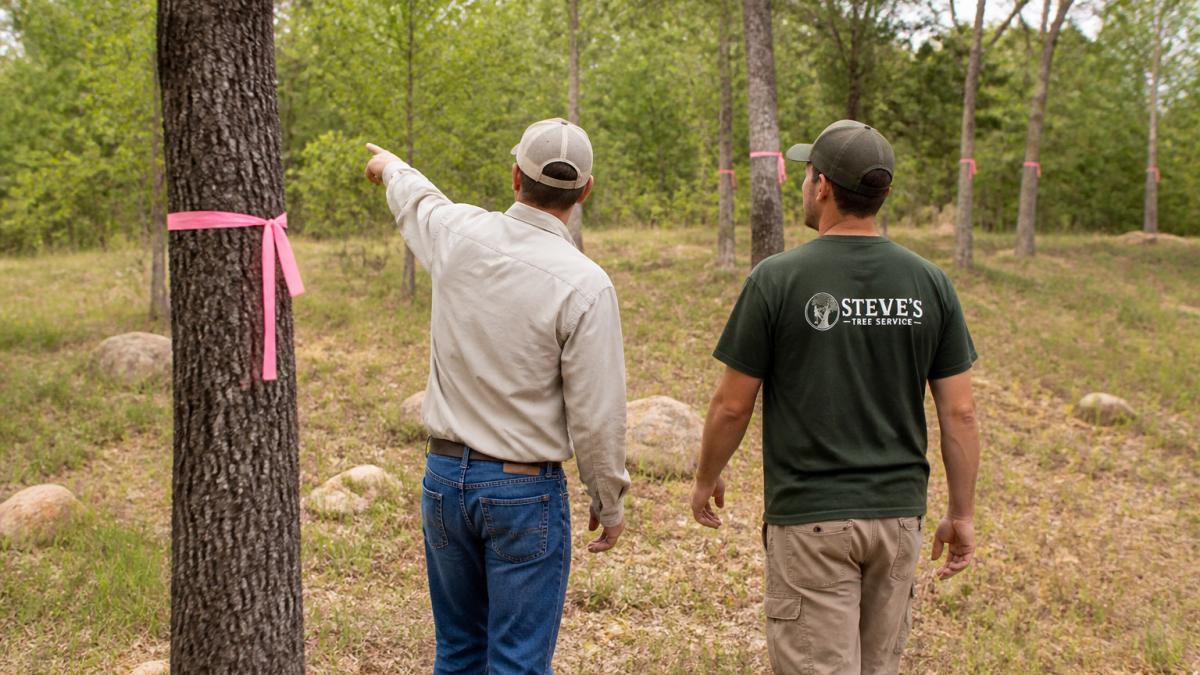
1. Confirm your boundaries. Find your property corners and the lines between them. If you do not have a recent survey, ask your county appraisal district for the parcel map on file, or hire a licensed surveyor if the corners are unclear. A crew that clears past a line can create a neighbor dispute that costs far more to fix than the clearing itself. Mark the line with flagging tape or stakes so the equipment operator can see it from the cab.
2. Flag what stays. Walk the property and tie bright ribbon around every tree, fence post, shed, well head, septic component, and landscape feature you want protected. Be specific: “keep the oak by the gate” is clearer than “keep the big trees.” If you want a buffer of vegetation along a fence or creek, mark its edge.
3. Call 811 before anyone digs. Underground utilities, water, gas, electric, internet, and septic lines, are not always where you expect. Calling 811 before excavation is the standard way to have them located (811 Before You Dig). Give the locator service time to mark the lines, then photograph the marks.
4. Plan equipment access. A forestry mulcher or skid steer needs a path at least as wide as the machine plus clearance for turns. Note gates, culverts, low limbs, and soft ground that could bog down a tracked or wheeled machine. If the only access is through a neighbor’s property, get written permission before the crew arrives.
5. Decide what happens to the debris. Common paths include hauling it off-site, chipping or mulching it on-site, or stacking it for burning where local rules allow. Each has trade-offs. Hauling leaves the cleanest site but adds truck traffic and disposal logistics. To learn whether debris from your job gets hauled away, see what gets hauled away and whether tree companies remove debris. On-site mulching keeps nutrients on the property and reduces trips. Burning requires a permit in many areas and is weather-dependent. Tell your contractor which you prefer so the estimate reflects it.
6. Photograph everything. Take dated photos of the property, fences, driveways, and any structures near the work zone before clearing begins. These protect both you and the contractor if a question comes up later about pre-existing damage.
7. Write down your goal. Are you clearing for a homesite, a pasture, a garden, or simply to open up overgrown ground? The end use determines how much stumping, grading, and debris removal you need. Bring that goal to the estimate in one sentence.
Keep your checklist, photos, and 811 confirmation in one folder. A written scope built from these notes is the single best defense against mid-project change orders.
Bring these notes to your estimate visit. A clear scope reduces misunderstandings later and makes it easier to compare one contractor’s proposal against another’s.
Choosing Between Forestry Mulching, Hauling, and Conventional Clearing
There is no single correct method. Each option suits different conditions.
Forestry mulching uses a machine to grind brush and small trees into mulch that stays on the ground. Land owners often choose it for dense brush and rough terrain where hauling would be slow and expensive.
Hauling removes cut material from the property entirely. This leaves the site cleaner, but it adds trucking time and disposal costs.
Conventional clearing cuts trees, removes stumps, and hauls or stacks debris. Land owners often use it where they need bare ground for construction or planting.
Get a Free Tree Service Estimate →
Ask a contractor which method fits your land and why. A good answer will reference your terrain, vegetation density, and end goal rather than offering one method for every site.
Forestry Mulching: What It Is and When It Makes Sense
Forestry mulching is a machine-based method that grinds vegetation in place. Mulch left behind can break down over time and help protect exposed soil.
It works well when:
- Brush and small trees are dense
- Hauling access is limited
- You want to keep the work fast and low-disturbance
It is less suitable when you need a perfectly level site or when large stumps and root systems must be removed. In those cases, conventional clearing or a combination of methods is usually better.
How Long Does Land Clearing Take?
Timing depends on acreage, vegetation density, terrain, and the chosen method. Ask the contractor for a realistic schedule based on your specific property.
Weather also affects the schedule. Wet ground can delay equipment work and create erosion risk. Plan some flexibility into your timeline and ask the contractor for a realistic schedule based on your specific property.
Permits, Protected Trees, and Erosion Control to Plan For
Local rules vary by jurisdiction, so the first step is figuring out which authority governs your parcel. Property inside a city limits is usually regulated by that city’s planning or permitting office. Unincorporated land is generally governed by the county. If your property sits near a creek, floodplain, or wetland, a state or federal agency may also have a say. A quick call to your city or county planning office, before you sign a clearing contract, will tell you which permits, if any, apply.
What typically triggers a permit. Common triggers include clearing above a certain acreage, grading that changes drainage, work inside a floodplain or near a waterway, and removal of certain protected or heritage trees. Rules differ, so ask specifically: “Does my project need a tree removal permit, a grading permit, or a stormwater plan?” Get the answer in writing if you can.
Protected trees. Some municipalities maintain a list of protected species or size thresholds, for example, trees above a certain trunk diameter may require a permit to remove. Ask whether your property is inside a tree ordinance boundary and whether any species on your land are listed. If a tree you want to keep is near the work zone, mark it and ask the contractor how they will protect the root zone. Roots extend well beyond the trunk, and compacting the soil over them with heavy equipment can kill a tree slowly.
Erosion control. When vegetation is stripped, exposed soil is vulnerable to rain. Common erosion-control practices include:
- Silt fence, a fabric barrier staked along the downhill edge of disturbed ground to catch sediment while letting water pass.
- Straw or wood mulch cover, spread over bare soil to absorb raindrop impact and slow runoff.
- Seeding, fast-growing temporary grasses stabilize soil while permanent vegetation establishes.
- Diversion berms or swales, shallow shaped channels that direct water away from the cleared area.
- Stabilized entry/exit, a gravel pad where equipment enters and leaves keeps mud off the road.
Ask your contractor which of these they will install, who removes them after the project, and whether the plan needs to be reviewed by the local authority. On larger or sloped sites, a written erosion and sediment control plan may be required.
Clearing without checking local rules can result in stop-work orders, fines, or required replanting. A five-minute call to the planning office before the crew arrives is far cheaper than fixing a violation afterward.
Discuss these items with your contractor during the estimate so they can factor them into the scope. A contractor who has worked in the area should be able to tell you which office to call and what questions to ask.
Before the crew starts, the article lays out the main erosion-control practices and what each one does.
| Practice | What it does | Who to ask |
|---|---|---|
| Silt fence | Fabric barrier on the downhill edge catches sediment while letting water pass | Your contractor |
| Straw or wood mulch cover | Absorbs raindrop impact and slows runoff on bare soil | Your contractor |
| Seeding | Fast-growing temporary grasses stabilize soil while permanent vegetation establishes | Your contractor |
| Diversion berms or swales | Shallow channels that direct water away from the cleared area | Your contractor |
| Stabilized entry/exit | Gravel pad keeps mud off the road where equipment enters and leaves | Your contractor |
Land Clearing Contractor Questions to Ask Before You Book
Ask these questions before signing anything:
- What clearing method do you recommend for my property, and why?
- Is debris hauling or disposal included in the estimate?
- What is included in cleanup, and what would be extra?
- Do you handle stump removal, and how is it priced?
- How do you protect trees and features I want to keep?
- Are you insured, and can you provide proof?
- What is your typical timeline for a property like mine?
Clear, written answers help you compare contractors fairly.
Booking Your Parker County Land Clearing Estimate
Steve’s Tree Service LLC provides land clearing for homeowners in Parker County, including Weatherford. Our land clearing service covers brush removal, tree removal and site preparation for your next project. To get started, contact Steve’s Tree Service LLC for a free estimate. Our team walks the property with you and explains the options.
For a related look at planning and timing, read How to Clear Overgrown Land: Step-by-Step Guide before you schedule a visit. When you are ready to talk through your property, see our Parker County land clearing services and request your estimate.
Christian-Owned – 5-Star Rated – Free Estimates
Frequently Asked Questions
What does professional land clearing include?
Professional land clearing usually covers removing brush, small trees, and unwanted vegetation, then hauling or mulching the debris so the lot is usable. Some crews also grade the ground, shape drainage, or prepare an access road. Ask for a written scope that lists every task, including whether stumps are removed and where debris goes, so you can compare estimates on the same work.
How can land clearing protect trees I want to keep?
Mark the trees you want to keep with bright flagging or paint before the crew starts, and show the operator your planned access routes. Selective clearing works around marked trees, and experienced operators avoid driving over root zones, which compacts soil and can kill healthy trees over time. Keep a small buffer around each keeper tree and confirm this plan in writing before work begins.
What should I ask a land clearing contractor before hiring?
Ask how long the company has been working in Parker County, whether it carries liability insurance, and how it handles debris and stumps. Request a written estimate that states the method, the expected timeline, and the cleanup standard. Ask for references from past rural jobs and whether the crew will take care of permits or utility locates. A reputable contractor will answer each question directly and put the answers in the contract.
