
Last Updated: November 10, 2026
Quick Summary
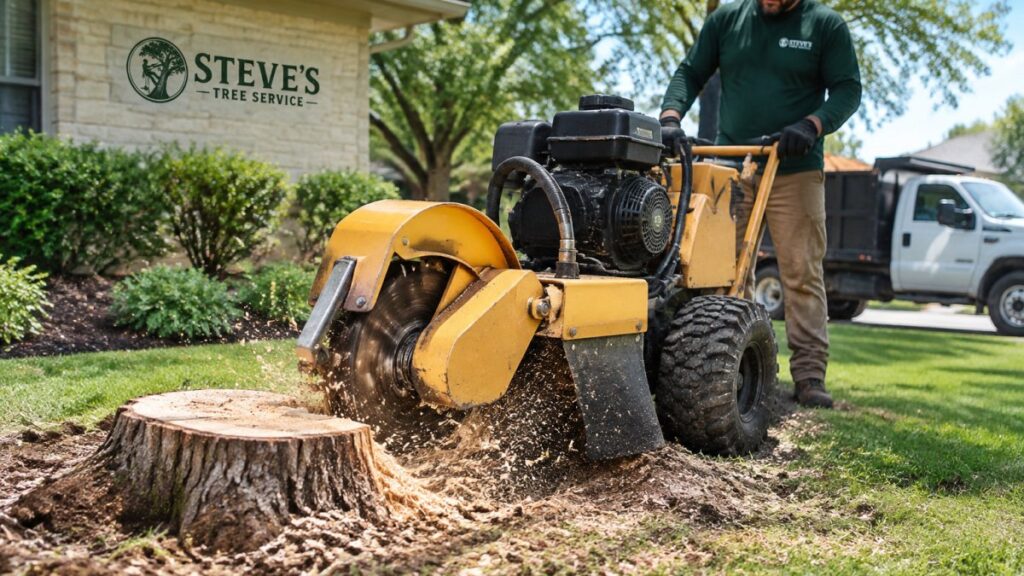
Stump grinding removes an old stump by chewing it down below the soil line into wood chips. It opens up usable yard space, removes a trip and mower hazard, reduces pest risk, and can help the lawn recover and the soil improve.
- Grinding reclaims yard space that a stump occupies, such as for a garden bed or patio.
- A stump can cause trips and falls and can catch a mower blade or string trimmer.
- Dead wood can attract wood-boring insects and termites, which grinding removes.
- Grinding removes most of the root system near the surface, which slows or stops regrowth.
- For most yards grinding is the better choice, unless you plan to build over the spot.
Table of Contents
- Why an Old Stump Holds Back Your Yard
- 10 Benefits of Stump Grinding for Yard Space
- Stump Grinding vs Stump Removal: Which Do You Need?
- How to Prepare Your Yard for Stump Grinding
- Putting the Wood Chips From Stump Grinding to Work
- DIY Grinders vs Professional Crews: What to Weigh
- Book Your Stump Grinding With Steve’s Tree Service
- Frequently Asked Questions
Why an Old Stump Holds Back Your Yard
Most homeowners leave a stump in the yard for years without a second thought. It looks harmless, but a stump is dead wood that keeps causing trouble. Stump grinding is the process of using a machine to chew the stump down below the soil line, turning it into small wood chips. For a first-time homeowner, that can sound like a big job, so this guide explains each benefit in plain terms.
Steve’s Tree Service LLC has over 12 years of experience serving homeowners in Weatherford and Parker County. Here is what you gain when an old stump is gone.
10 Benefits of Stump Grinding for Yard Space
A stump is more than an eyesore. Grinding it out opens up the space around it and cuts down on several everyday problems. These are ten common benefits homeowners notice.
Benefits 1-3: Reclaiming Space, Safety and Curb Appeal
1. You get your usable yard space back. A stump takes up room that you could use for a garden bed, a play area, or a patio. Once it is ground down, the area is open and easy to mow around.
2. You remove a safety hazard. Stumps can cause trips and falls, especially for kids, older family members, and visitors who do not see them in tall grass. They can also catch a lawn mower blade or a string trimmer, which can damage the equipment and cause injury.
3. Your home looks better from the street. A cleared spot with fresh soil and grass makes the whole property look cared for. Buyers and neighbors notice these details.
- Stumps often sit in the most visible part of the yard
- A clean spot reads as a well-kept property
- Replanting the area is simple once the stump is gone
Benefits 4-6: Pest Control, Lawn Health and Soil
4. You reduce the chance of pests. Dead wood can attract wood-boring insects and termites (Structural Pests). Grinding the stump removes the food source that keeps them close to your home.
5. Your lawn can recover. Old stumps and their roots shade and crowd the grass nearby. Once they are removed, sunlight and water reach the soil, and the lawn has room to fill in.
6. Your soil can improve. The wood chips left behind add organic matter to the soil. Over time, that helps the soil hold moisture and nutrients.
Benefits 7-10: Property Value, Regrowth, Mulch and Landscaping
7. You protect your property value. Buyers often see a stump as a sign of deferred maintenance. Clearing it is a small step that shows the property was kept up.
8. You stop regrowth. Many tree species send up new shoots from the remaining roots. Grinding removes the stump and most of the root system near the surface, which slows or stops that regrowth.
9. You get free mulch. The chips from grinding can be spread around trees and garden beds. They help suppress weeds and keep soil temperatures steadier. More on this later in the article.
10. You open up landscaping options. With the stump gone, you can plan new beds, a walkway, or a new tree. The site is ready for design work in a way it was not before.
Stump Grinding vs Stump Removal: Which Do You Need?
Stump grinding and stump removal are not the same thing. Grinding cuts the stump down below ground level, leaving wood chips and a shallow hole. If you would rather have the whole job handled, you can compare our stump removal options in Weatherford before you decide. Full removal digs out the stump and its major roots, leaving a larger open hole that must be filled with soil.
For most homeowners, grinding is the better choice. It is faster, it disturbs less of the yard, and it leaves the area ready to replant. Full removal makes sense when you plan to build over the spot, such as a foundation or a deep patio base.
- Grinding: Faster, less digging, leaves a shallow area to fill with topsoil
- Full removal: Digs out roots, leaves a deep hole, needs more backfill work
- Best for most yards: Grinding, unless you plan to build over the spot
Stump grinding is often part of a larger tree job, so it is worth asking whether it is included in your quote. You can check whether grinding is covered in a tree removal job to see what a removal quote typically includes.
The two approaches differ in how much of the stump and roots they remove and how much work the yard needs afterward.
| Approach | Best for | Key difference |
|---|---|---|
| Grinding | Most yards | Faster, less digging, shallow area to fill |
| Full removal | Building over the spot | Digs out roots, deep hole, more backfill |
| Grinding | Replanting the area | Leaves area ready to replant |
| Full removal | Foundations or deep patio bases | Removes major roots |
| Grinding | Disturbing less of the yard | Less digging overall |
| Full removal | Larger open hole to fill | Needs more backfill with soil |
How to Prepare Your Yard for Stump Grinding
A little preparation makes the job go faster and keeps your yard in better shape afterward. Start by marking any buried utility lines, sprinkler heads, and irrigation pipes in the work area. Call 811 before any digging to have lines located (811 Before You Dig). Next, clear the area of toys, planters, and loose items, and make sure there is enough room for the grinder and crew to move.
Safety matters here too. Keep kids and pets well away from the work zone while the machine runs. For more on keeping people and property clear of the work area, read the key safety protocols for tree work.
Putting the Wood Chips From Stump Grinding to Work
Grinding leaves a pile of wood chips, and most homeowners wonder what to do with them. The answer depends on where the chips go and how fresh they are.
Use them as mulch. Spread chips around trees and garden beds, keeping them a few inches away from trunks and stems to avoid holding moisture against the bark. A layer two to four inches deep suppresses weeds and moderates soil temperature.
Use them on paths or play areas. Chips make a natural walking surface for garden paths. Refresh the layer as it breaks down.
Compost them in moderation. Chips are a carbon-rich “brown” ingredient. Balance them with nitrogen-rich “greens” like grass clippings or kitchen scraps, and turn the pile regularly. Pure chips break down slowly, often a year or more, so mix them rather than composting them alone.
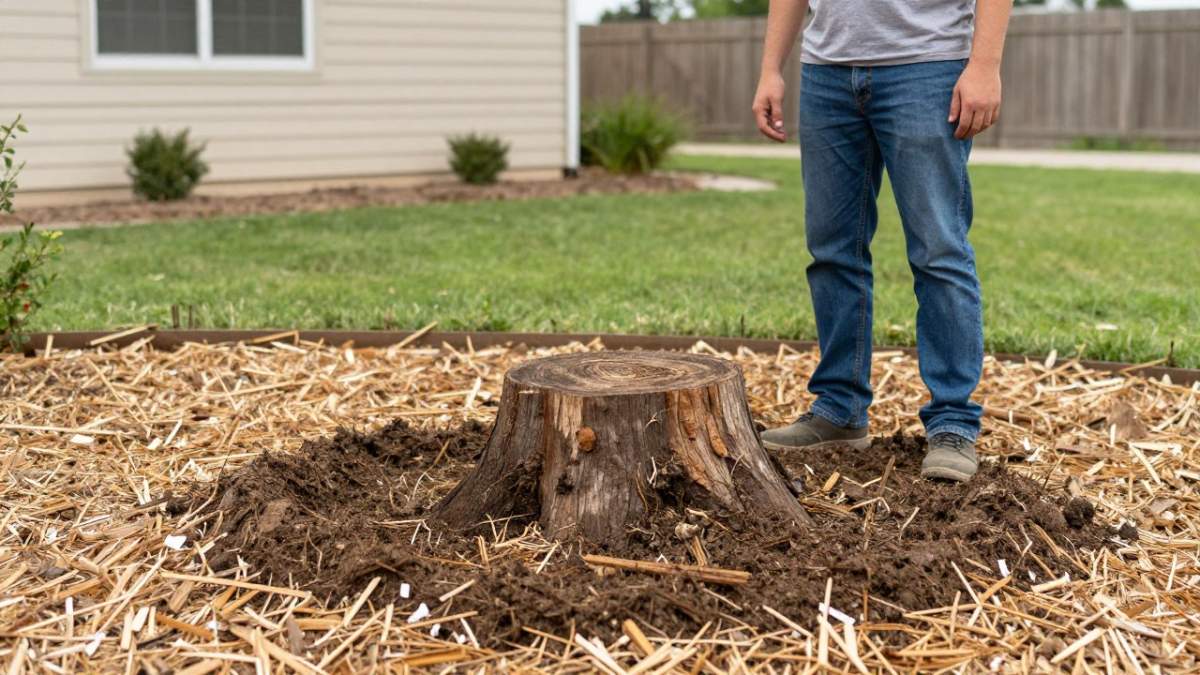
Fill the grind hole. Mix chips with topsoil to bring the hole up to grade, then cap with a few inches of straight topsoil before seeding or sodding. Chips alone will settle and leave a sunken spot.
How Long Until the Ground Is Ready?
This is the question most guides skip. The timeline depends on what you plan to do with the spot:
- Sod or seed: Fill the hole with topsoil, tamp, water to settle, and you can seed or lay sod within a few weeks. Expect the patch to need extra watering through its first season.
- Planting a new tree or shrubs: Wait one full season after grinding so the soil settles and any remaining near-surface roots decay enough not to interfere. Dig the planting hole wider than the root ball and backfill with native soil, not pure chips.
- Building a patio, shed, or structure: This is the case where grinding may not be enough. A grind hole is backfill, not a foundation. For anything structural, the remaining roots and disturbed soil need to be evaluated, and full stump removal is often the safer choice. Watch out: building over a grind hole without proper compaction can lead to settling and cracked slabs.
A Note on Nitrogen
Fresh chips tie up nitrogen at the soil surface as they decompose. That is fine for mulch and paths, but do not till a large volume of fresh chips into lawn or garden soil right before planting. If you want to incorporate chips, let them age first, or add a nitrogen source and give the bed a season to balance out.
Ask your crew whether they haul away leftover chips or leave them on site. You can see which debris tree companies typically remove so you know what to expect.
DIY Grinders vs Professional Crews: What to Weigh
Rental grinders are available at many equipment shops, and some homeowners choose to do the job themselves. A DIY grind can work for a small stump in an open area. Keep in mind that grinders are heavy, loud, and throw debris, and the operator needs training and protective gear.
A professional crew can bring the right machine for the stump size and the experience to work around roots, buried lines, and nearby structures. For large stumps, stumps near a house or fence, or yards where a mistake would be costly, a professional job is usually the safer choice.
Book Your Stump Grinding With Steve’s Tree Service
If you are ready to clear that stump and reclaim your yard, Steve’s Tree Service LLC can help. We offer free estimates and thorough cleanup. Our team treats every property like our own.
Steve’s Tree Service LLC is Christian-owned and operated, with 73+ five-star Google reviews. Request your free estimate today and see how much space a clear yard can give you.
Frequently Asked Questions
What are the downsides of stump grinding?
Stump grinding is loud and dusty while it runs, so the yard and nearby areas need to be cleared of pets, children and vehicles beforehand. The grinder can also leave a shallow pit of soil and chips that needs filling before you can plant or lay sod. Grinding does not always remove every root, so some surface roots may remain and sprout new growth if not treated. Pricing depends on stump size, access and site conditions, so ask Steve’s Tree Service for a free estimate before you schedule the work.
Is it better to leave a tree stump or grind it down?
Leaving a stump can be acceptable if it is low, stable and out of the way, but it tends to attract wood-boring insects, can rot into a trip hazard and blocks use of the space. Grinding it down clears the area for lawn, garden beds or outdoor living space. Most homeowners who want to use the yard again choose grinding, since the chips can be reused as mulch. A quick on-site look can help you decide which option fits your yard.
Does stump grinding prevent new tree growth from the roots?
Grinding removes the main stump and the portion of the root system near the surface, which greatly reduces the chance of a new tree sprouting from that spot. Some roots extend beyond the grinder’s reach, however, and can send up shoots later. Thorough grinding, followed by monitoring and removing any new sprouts quickly, gives the best results.
