
Last Updated: November 21, 2026
Quick Summary
Tree trimming safety means planning for falls, electrocution and falling limbs before any cutting starts. Ask the provider for a site assessment, the protective gear the crew wears, how they inspect equipment, and how they handle work near power lines. A qualified crew should stop work and call the utility company whenever branches could come near energized lines.
- Falls, electrocution and falling limbs are the three hazards that cause most tree trimming injuries.
- Ask for a site assessment covering power lines, structures, slopes and people nearby before work begins.
- Standard protective gear includes a hard hat, eye protection, hearing protection, chainsaw chaps and gloves.
- Inspect harnesses, ropes and ladders for damage before every job, and retire any item that is worn or damaged.
- Call your electric utility before work begins if branches are near power lines, and stop work if a line is involved.
Table of Contents
- Why Tree Trimming Safety Matters for Your Home
- Common Tree Trimming Hazards: Falls, Electrocution, and Falling Limbs
- Assessing Tree and Site Hazards Before Work Begins
- Tree Trimming Safety Equipment and Protective Gear
- Tree Trimming Standards and Working Near Power Lines
- Tree Felling Safety and Fall Protection
- Questions to Ask a Tree Service Before Hiring
- Scheduling Your Trimming Safely with Steve’s Tree Service LLC
- Frequently Asked Questions
Why Tree Trimming Safety Matters for Your Home
Tree trimming looks simple from the ground, but it is one of the more dangerous jobs a homeowner can take on.
Steve’s Tree Service LLC has spent over 12 years helping homeowners in Weatherford and Parker County keep their trees safe and healthy.
This guide walks through the safety questions every homeowner should ask, explains the terms you will hear, and shows what a safe job looks like from start to finish.
Common Tree Trimming Hazards: Falls, Electrocution, and Falling Limbs
Three hazards cause most tree trimming injuries. Each one can happen to a professional or a homeowner with a ladder and a saw.
- Falls: Climbing or working from a ladder can send a person to the ground. Even a short drop can cause broken bones or worse.
- Electrocution: Branches that touch power lines can carry electricity to whoever is holding them. Many severe trimming injuries involve power lines.
- Falling limbs: Heavy branches can drop without warning, especially dead or cracked wood. They can strike people or property below.
A safe job plans for all three hazards before the first cut is made.
Assessing Tree and Site Hazards Before Work Begins
Before any cutting starts, a qualified worker should look over the tree and the area around it. This is called a site assessment. It tells you whether the job is safe to do and what equipment it needs.
Ask the service provider to point out the following:
- Power lines near the tree or in its fall zone
- Structures such as the house, fences, sheds and vehicles
- Slopes, soft ground or uneven footing
- People and pets who need to stay clear of the work area
- Signs of structural weakness in the tree itself
If the crew cannot explain the hazards they see, that is a warning sign.
Recognizing Decay, Damage, and Unstable Structures
Some trees look healthy but have hidden problems. Decay is wood that has rotted, often from fungus. Damage can come from storms, lightning or past cuts. Both can make branches or whole trunks likely to break.
Watch for these warning signs:
- Mushrooms or conks growing at the base of the trunk
- Cracks, splits or cavities in the wood
- Dead branches, especially high in the canopy
- Leaning trunks or a sudden change in the tree’s lean
Anything on this list means the tree needs a closer look from a professional before anyone climbs it. For a deeper walkthrough, see how to assess tree failure risk.
Tree Trimming Safety Equipment and Protective Gear
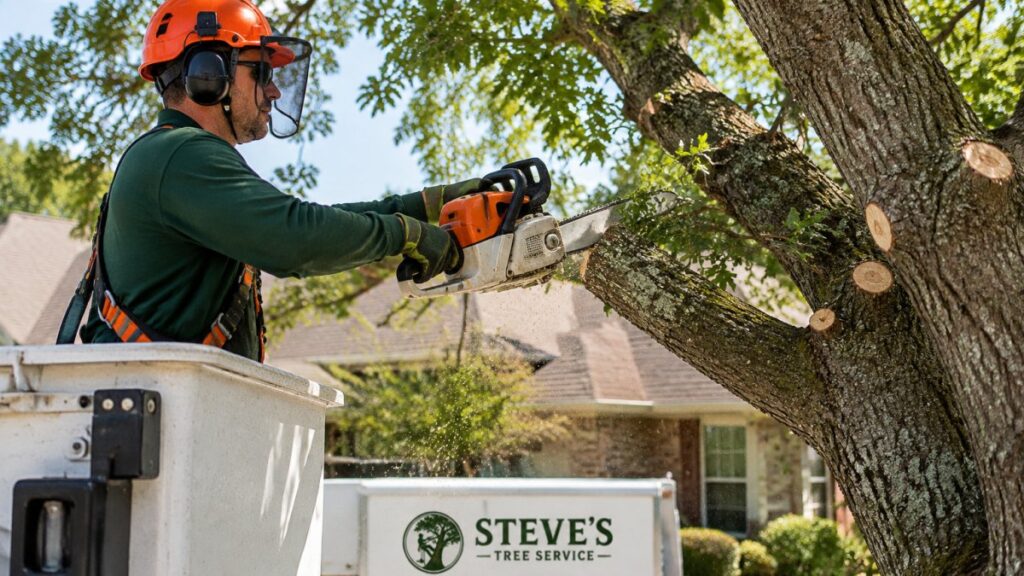
Proper gear is the first line of defense, but gear only protects you if it is in good condition and matched to the job.
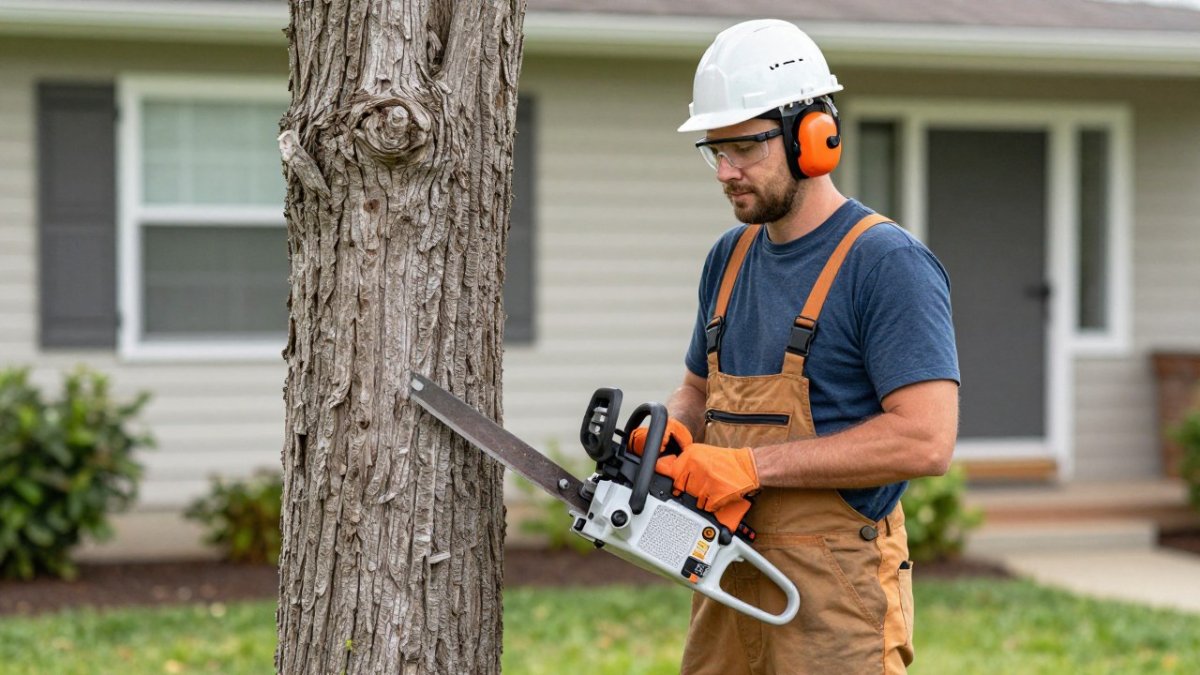
Personal protective equipment (PPE) is the clothing and gear worn to reduce injury. For tree trimming, standard PPE includes:
- A hard hat to guard against falling limbs and to anchor a face shield
- Safety glasses or a face shield to block wood chips and sawdust
- Hearing protection, since chainsaws are loud enough to cause lasting damage
- Chainsaw chaps, cut-resistant leg coverings that slow a saw if it kicks back
Fall protection is the system that keeps a climber from hitting the ground. Ask whether the crew uses a harness and rope system for climbs. A harness keeps the worker attached to the tree if they slip.
How to Inspect Equipment Before Work Begins
Equipment fails when it is worn, damaged or past its service life. A safe crew inspects gear before every job and removes anything questionable from service. Ask the provider how they handle these checks:
- Harnesses and ropes: Look for cuts, fraying, burns, glazing (shiny melted spots), chemical damage or faded labels. Any of these means the item should be retired.
- Ladders: Check for cracked rails, bent rungs, loose hardware and missing feet. A ladder that wobbles or has a damaged rung should not be used.
- Chainsaws: Check the chain tension, the brake, the throttle and the bar for wear. A dull or loose chain is more likely to kick back.
- PPE: Check that hard hats are not cracked, that chaps are not cut or oil-soaked, and that hearing protection and eye protection are clean and intact.
- Rigging and ropes: Look for glazing, fraying and flat spots. Ropes used for rigging (lowering branches under control) take heavy loads and need regular inspection.
Watch out: a crew that cannot show you how they inspect gear, or that keeps using visibly damaged equipment, is a warning sign, damaged gear can fail without warning under load.
Matching Equipment to the Task
Not every job needs the same gear. A homeowner trimming a low branch with a pole pruner needs eye protection and gloves. You can also review the tree removal services offered in Weatherford, TX before you book.
Weatherford homeowners trust Steve’s Tree Service LLC for safe tree removal, professional tree trimming, and dependable cleanup. With over 12 years of experience, Christian values, and 73+ five-star Google reviews, we take pride in treating every property like our own.
Tree Trimming Standards and Working Near Power Lines
Power lines are the most serious hazard in tree work. Electricity can jump to a person or tool without any contact, and the danger is not always obvious from the ground. A branch that looks like it is clear of a line can still be close enough for electricity to arc across the gap.
Some key points to understand:
- The utility company, not the tree service, is responsible for lines it owns. Call your electric provider before work begins if branches are near lines. The utility can tell you whether the line is energized and who is allowed to work near it.
- Only specially trained workers should trim branches near power lines. Line-clearance workers receive specific training and use insulated tools and equipment. A general tree crew should not work within the clearance zone around an energized line.
- Never assume a line is safe to touch because it looks low or dead. A downed or low line can still be energized, and electricity can travel through tools, ladders, ropes and the ground.
Electrical-Clearance Stop-Work Criteria
A safe crew stops work and calls for qualified help when any of these conditions exist:
- A branch, tool or ladder could come within the clearance zone around an energized line. The exact distance depends on the line voltage, so the utility or a qualified line-clearance professional should make that call.
- A tree or branch is touching or leaning on a line.
- A line is down or sagging, or a limb is resting on a line.
- The crew cannot confirm whether a line is energized or who owns it.
- Weather conditions, wind, rain, lightning or poor visibility, make contact more likely.
Watch out: if a crew keeps working near a line without confirming clearance or calling the utility, stop the job. No trimming task is worth the risk of electrical contact.
How Utility Coordination Works
Utility coordination means contacting the electric provider before work begins so the utility can confirm line ownership, mark clearances and, if needed, de-energize or cover lines. Ask the provider:
- Will you call the utility before work begins if branches are near lines?
- Who will make that call, and when?
- What will the crew do if a line is closer than expected?
- Will you stop work and wait for a qualified line-clearance professional if needed?
A provider who cannot answer these questions clearly is not prepared for power-line work. For most homeowners, the safest choice is to hire a qualified tree-care professional who coordinates with the utility rather than attempting the work yourself.
Weatherford homeowners trust Steve’s Tree Service LLC for safe tree removal, professional tree trimming, and dependable cleanup.
The table below summarises the stop-work conditions a safe crew should watch for and who to call when power lines are involved.
| Condition | Action | Who to call |
|---|---|---|
| Branch could enter the clearance zone of an energized line | Stop work | Utility or qualified line-clearance professional |
| Tree or branch touching or leaning on a line | Stop work | Utility company |
| Line down, sagging, or limb resting on a line | Stop work | Utility company |
| Crew cannot confirm whether a line is energized or who owns it | Stop work | Electric provider |
| Wind, rain, lightning, or poor visibility | Stop work | Reschedule the job |
Tree Felling Safety and Fall Protection
Felling, or taking down a whole tree, carries higher risk than trimming. The tree can fall in an unexpected direction, and the worker has to stay out of its path.
Good felling practice includes:
- Marking a clear escape route before the first cut
- Checking the direction of lean and the wind
- Clearing the area of people, pets and objects
- Using wedges or rigging to control the fall
For climbing work, fall protection means a harness, a secure anchor point and trained climbing skills. Ladders are not a safe substitute for a proper climbing system in most trimming jobs.
Questions to Ask a Tree Service Before Hiring
Asking the right questions helps you choose a safe, reliable provider. Use this checklist when you call for estimates:
- Are you licensed and insured for tree work?
- Does your insurance cover workers’ compensation and property damage?
- Who on the crew is trained in chainsaw and climbing safety?
- What protective equipment does your crew wear on every job?
Steve’s Tree Service LLC offers free estimates.
Scheduling Your Trimming Safely with Steve’s Tree Service LLC
Once you have chosen a provider, plan the job with safety in mind. Pick a day with calm weather, since wind and rain make climbing and cutting more dangerous.
Steve’s Tree Service LLC is a Christian-owned company with 73+ five-star Google reviews.
Ready to get started? Contact Steve’s Tree Service LLC for a free estimate and ask us any safety question on your list.
Frequently Asked Questions
What questions should I ask a tree service about safety?
Ask whether the crew is licensed and insured, whether workers use personal protective equipment such as hard hats, safety glasses, and hearing protection, and how they handle branches near power lines. Ask who will call the utility company if lines are involved and whether crew members are trained in fall protection and safe climbing. A reputable provider will answer these questions directly and explain their plan for your specific tree.
What personal protective equipment should tree workers use?
Tree workers typically wear a hard hat, safety glasses or face shields, hearing protection for chainsaw noise, cut-resistant chaps, and sturdy boots with good grip. Climbers also rely on harnesses and fall-arrest systems rated for the work. Ask any provider you hire which of these items the crew uses on your job. Protective gear is only one layer of protection, so pair it with a site assessment and clear communication between crew members.
How should a tree service handle branches near power lines?
Branches near power lines should be handled by trained personnel who understand electrical clearance requirements, and the utility company should be contacted when work could approach energized lines. Homeowners should never attempt to trim branches touching or close to power lines themselves. A qualified tree-care professional should assess the distance, coordinate with the utility when needed, and stop work if conditions become unsafe. Ask any provider you consider how they plan to approach lines on your property.
What should homeowners do while tree trimming is underway?
Keep children, pets, and vehicles well away from the work zone, and stay indoors or at a safe distance while limbs are being cut and lowered. Confirm where crews will stage debris and how cleanup will be handled. Let the crew know about any hazards you see, such as exposed wires or unstable structures near the tree. If weather turns windy or wet, ask whether work will be postponed. Good communication with the crew helps keep everyone safe.
