
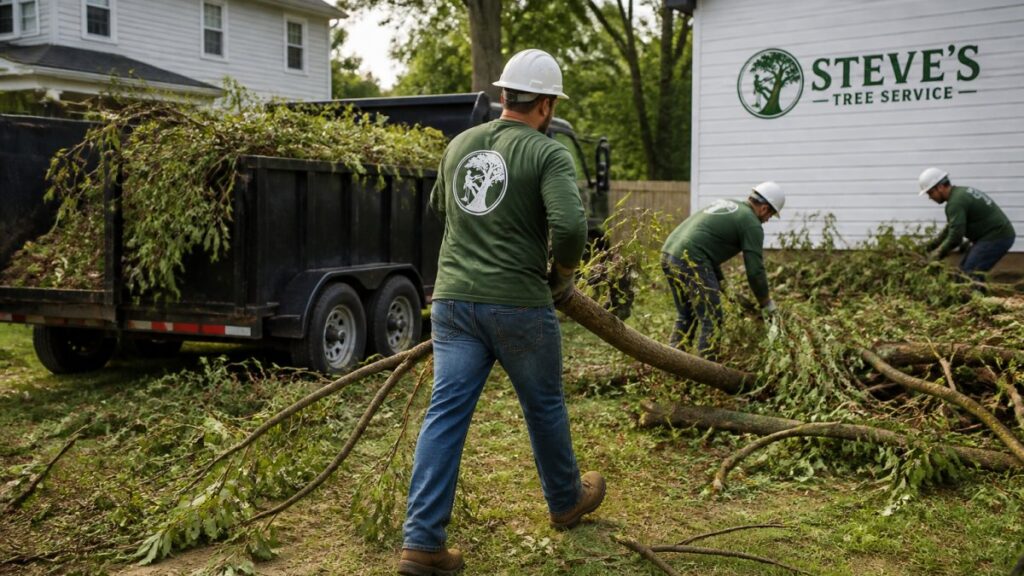
Last Updated: October 28, 2026
Quick Summary
Most tree companies remove debris as part of the job, though how tree companies remove debris varies from one crew to the next. Debris removal means hauling away everything a tree job produces, from cut branches to the last pile of sawdust. Some crews cut the tree and leave the wood in a pile by the curb, so ask before you sign.
- Cleanup is often included in a tree removal quote, but not always, so read the quote line by line.
- Ask one direct question: does this include hauling everything away?
- If you want the wood chips, ask for them; otherwise request haul away all debris in writing.
- Crews handle fallen trees and brush on your property, while utilities handle anything touching power lines.
- Photograph and video the damage before cleanup begins to support an insurance claim.
Table of Contents
- What Debris Removal Usually Includes
- Is Cleanup Included in a Tree Removal Quote?
- What to Do With Fallen Tree Branches After a Storm
- Storm Debris Cleanup: What Crews Handle and What They Don’t
- Municipal Pickup vs. Private Removal
- Your Tree Service Cleanup Checklist Before Hiring
- Get a Free Cleanup Estimate From Steve’s Tree Service LLC
- Frequently Asked Questions
What Debris Removal Usually Includes
Most tree companies remove debris as part of the job, but how tree companies remove debris varies from one crew to the next. Here’s the plain answer: debris removal is the hauling away of everything a tree job produces, from cut branches to the last pile of sawdust.
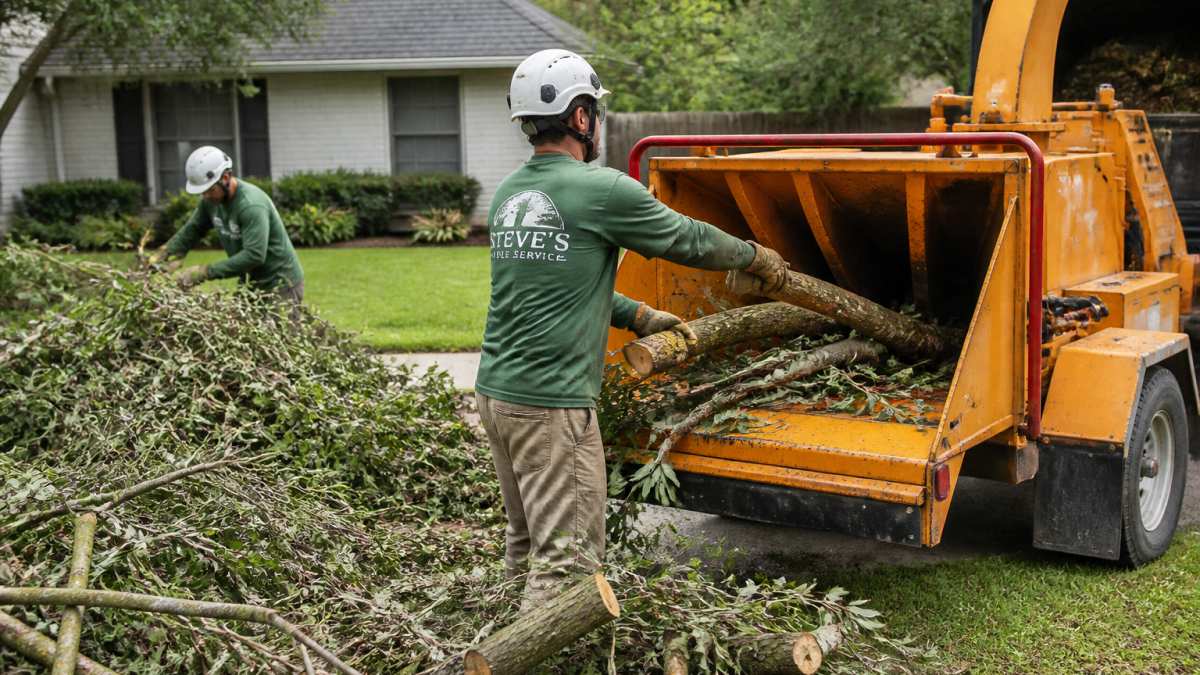
A typical cleanup covers:
- Branches and limbs cut from the canopy
- Logs from the trunk, cut into movable lengths
- Brush and twigs raked from the lawn
- Sawdust and wood chips from cutting and chipping
- Loose leaves left after the work
What most guides miss is the difference between “we cut it” and “we haul it.” Some crews cut the tree and leave the wood in a pile by the curb. Ask before you sign.
Branches, Limbs, and Logs
Branches and limbs are the easy part. Most crews chip them on site and haul the chips away or leave them for you. Logs are different. A big trunk produces heavy sections that need a truck, a winch, or a lot of muscle.
Many homeowners choose to keep the wood for firewood or a fire pit. If you want it, say so early. Otherwise, expect the crew to load and haul it off as part of the cleanup.
Wood Chips and Sawdust
Wood chips are a gray area. Some companies leave a neat pile for your garden beds. Others haul everything away. Sawdust gets raked up with the rest of the fine debris.
If you want the chips, ask for them. If you don’t, make sure the quote says “haul away all debris.” That one line prevents a weekend of raking.
Is Cleanup Included in a Tree Removal Quote?
Cleanup is often included in a tree removal quote, but not always. The only way to know is to read the quote line by line and ask one direct question: “Does this include hauling everything away?”
The word removal can mean the tree comes down. To see the full tree removal service and request a free estimate, visit the removal page. It doesn’t promise the mess leaves with it.
When you review a quote, check for these:
- A line that says debris hauling or cleanup included
- Whether the stump is ground or left in place
- Where the crew will stack or dump the wood
- Whether wood chips stay or go
- Any extra charge for hauling large logs
If stump grinding isn’t spelled out, don’t assume it’s part of the deal. Our guide on whether stump grinding is included in tree removal explains what to check.
What to Do With Fallen Tree Branches After a Storm
Storm cleanup starts with safety, not raking. Fallen branches can hide downed power lines, and a limb under tension can snap back when you cut it. Before you touch anything, look up and look around.
Here’s a possible order:
- Check for power lines. If a branch touches a line, call your utility and stay back.
- Photograph the damage for your insurance company.
- Clear small twigs you can safely pick up by hand.
- Leave large limbs for a crew with the right equipment.
- Pile debris near the curb only if your city allows it.
A common mistake is dragging heavy limbs alone. Limbs can roll, and chainsaws kick back. If the branch is bigger than your arm, it’s a job for a professional.
Storm Debris Cleanup: What Crews Handle and What They Don’t
Storm debris cleanup covers fallen limbs, broken branches, and downed trees, but the scope depends on where the debris sits and what it is touching. The scope of cleanup depends on where the debris sits and what it is touching.
Here is the practical split:
- Crews handle: fallen trees on your property, broken limbs in the yard, brush piles, and hauling.
- Utilities handle: anything touching power lines, including limbs resting on service drops.
- Cities handle: debris left at the curb, if a pickup program is running.
Hazardous Debris: What to Leave Alone
Some storm debris is dangerous even to approach. Leave these for a professional or the utility:
Get a Free Tree Service Estimate →
- Limbs resting on or near power lines. Assume any line is live. Keep everyone, including pets, well back and call the utility.
- Hanging or broken limbs still attached to the tree. A limb under tension can snap back unpredictably when cut, a hazard known as a “widow-maker.”
- Leaning trees and split trunks. A tree that has shifted may still be settling, and cutting it can trigger a fall.
- Root balls lifted out of the ground. The root plate can flip back into its hole when the trunk is cut.
- Debris blocking a driveway or access path where heavy equipment will need to pass.
Never cut a limb that is touching a power line, and never pull debris out from under a leaning tree. If the debris is larger than your arm or anywhere near a line, call a professional.
Documenting Damage for Insurance
Before cleanup begins, photograph and video the damage from several angles, including close-ups of any structures that were hit. Keep receipts and any written estimates. Most homeowner policies treat tree removal differently depending on whether the tree hit a structure, blocked a driveway, or simply fell in the yard, so a clear record helps when you file a claim.
Timing and Booking After a Storm
Crews book fast after a major storm. Call early, even if you are not sure you need help yet, and ask to be placed on a list. When you call, have these details ready:
- The number and approximate size of fallen trees or large limbs
- Whether any debris is near power lines or structures
- Whether equipment can reach the debris from the street
- Whether the debris is blocking access
If your yard is buried after a storm, Steve’s Tree Service LLC offers storm cleanup and free estimates.
Municipal Pickup vs. Private Removal
Which one fits depends on your pile, your timeline, and how much heavy lifting you can safely do yourself.
Here is the practical split most homeowners need to understand:
| Factor | Municipal Pickup | Private Removal |
|---|---|---|
| Who does the work | You drag debris to the curb | Crew cuts, loads, and hauls from the yard |
| Typical timing | Scheduled route or weeks after a storm | Usually days, often same-week |
| Size and volume limits | Strict branch length, bundle diameter, and pile limits | Handles large logs and full trees |
| Placement rules | Curb or alley only, separated by material type | Crew removes from wherever debris sits |
| Separation requirements | Branches, leaves, and logs often must be kept separate | No separation needed |
| Best for | Small storm brush and bagged leaves | Big limbs, full trees, and hazardous debris |
What Municipal Programs Typically Require
Most city and county yard-waste programs publish a set of rules that catch homeowners off guard. Common requirements include:
- Branch length and diameter limits. Many programs cap branches at a set length and diameter, and reject anything larger.
- Bundling and bagging. Loose brush often must be tied in bundles or placed in paper yard-waste bags, not plastic.
- Separation by material. Leaves, branches, and logs frequently go in separate piles or containers.
- Set-out timing. Debris usually must be placed at the curb no earlier than a specified window before pickup day.
- Exclusions. Stumps, root balls, and dirt are commonly excluded from curbside collection.
A quick call to your city office or a look at the public works website tells you the current rules. Many towns pause regular yard-waste pickup after a major storm and announce a separate storm-debris route, so confirm before you drag anything to the curb.
When Private Removal Makes More Sense
Private removal is the better fit when:
- The debris includes large trunk sections or logs that exceed municipal size limits.
- The pile is too far from the curb for you to move safely.
- You need the debris gone quickly, for example, before a real estate closing or after storm damage.
- The debris is hazardous, such as limbs near power lines or trees under tension.
Ask your municipality two questions before you rely on curbside pickup: “Is there a storm-debris route running right now?” and “What are the branch length and bundle limits?” The answers decide whether you need a private crew at all.
A junk-removal service is a third option for non-organic debris mixed into the pile.
Your Tree Service Cleanup Checklist Before Hiring
Before you hire anyone, run this checklist. It takes ten minutes and saves a lot of grief.
- Ask: “Is debris hauling included in the quote?”
- Confirm the crew is insured and can show proof
- Ask where the wood and chips will go
- Get the cleanup terms in writing
- Confirm the service area covers your address
- Ask about stump grinding and any extra charge
- Read recent reviews from real customers
- Get a free estimate before work starts
For a deeper walkthrough, our guide on how to find reliable tree services breaks the vetting process into clear steps. Ask what “clean” means to them.
Get a Free Cleanup Estimate From Steve’s Tree Service LLC
Weatherford homeowners trust Steve’s Tree Service LLC for safe tree removal, professional tree trimming, and dependable cleanup. With over 12 years of experience, Christian values, and 73+ five-star Google reviews, we take pride in treating every property like our own.
One customer, Betsy S., put it simply: “He does great work, professional and takes care of all the mess.”
Christian-Owned – 5-Star Rated – Free Estimates
Frequently Asked Questions
Do tree companies remove debris after cutting down a tree?
Ask whether hauling is part of the quote, what happens to wood chips, and whether stump grinding debris is included.
Can I keep the wood after a tree is removed?
Yes, many homeowners choose to keep the wood for firewood, raised garden beds, or landscaping. Confirm the arrangement with the tree service before the job.
Is it safe to move storm-damaged branches myself?
For storm debris cleanup, keep yourself clear of downed lines and call a professional service for anything tangled, heavy, or near your home.
How do I know whether cleanup is included in a tree service estimate?
Read the estimate line by line and look for words like haul away, debris removal, and site cleanup. Ask directly what is included and what costs extra, such as stump grinding or wood chip removal. Steve’s Tree Service LLC offers free estimates.
Storm damage doesn’t wait, and neither should your cleanup plan. If you’re staring at a pile of limbs and wondering where to start, let a crew that has done this for over a decade take it from here. Steve’s Tree Service LLC offers free estimates, thorough property cleanup, and honest answers about what’s included. Contact Steve’s Tree Service LLC and get started with a free cleanup estimate today.
