
Last Updated: October 26, 2026
Quick Summary
Storm cleanup involves safely removing fallen trees, branches, and debris while protecting yourself from hazards like downed power lines and contaminated floodwater. Prepare before storm season by gathering safety gear and tools, then follow a careful sequence that prioritizes checking for electrical dangers, wearing protective equipment, and knowing when to call a professional.
- Downed power lines are the single most dangerous hazard after a storm; stay back at least 10 feet and call your utility company immediately.
- Essential safety gear includes heavy-duty work gloves, safety boots, eye protection, long sleeves and pants, and a hard hat or respirator depending on conditions.
- Mold can start growing within 24 to 48 hours of water exposure, so dry wet areas quickly using fans, dehumidifiers, and open windows.
- Call a professional tree service if a tree leans toward your house, branches touch power lines, or you need a chainsaw to remove debris.
- Document all storm damage with photos and video before making repairs, and contact your insurance company as soon as it is safe to do so.
Table of Contents
- Understanding Storm Cleanup and Why Preparation Matters
- Storm Cleanup Safety Tips Every Homeowner Should Know
- Creating a Storm Cleanup Checklist Before Damage Strikes
- Handling Fallen Tree Branch Cleanup Safely
- When to Call a Tree Service After a Storm
- Documenting Damage and Protecting Your Home
- Getting a Free Estimate for Professional Storm Cleanup
- Frequently Asked Questions
Understanding Storm Cleanup and Why Preparation Matters
A storm can strike fast and leave your property in chaos. Fallen trees, broken branches, scattered debris, and damaged structures create immediate safety hazards.
Most first-time homeowners underestimate the dangers that come after severe weather passes.
This guide covers the safety steps to take, the tools to gather in advance, and when it’s time to call a professional tree service.
Storm Cleanup Safety Tips Every Homeowner Should Know
Your safety comes first when dealing with storm damage. Never rush into cleanup without checking for hazards, since the most dangerous mistakes happen when homeowners skip basic safety steps.
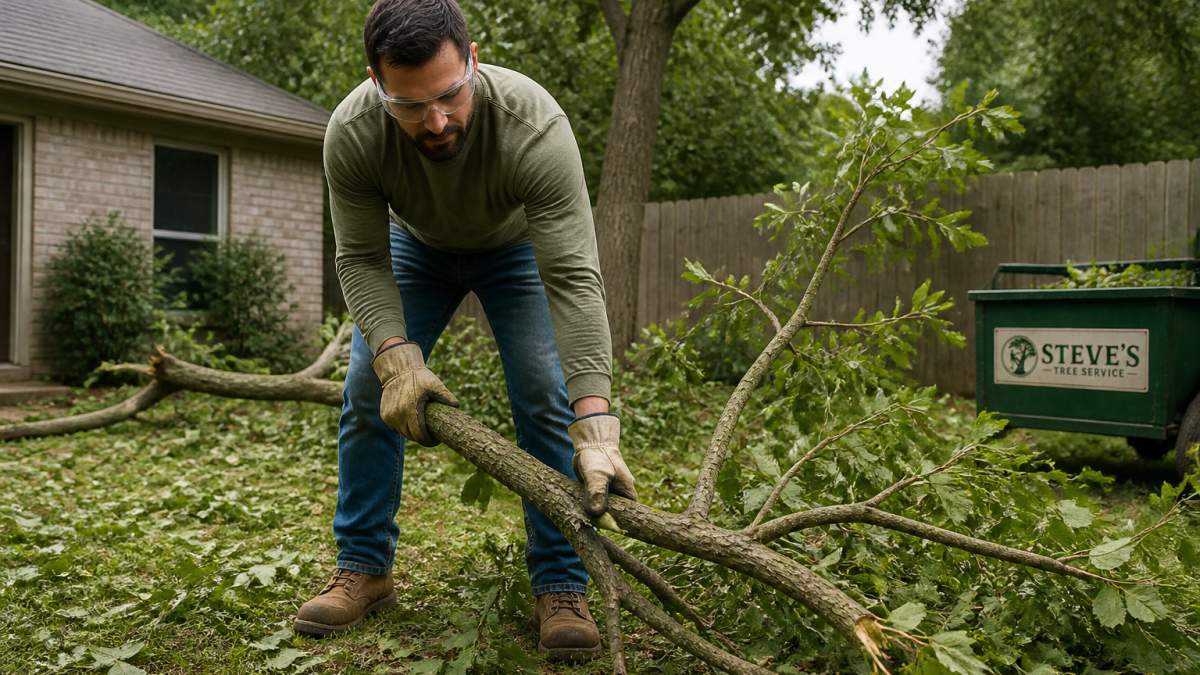
Assessing whether it is safe to go outside
Before you step outside after a storm, pause and check for obvious dangers like hanging branches, tilted trees, or debris blocking walkways.
Ask yourself these questions:
- Are power lines down or sagging?
- Are trees leaning toward your house or neighbors’ homes?
- Is the ground soft or flooded?
If you answer yes to any of these, wait for professionals. Downed power lines are deadly, unstable trees can fall without warning, and floodwater carries hidden hazards and contamination.
Checking for downed power lines and electrical hazards
Downed power lines are the single most dangerous hazard after a storm.
Stay back at least 10 feet from any downed power line, even one draped across a tree or fence, and call your local utility company to report it.
Watch for these electrical dangers:
- Wet debris near power lines
- Damaged outdoor outlets or light fixtures
- Exposed wiring on fallen branches
If you’re unsure about any electrical hazard, call your utility company or an electrician. It’s not worth the risk.
Wearing protective clothing and safety gear
Proper gear protects you from cuts, splinters, and contamination. Never work in storm cleanup without it.
Essential safety gear includes:
- Work gloves (heavy-duty leather or rubber)
- Safety boots with thick soles (protects against nails and sharp objects)
- Eye protection (safety glasses or goggles)
Don’t skip gear because the job seems small. A single nail or shard of glass can cause serious injury, and contaminated floodwater can carry bacteria and toxins.
Creating a Storm Cleanup Checklist Before Damage Strikes
The best time to prepare for storm cleanup is before a storm arrives. Gathering supplies and making a plan now means you’ll act fast and safely, but a tool list is only half the job. You also need a clear order of operations and firm stop-work rules so you don’t freeze or take dangerous shortcuts.
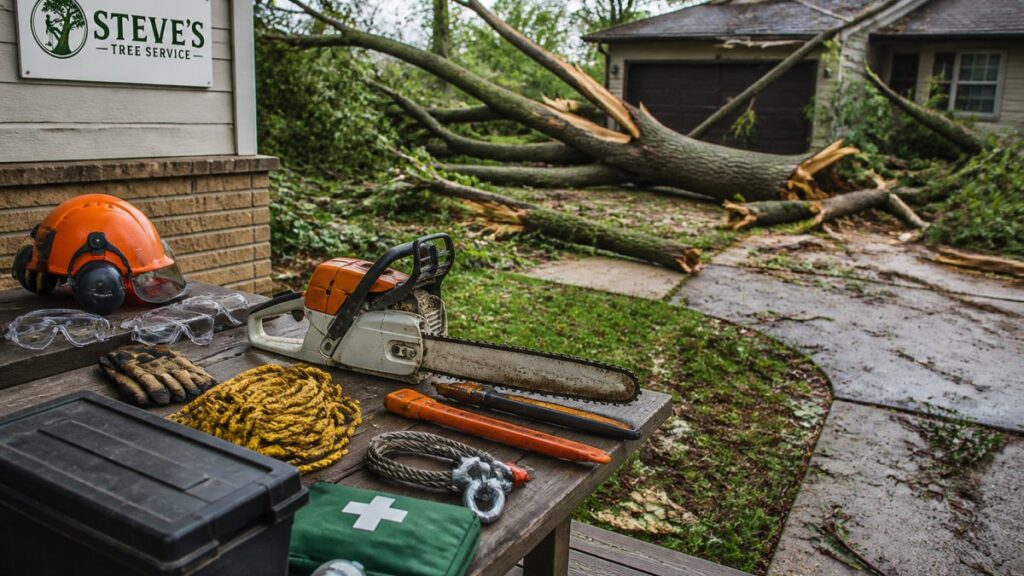
Essential tools and supplies to gather
Stock these items before storm season:
- Sturdy rake and shovel
- Pruning saw or chainsaw (only if you are trained and comfortable using one)
- Heavy-duty work gloves and safety boots with thick soles
Store these items in one accessible place, such as a labeled bin in the garage, so you won’t waste time hunting for gear.
Your ordered cleanup sequence (and when to stop)
A common mistake is hauling branches the moment the wind stops. Instead, work through this sequence and stop at any red flag.
- Check for life safety first. From inside, look for downed power lines, leaning trees, and flooded areas. If you see any, stay inside and call the utility company or emergency services. Do not go outside.
- Confirm the storm has fully passed. Listen to local alerts and make sure no additional severe weather is forecast. Lightning and flash flooding can continue after the main storm.
- Put on all safety gear before stepping outside. Gloves, boots, eye protection, long sleeves, and long pants are non-negotiable.
- Walk the perimeter and mark hazards. Use caution tape to flag downed lines, unstable trees, broken glass, and holes. Do not touch anything you have flagged.
- Clear only small, safe debris. Remove branches you can lift without strain, and never cut anything under tension or near power lines.
- Tarp openings and document damage. Cover broken windows or roof damage with tarps, then photograph everything before making temporary repairs.
- Move to water removal and drying. Standing water and wet materials must be addressed within 24 to 48 hours to prevent mold.
Stop-work conditions: Stop immediately and call a professional if you see a downed power line, a tree leaning toward a structure, water rising, a gas smell, or any debris you cannot safely move. Never work alone with a chainsaw, and never enter floodwater.
Preparing your property in advance
Before storm season, take steps to reduce damage risk:
- Trim dead or weak branches from trees near your house. This is a job for a professional if branches are near power lines or above the roof.
- Remove loose outdoor items such as patio furniture, trash cans, and decorations that can become projectiles.
- Secure outdoor structures like sheds, fences, and awnings.
- Clear gutters and downspouts so water drains away from the foundation.
- Document your property with photos and a video walkthrough for insurance claims.
- Review your insurance policy and keep it in a waterproof folder or digital copy.
- Identify a safe room in your home and a family meeting place in case you need to evacuate.
Trimming weak branches now prevents them from becoming dangerous debris later, removing loose items keeps them from becoming projectiles, and a written plan means everyone knows what to do first.
Work through this sequence in order and stop immediately if you encounter any red flag.
| Step | Action | Stop if |
|---|---|---|
| 1 | Check for life safety from inside | Downed power lines, leaning trees, or flooded areas present |
| 2 | Confirm storm has fully passed | Additional severe weather is forecast |
| 3 | Put on all safety gear | You lack gloves, boots, eye protection, or long sleeves |
| 4 | Walk perimeter and mark hazards | You find downed lines, unstable trees, or broken glass |
| 5 | Clear only small, safe debris | Debris is under tension or near power lines |
| 6 | Tarp openings and document damage | Structural damage to roof, walls, or windows exists |
| 7 | Move to water removal and drying | Standing water or wet materials are present |
Handling Fallen Tree Branch Cleanup Safely
Fallen branches and trees are the most common storm damage, and one of the most dangerous things to handle without proper training.
Get a Free Tree Service Estimate →
Clearing debris without risking injury
Never cut down a fallen tree or remove large branches yourself. Trees under tension can snap and cause serious injury, and branches tangled in power lines are especially dangerous.
For small branches you can safely handle:
- Clear the area of people and pets
- Put on all safety gear (gloves, boots, eye protection)
- Remove branches one at a time, smallest first
- Drag branches to a pile away from the house
- Cut branches into manageable pieces for disposal
- Stack debris neatly for pickup or disposal
For large fallen trees or branches near power lines, call a professional immediately. This is not a DIY job.
Managing broken glass, nails, and sharp objects
Storm debris often contains hidden hazards. Broken glass, nails, and sharp metal pieces cause deep cuts and infections.
When clearing debris:
- Wear heavy-duty gloves at all times
- Watch for nails sticking out of wood
- Don’t touch broken glass with bare hands
Contaminated debris, especially from flooded areas, may carry bacteria and toxins (the CDC). Wear a respirator, wash your hands thoroughly after cleanup, and clean any puncture wound or deep cut while watching for infection.
When to Call a Tree Service After a Storm
Knowing when to stop and call a professional is the smartest decision you can make, since many homeowners try to handle too much alone and end up injured.
Call a tree service immediately if:
- A tree is leaning toward your house or a neighbor’s home
- Branches are touching or tangled in power lines
- The tree is dead or diseased (weakened wood is unpredictable)
Professional arborists have the training, equipment, and insurance to handle dangerous situations safely, removing fallen trees, clearing debris, and assessing whether other trees on your property are at risk. Learn about emergency storm tree cleanup services to understand what professional help includes.
Weatherford homeowners trust Steve’s Tree Service LLC for safe tree removal, professional tree trimming, and dependable cleanup. With over 12 years of experience, Christian values, and 73+ five-star Google reviews, we take pride in treating every property like our own. Learn about our emergency tree service response to understand how quickly we can help when storms strike.
Documenting Damage and Protecting Your Home
After clearing immediate hazards, document everything for insurance and protect your home from secondary damage. Water intrusion and mold can cause more long-term harm than the storm itself, so this step is urgent.
Photograph and record the damage
Take photos and video of:
- Fallen trees and branches, including where they landed
- Damage to your roof, siding, windows, and doors
- Debris piles and any standing water
Write down the date, time, and type of storm, note which areas were affected, and keep receipts for cleanup supplies or temporary repairs. If you tarp a roof, photograph the damage before and after so your insurer can see what was storm-related.
Handle floodwater and contaminated materials safely
Floodwater can carry sewage, chemicals, and bacteria that cause illness, so treat everything it touched as contaminated (the CDC).
- Wear rubber boots, gloves, and eye protection when working near floodwater.
- Do not wade into standing water, especially if you see downed power lines nearby.
- Discard porous materials that soaked up floodwater, such as drywall, insulation, carpet, and upholstered furniture. These are hard to clean and can grow mold quickly.
Dry your home fast to prevent mold
Mold can start growing within 24 to 48 hours of water exposure, so dry wet areas quickly and completely (the CDC).
- Open windows and doors when weather permits to increase airflow.
- Use fans and dehumidifiers to move air and pull moisture out of the air.
- Remove wet items such as rugs, cushions, and cardboard boxes.
If you see or smell mold, or if water damage is extensive, call a professional mold remediation service. Do not attempt to clean large mold areas yourself, as disturbing mold can release spores into the air.
Work with your insurance company
Contact your insurer as soon as it is safe. Ask what they need for your claim and whether they require an adjuster visit before permanent repairs.
For structural damage such as roof, walls, or windows, take photos but do not attempt repairs yourself. Call a licensed contractor or your insurance company for guidance. Weatherford homeowners trust Steve’s Tree Service LLC for safe tree removal, professional tree trimming, and dependable cleanup.
Getting a Free Estimate for Professional Storm Cleanup
When storm damage is extensive or involves trees, professional cleanup is the safest choice. Request a free estimate for professional storm cleanup to understand what professional help costs and what it includes.
A good tree service will:
- Assess all damage to your property
- Explain what work is needed
- Provide a clear estimate
Don’t hesitate to get multiple estimates. Ask each service about their experience with storm damage, their safety record, and how they handle debris disposal. Check online reviews and ask for references.
Frequently Asked Questions
What should you do before cleaning up after a storm?
Before you begin storm cleanup, assess whether it’s safe to go outside by checking for downed power lines, unstable structures, and floodwater. Put on protective gear including work gloves, safety boots, eye protection, and long sleeves. Have a plan for where debris will go and what tools you’ll need. If trees are near power lines or your home is structurally damaged, wait for professionals to assess the situation first.
How do you safely handle fallen tree branches?
Start by removing smaller branches first and work toward larger limbs. Use proper cutting tools like a chainsaw or handsaw, never pull branches with your bare hands. Watch for sharp objects, nails, and broken glass mixed in debris. Wear protective equipment throughout. If branches are tangled in power lines, touching a roof, or too large to safely move, contact a professional tree service rather than attempting removal yourself.
When should you call a professional for storm-damaged trees?
Call a professional tree service immediately if a tree is leaning toward your house, branches are touching power lines, the tree is dead or unstable, or the damage is extensive. Professional arborists have the equipment and training to safely remove hazardous trees and handle debris. Weatherford homeowners trust Steve’s Tree Service LLC for safe tree removal and storm cleanup with over 12 years of experience and 73+ five-star reviews.
What tools should you have ready for storm cleanup?
Essential tools include a rake for gathering debris, a shovel for moving soil and smaller materials, work gloves, safety boots, eye protection, and a respirator if dust is heavy. Have a yard cart or wheelbarrow for transporting debris. For larger branches, a handsaw or chainsaw may be needed, though chainsaws require proper training and safety precautions. Keep first aid supplies nearby in case of minor injuries during cleanup.
Storm cleanup is hard work, but it doesn’t have to be dangerous. Prepare now, follow safety steps, and know when to call professionals. Steve’s Tree Service LLC has helped hundreds of homeowners safely recover from storm damage with fast response, professional expertise, and thorough cleanup that leaves your property restored.
