
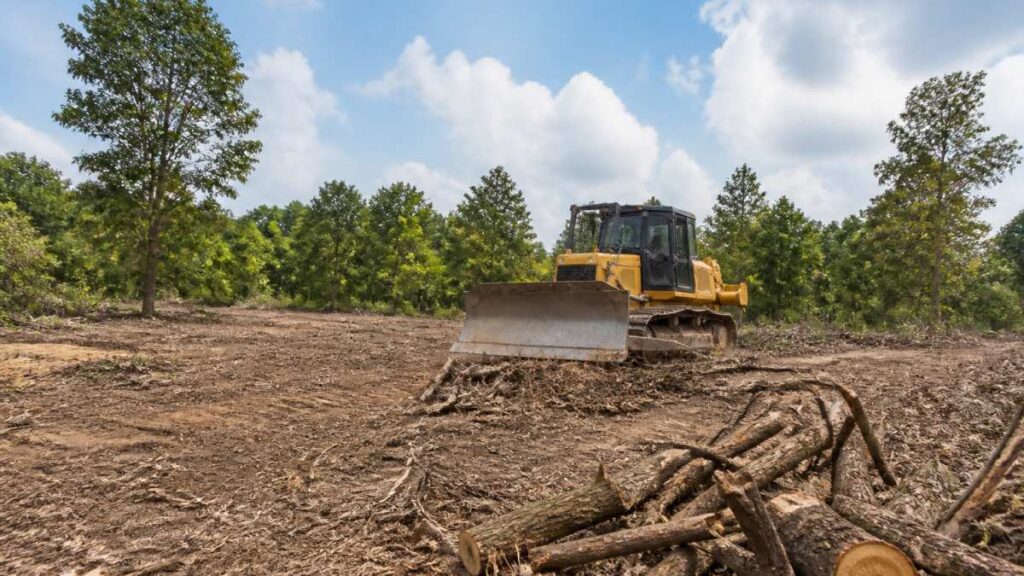
Table of Contents
- How Much Does It Cost to Clear Land? 2026 Price Ranges
- Land Clearing Cost Per Acre: What Drives the Number
- Cost to Clear Heavily Wooded Land vs. Light Brush
- Land Clearing Timeline: How Long Your Project Takes
- Land Clearing vs. Grading and Site Preparation
- Choosing a Clearing Method by Site Conditions
- Frequently Asked Questions
Last Updated: October 5, 2026
How Much Does It Cost to Clear Land? 2026 Price Ranges
The average cost to clear land depends on what is growing on it, how steep the ground is, and how far equipment must travel.
Land clearing cost is the total price to remove trees, brush, stumps, and undergrowth from a parcel and leave the ground in a usable condition. It is not the same as grading, which reshapes the soil after clearing is finished.
Average Cost Per Acre vs. Per Square Foot
Most contractors price by the acre for larger parcels and by the square foot for small residential lots. A lightly brushed quarter-acre lot is usually a flat fee, while wooded acreage is quoted per acre because equipment time scales with density.
| Parcel Type | Typical Pricing Basis | Main Cost Driver |
|---|---|---|
| Small residential lot under 0.5 acre | Flat project fee or price per square foot | Tree count and access |
| Light brush, 1-5 acres | Price per acre | Undergrowth thickness |
| Heavily wooded acreage | Price per acre | Tree size and stump removal |
| Steep or wet terrain | Price per acre with terrain surcharge | Slope and site accessibility |
For a precise number, request a free estimate rather than relying on a national average, because regional pricing and local disposal fees swing widely.
Land Clearing Cost Per Acre: What Drives the Number
The cost per acre is set by equipment hours, not acreage alone. A crew clearing flat pasture with a skid steer finishes an acre far faster than one working a slope with mature hardwoods requiring an excavator and hand felling.
Typical Per-Acre Ranges by Vegetation and Terrain
Use these ranges as a planning benchmark, not a quote; your number moves with local labor rates, disposal fees, and crew travel distance.
| Site Condition | Typical Cost Per Acre | Dominant Cost Driver |
|---|---|---|
| Light brush, flat ground, mulch in place | $500 – $1,500 | Machine hours, single pass |
| Medium density, mixed small and medium trees | $1,500 – $3,500 | Felling time, partial stump work |
| Heavily wooded, mature hardwoods | $3,000 – $6,000+ | Tree size, stump removal, hauling |
| Steep slope or wet ground | Add 25% – 50% | Slower cycles, hand work, matting |
| Tight access (gate, fence, narrow drive) | Add 10% – 25% | Staging, smaller machines, extra trips |
A quarter-acre residential lot with scattered trees is usually a flat project fee rather than per acre, because equipment time does not scale cleanly below about half an acre.
The Three Line Items That Move the Number
Labor. A two- or three-person crew runs at a blended hourly rate. A wooded acre taking 16 crew hours costs roughly twice as much in labor as a brush acre taking 8.
Equipment. A forestry mulcher, dozer, and excavator each carry a different hourly cost, dictated by tree size and terrain.
Hauling and disposal. Debris mulched in place costs nothing to move; debris hauled off site is priced per load, and a heavily wooded acre can generate several loads.
A Worked Example: One Acre, Medium Density
Here is how the math typically breaks down for one acre of medium-density land with mixed trees, flat ground, and debris hauled off site:
- Equipment hours: 10 – 14
- Crew hours: 20 – 28
- Debris loads: 3 – 5
The total lands in the $1,500 – $3,500 band above. If the same acre were heavily wooded with mature hardwoods, equipment hours roughly double, debris loads double or triple, and the total moves into the $3,000 – $6,000+ band.
Ask your contractor how many equipment hours they estimate for your acreage, not just the total price. Hour estimates are far harder to pad than a lump sum, and they make it easy to compare two bids on the same footing. If a bidder will not break out hours, loads, and stump counts, treat the number as a placeholder.
Why Regional Pricing Swings So Widely
Two forces drive most of the regional spread: local labor cost, since a crew in a high-cost metro bills a higher hourly rate than one in a rural county, and disposal, since tipping fees vary by state and facility. Expensive disposal pushes contractors toward mulching in place, which changes the scope of the quote, not just the price. When comparing bids, confirm they assume the same disposal method, because a mulch-in-place bid and a haul-everything bid are not the same job.
Cost to Clear Heavily Wooded Land vs. Light Brush
Clearing heavily wooded land costs substantially more than clearing light brush, because mature trees add felling, stump removal, and debris disposal to every acre.
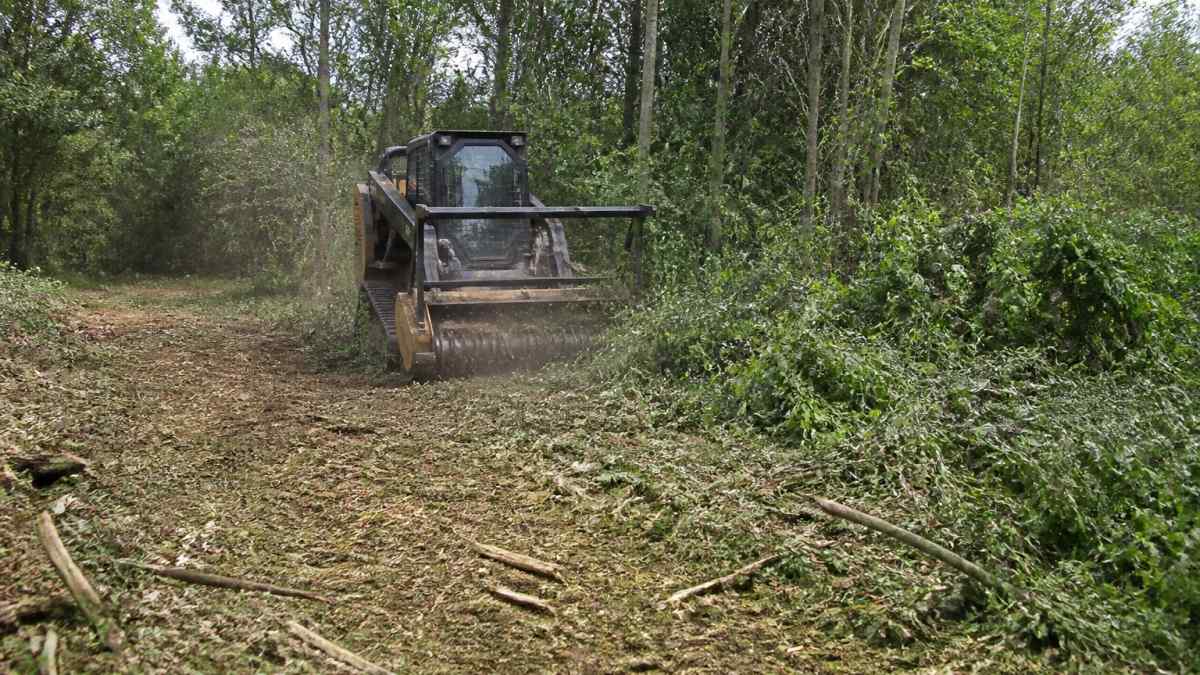
(/services/tree-removal-weatherford-tx/) | Felling and bucking of standing trees | Per tree, by size |
| Brush clearing | Mulching or cutting undergrowth | Per acre |
|---|---|---|
| Stump removal | Grinding below grade | Per stump, by diameter |
| Debris removal | Hauling and disposal fees | Per load |
| Grading and site prep | Rough leveling after clearing | Per hour or per acre |
The most common mistake we see is a homeowner accepting a low bid that excludes debris hauling and stump removal. Those two items alone can add a large amount to the final bill, and the “cheap” quote often stops being cheap once they are added back in.
Land Clearing Timeline: How Long Your Project Takes
A typical residential clearing project takes one to three days, while larger wooded acreage can run a week or more, depending on acreage, density, and how much debris must be hauled off site versus mulched in place.
Small lots with light brush are often finished in a single day; heavily wooded parcels take longer because felling, stump removal, and hauling happen in stages.
Land Clearing vs. Grading and Site Preparation
Land clearing removes vegetation, while grading and site preparation shape the bare ground afterward. These are separate phases, and conflating them is a common source of budget surprises.
- Land clearing: removes trees, brush, stumps, and debris
- Grading: cuts and fills soil to create a level or sloped surface
- Site preparation: compacts, levels, and readies the pad for a foundation, driveway, or build
If your contractor quotes “clearing” only, confirm whether grading is included. For a building pad, it usually is not, and you will need a second phase to make the ground buildable.
Choosing a Clearing Method by Site Conditions
The right clearing method follows the site, not the other way around. Match it to vegetation, soil, access, and what you want the ground to look like when the crew leaves.
Method Comparison by Site Condition
| Method | Best For | Soil Impact | Relative Speed | Relative Cost |
|---|---|---|---|---|
| Forestry mulching | Brush, saplings, small trees; sensitive or erosion-prone ground | Low, leaves mulch mat and root structure | Fast on light growth | Lowest per acre on light brush |
| Dozer clearing | Medium to heavy trees, rough grading needed | High, scrapes topsoil and root zone | Fast on open, flat ground | Mid to high; adds grading value |
| Excavator work | Stumps, root balls, wet or uneven ground | Moderate, targeted digging | Slower, precise | High per hour, but avoids rework |
| Hand clearing | Tight access, protected trees, steep slopes | Lowest, selective removal | Slowest | Highest per tree, lowest site damage |
How to Pick
Start with what is growing. Grasses and saplings point to mulching. Mature hardwoods with large root systems point to a dozer or excavator, because a mulcher cannot grind a two-foot stump below grade.
Then check access. If a gate, fence, or narrow driveway blocks a dozer, the job shifts to a skid steer or hand crew, and the price reflects the smaller machine and slower pace.
What Happens to Trees, Stumps, and Debris
This is where budgets quietly break. Every material on the site has at least two destinations, and each one changes the price:
- Merchantable timber. If trees are large enough, a logger may buy them or remove them at no cost in exchange for the wood, rare on residential lots, common on larger wooded tracts.
- Brush and small trees. Chipping or mulching in place is almost always the cheapest option because nothing leaves the site. Hauling brush off site is priced per load and adds up fast.
- Stumps. Grinding below grade is the standard for a buildable pad. Pulling stumps with an excavator costs more but removes the root ball entirely, which matters if you plan to build or plant over that spot.
A low bid that assumes mulch-in-place when you actually need stumps ground and debris hauled is not a cheaper job, it is a different job. Compare bids on the same scope before you compare the totals.
Quote-Comparison Checklist
Before you sign, get answers to these in writing:
- Which method is assumed, and why?
- Are stumps ground below grade, cut flush, or left?
- Is debris mulched in place, burned, or hauled? How many loads are included?
- Is grading included, or is it a separate phase?
- Is the contractor insured and licensed as required locally?
- What is excluded from the quote?
The three questions that protect your budget: Is stump removal included? Is debris hauled off site? Is grading part of the quote? Get all three answered in writing before work begins.
Frequently Asked Questions
How much does it cost to clear off 1 acre of land?
The average cost to clear land depends on density, terrain, and access. Light brush on flat ground sits at the low end of the range, while heavily wooded acreage with large trees and stumps lands at the high end. Request a site visit so the contractor can measure tree size, slope, and debris volume before quoting.
Do I need a permit to clear land on my property?
Not always, but many jurisdictions require one before you remove trees or disturb soil near wetlands and waterways. Local rules often protect certain tree species and set buffer zones. Confirm requirements with your city or county before work starts, and ask your contractor whether they handle permit paperwork as part of the project.
Does land clearing include stump and root removal?
It depends on the scope you agree to. Basic clearing may only cut vegetation at ground level, leaving stumps behind. Stump grinding, root removal, and debris hauling are frequently priced as separate line items. Ask for a written estimate that states exactly what happens to stumps and whether disposal fees are included.
How long does it take to clear 10 acres of land?
The land clearing timeline varies with density, method, and weather. Light brush on flat acreage moves quickly, while heavily wooded land with large trees takes considerably longer per acre. Ask your contractor for a phased schedule and build in buffer time for rain, which can pause heavy equipment for days at a time.
What factors affect the average cost to clear land?
The biggest cost factors are vegetation density, tree size, terrain and slope, site accessibility, soil conditions, and debris disposal. Distance to the nearest disposal site and whether you need grading afterward also move the number. A flat, open lot with small trees costs far less per acre than a sloped, heavily wooded parcel with limited equipment access.
How can I get an accurate land clearing estimate?
Get at least two or three written estimates, each itemizing labor, equipment, disposal, and any grading. Walk the property with each contractor so they see the same conditions. Compare line items rather than totals, confirm insurance and references, and ask what could change the price after work begins. A free on-site estimate is the most reliable starting point.