
Table of Contents
- How to Tell If a Tree Is Hazardous: A Practical Risk Checklist
- Warning Signs of a Dangerous Tree: What to Look For First
- Leaning Tree Danger: When a Lean Becomes a Threat
- Root Damage and Soil Movement Around the Base
- Decay, Fungus, and Disease: Hidden Structural Weakness
- Tree Inspection After a Storm: What Changes Overnight
- Dead Tree Removal: When Preservation Is No Longer Safe
- Conclusion: When to Call a Professional Arborist
- Frequently Asked Questions
Last Updated: October 4, 2026
How to Tell If a Tree Is Hazardous: A Practical Risk Checklist
A hazardous tree is a tree with a structural defect that could cause it to fall or drop limbs onto people or property. At Steve’s Tree Service LLC, we’ve spent over 12 years helping homeowners in Weatherford and Parker County read those warning signs before a storm does it for them.
The stakes are real. A dead or leaning tree near your home can fail without warning, and the damage isn’t limited to a crushed fence.
Below, we’ll walk through the seven warning signs that matter most, plus a simple checklist you can run this weekend. But first, here’s what most guides get wrong: they treat every dead branch as an emergency.
A tree is hazardous when a defect (dead wood, cracks, root failure, or decay) combines with a target (your house, car, or family). No target, no hazard. No defect, no hazard. You need both.
What makes a tree hazardous?
A tree becomes hazardous when it has a structural weakness that could cause it to fail, plus something in the fall zone worth protecting. A dead limb over an empty field is a low priority. The same limb over your driveway is a serious risk.
Use this quick checklist to score any tree on your property:
- Are there dead, broken, or hanging branches overhead?
- Is the trunk cracked, split, or hollow?
- Has the tree started to lean, or is an existing lean getting worse?
- Is the soil around the base heaved, cracked, or spongy?
Two or more checks means it’s time to call a professional. One check with a clear target still warrants a look.
Warning Signs of a Dangerous Tree: What to Look For First
The clearest warning signs of a dangerous tree are visible from the ground. You don’t need special tools to spot most of them.
Start with a slow walk around the tree. Look up, then look down. Most problems show up in the canopy first, then at the base.
Dead, Broken, and Hanging Branches
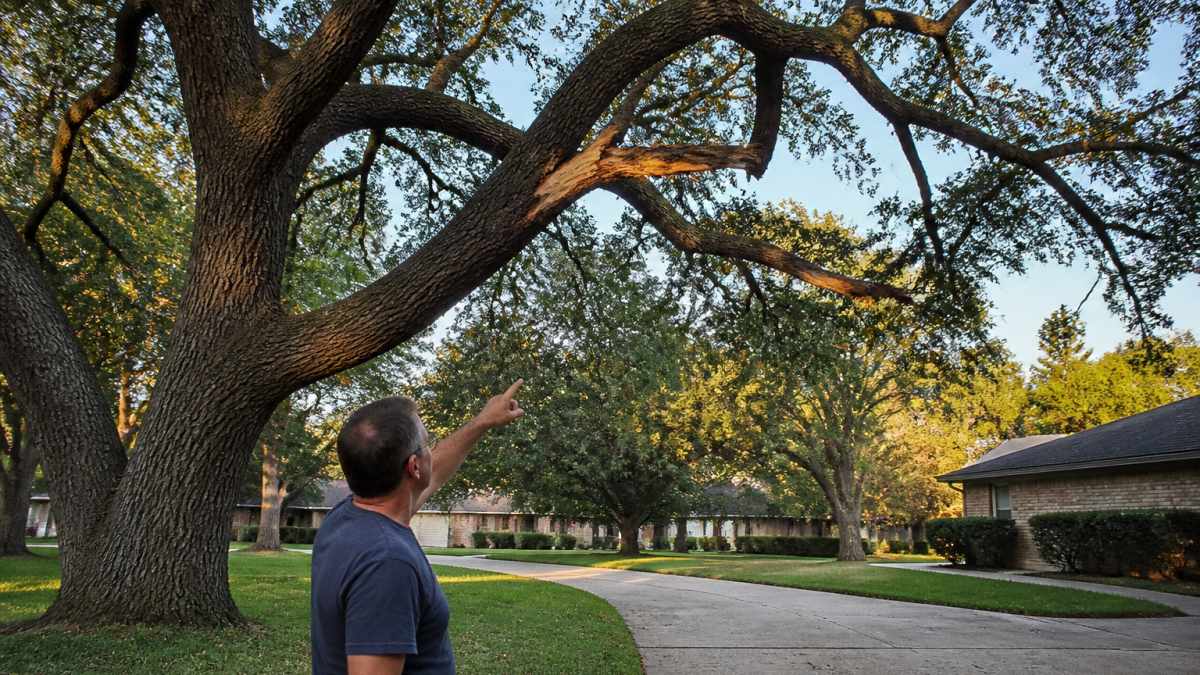
Dead limbs are the most common hazard we see. A dead branch has no leaves in season, looks dry and brittle, and may have peeling bark. If it’s hanging by a thread, it can drop at any time, even on a calm day.
Watch for these specific red flags:
- Bare patches in the canopy during the growing season
- Dead limbs that snap easily when you tap them with a pole
- Hanging branches caught in lower limbs, waiting to fall
- Falling limbs after every minor wind event
Dead wood over a roof, driveway, or walkway is a top priority. A falling tree or limb doesn’t need a storm to cause property damage.
Trunk Cracks, Splits, and Cavities
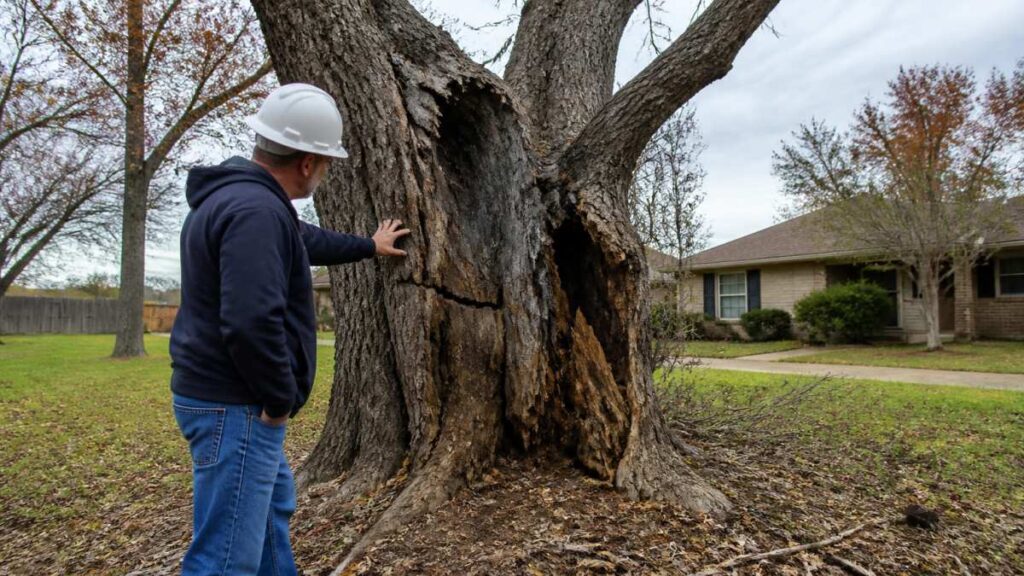
Trunk defects are harder to spot but more serious. A trunk crack or split means the tree’s main support column is failing. Cavities and a hollow trunk mean decay has eaten into the wood that holds the tree up.
Check for:
- Vertical cracks running up the trunk
- Deep splits where two leaders meet
- Soft spots or holes you can poke a screwdriver into
- Fungus or mushrooms growing on the bark
A tree with a major trunk defect and a target nearby is a candidate for removal, not trimming.
Leaning Tree Danger: When a Lean Becomes a Threat
A leaning tree is dangerous when the lean is new, getting worse, or paired with soil movement. A tree that has leaned the same way for decades is usually fine.
The key is change. Take a photo of the tree today. Compare it in a month.
Signs a lean has turned serious:
- Sudden lean after a storm or heavy rain
- Worsening lean over weeks or months
- Exposed roots lifting out of the ground on the tension side
- Soil heaving or cracking around the base
A leaning tree over a house or power line needs a professional arborist fast. This is not a job for a chainsaw and a ladder.
Never try to pull or cable a leaning tree back upright yourself. If the root plate is already failing, the tree can snap or roll onto you. This is one of the most common causes of serious tree-work injuries.
Root Damage and Soil Movement Around the Base
Root damage is the hidden killer. You can’t see a failing root system from the canopy, but the ground tells the story. Roots hold the tree up, and when they fail, the whole tree goes.
Look for these ground-level clues:
- Soil movement or soil heaving around the trunk
- Cracks in the soil radiating out from the base
- Mushrooms or conks growing at the root flare
- Fresh root exposure from erosion or digging
- Spongy, soft ground where the tree meets the soil
Construction, grading, and even a new driveway can sever roots and weaken a tree over years. If you’ve done major digging near a mature tree, watch it closely.
Decay, Fungus, and Disease: Hidden Structural Weakness
Decay is the most common cause of structural weakness we find. By the time you see a mushroom on the trunk, the rot has usually been working for years. Fungus feeds on dead wood, and dead wood doesn’t hold weight.
Other signs of trouble include:
- Disease causing dieback in the canopy
- Insect damage from borers, beetles, or moths
- Bark damage or peeling bark in large patches
- Oozing sap or dark streaks on the trunk
Not every mushroom means removal. Some fungi are harmless. But shelf-like growths at the base, called conks, often point to internal rot. That’s a sign to get an inspection.
Tree Inspection After a Storm: What Changes Overnight
A tree inspection after a storm is the fastest way to catch new hazards. Storms expose weaknesses that were invisible the day before. A tree that stood fine for years can turn into a dangerous tree in one night.
After any major storm, check for:
- New cracks or splits in the trunk
- Fresh lean that wasn’t there before
- Hanging branches caught in the canopy
- Broken branches still attached
- Lifted roots or soil movement at the base
If you see any of these, keep people and pets away from the tree until a pro takes a look. Storm damage often leaves trees unstable for weeks.
Photograph your trees before storm season. When a tree fails after a storm, before-and-after photos help an arborist judge whether the lean or crack is new or pre-existing. It also helps with insurance claims.
Dead Tree Removal: When Preservation Is No Longer Safe
Dead tree removal is the right call when a tree is fully dead, has major decay, or sits within falling distance of a target. A dead tree has no living tissue to heal itself. Once it’s dead, every storm makes it weaker.
But before you schedule anything, the first job is safety, yours and everyone else’s.
What to do immediately when a tree looks hazardous
If a tree on your property shows major defects, take these steps right away:
- Keep people and pets away. Rope off or block the area under the canopy and a little beyond it. A failing tree can drop limbs without warning, even on a calm day.
- Don’t work beneath hanging limbs. Never stand under a cracked trunk, a hanging branch, or a leaning tree to take a closer look or snap a photo.
- Don’t try to fix it yourself. Pulling, cabling, or cutting a compromised tree is how serious injuries happen. Leave the chainsaw on the shelf.
- Call a qualified professional. A certified arborist or licensed tree service can assess the tree and tell you whether it can be saved or needs removal.
- Call the utility first if power lines are involved. Never approach a tree touching or near a power line. Contact the utility and let them handle it.
What you can see from the ground, and what you can’t
Homeowners can spot a lot: dead branches, visible cracks, a new lean, mushrooms at the base, soil heaving. What you can’t see from the ground is what’s happening inside the trunk. Internal decay, root loss below the surface, and the true extent of a cavity require an in-person assessment.
That’s the limit of a do-it-yourself inspection. If a tree has a major defect and a target, the next step isn’t more looking, it’s a professional evaluation.
Monitoring after storms and over time
Hazards aren’t always static. A tree that looked fine last month can change after a storm, a heavy rain, or construction nearby. Check your trees after any major weather event, and compare them to photos you took before the season started.
Some defects are longstanding and non-critical, a tree that has leaned the same way for decades, or a small cavity that hasn’t changed. Others are new and worsening, and those are the ones that warrant attention.
When removal makes sense
Removal is the right call when:
- The tree is dead or mostly dead
- The trunk is hollow or badly decayed
- The tree leans toward a structure or power line
- Limbs are dropping on their own
- The tree sits over a driveway, walkway, or play area
Sometimes a tree can be saved with cabling, bracing, or crown reduction. A good arborist will tell you honestly which path is safer. We’d rather save a tree than remove it, but safety comes first.
Conclusion: When to Call a Professional Arborist
Knowing the signs a tree is hazardous lets you act before a limb does the talking. But there’s a limit to what you can see from the ground.
At Steve’s Tree Service LLC, we offer free estimates and honest assessments. We’ve got over 12 years of experience with hazardous removals, storm cleanup, and thorough property cleanup. If a tree on your property has you worried, don’t wait for the next storm.
USDA Forest Service guidance on tree risk assessment
International Society of Arboriculture on tree risk
FEMA guidance on trees and storm damage
Frequently Asked Questions
What are the warning signs of a hazardous tree?
Look for dead or hanging branches, cracks or splits in the trunk, cavities or hollow areas, mushrooms or fungus at the base, and soil heaving or cracking around the roots. A sudden or worsening lean is another red flag. Any one of these signs means the tree has a structural weakness that could cause it to fall unexpectedly, so have a professional inspect it before the next storm.
Is a dead tree dangerous even if it looks stable?
Yes. A dead tree loses the flexible wood fibers that let a living tree bend in wind, so its limbs and trunk become brittle and can snap without warning. Dead trees also attract borers, beetles, and wood-decay fungus that speed up the breakdown. Even a dead tree that has stood for years can fail in a single storm, which is why dead tree removal is usually the safest choice near homes, driveways, or power lines.
Are leaning trees always hazardous?
No. Some trees grow with a natural lean and stay that way for decades. The danger is a sudden lean or a lean that keeps getting worse, especially when paired with soil heaving, exposed roots, or cracks at the base. A tree that was straight last year and is tilted now has a failing root system. That kind of change calls for an arborist inspection right away.
What should I do if a storm damages a tree on my property?
Stay clear of the tree and anything it is touching, including fences and power lines. Do not try to cut hanging branches yourself. Call a licensed tree service for a tree inspection after a storm, and if a line is down, contact your utility first. A professional can assess whether the tree can be saved with trimming or needs removal, and can handle the cleanup safely.
A hazardous tree won’t wait for a convenient time to fall. If you’ve spotted cracks, a new lean, or dead limbs over your home, get a professional opinion before the next storm. Steve’s Tree Service LLC offers free estimates, fast response for emergency hazards, and a full cleanup that leaves your yard in good shape. We’ve earned 73+ five-star Google reviews from homeowners who trusted us with the trees closest to their homes. Get a quote today and let us make your property safe again.