
Table of Contents
- Assess the Hazard: Is Your Tree a Safety Risk Right Now?
- What to Do Before the Emergency Tree Service Arrives
- Tree on House Removal: Handling Trees That Have Made Contact
- Storm Damage Tree Cleanup: Managing Debris After Removal
- What to Do with Fallen Tree Branches: Sorting and Disposal
- How to Evaluate and Hire an Emergency Tree Service
- Insurance and Documentation: Protecting Your Claim
- Next Steps: Getting Your Property Back to Safe
- Frequently Asked Questions
Last Updated: October 11, 2026
Assess the Hazard: Is Your Tree a Safety Risk Right Now?
Emergency tree removal becomes necessary when a tree poses an immediate safety hazard to people, property, or power lines. Knowing the difference between urgent and routine work can save you money and prevent injury.
Signs of immediate danger
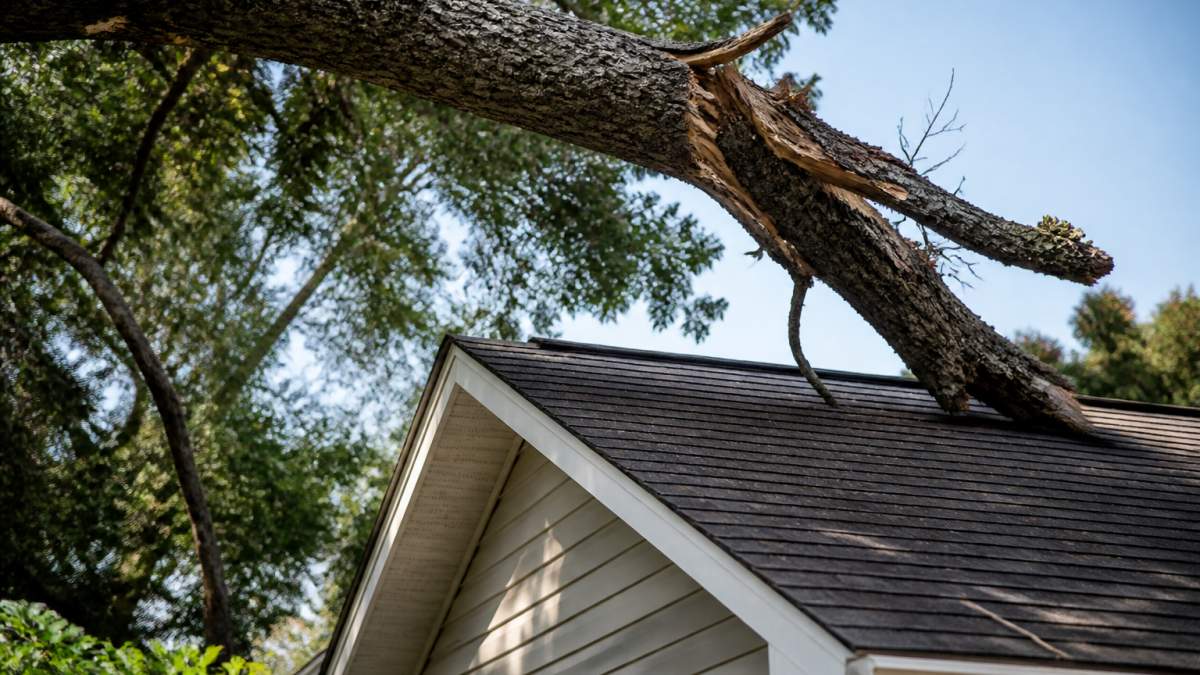
Warning signs demanding urgent attention include: a tree leaning toward your house, large dead branches overhead, visible cracks in the trunk, peeling bark, deep cavities, or partial uprooting. A snapped mid-trunk tree is an obvious emergency.
A tree in contact with your roof, power lines, or neighboring property is under stress and could fail suddenly. If branches touch electrical lines, call your utility company, do not attempt removal yourself.
Trees near power lines or structures
Trees within 10 feet of overhead power lines require professional assessment and a crew experienced with hazard removal. Utility companies sometimes trim trees near their lines, but service varies by location.
Trees directly over your house, garage, or shed require emergency removal if they show signs of instability. Dead, diseased, or storm-damaged trees overhead are liabilities.
Do not attempt to remove or trim branches near power lines yourself. Contact your utility company or a licensed tree service. Touching a live electrical line can be fatal.
What to Do Before the Emergency Tree Service Arrives
Your immediate actions protect your family and create a clear work environment for the crew. The first 24 hours after discovering a hazard are critical.
Secure the area and keep people away
Rope off the danger zone with caution tape. Keep children and pets away. Establish a perimeter at least as wide as the tree is tall, that’s how far debris can scatter if it fails.
If the tree has fallen across your driveway, do not move it yourself. A partially fallen tree is under tension and can shift unexpectedly. Call a professional immediately.
Document the condition with photos from a safe distance, showing the tree’s position relative to your house and power lines, plus close-ups of cracks or damage.
Document damage for insurance
Take clear photos from multiple angles showing the tree’s location, contact with structures, and any damage to your roof, siding, fence, or vehicles.
Write down the date, time, weather conditions, and any sounds or movements you noticed. This timeline helps establish when damage occurred for insurance claims.
Contact your insurance company promptly. Many policies have time limits for reporting damage. Your insurer may require photos before any cleanup begins, so document first, then call.
Take photos before removing any debris or branches. Insurance companies need visual evidence of the damage in its original state. Once you’ve cleaned up, it’s harder to prove what happened.
Tree on House Removal: Handling Trees That Have Made Contact
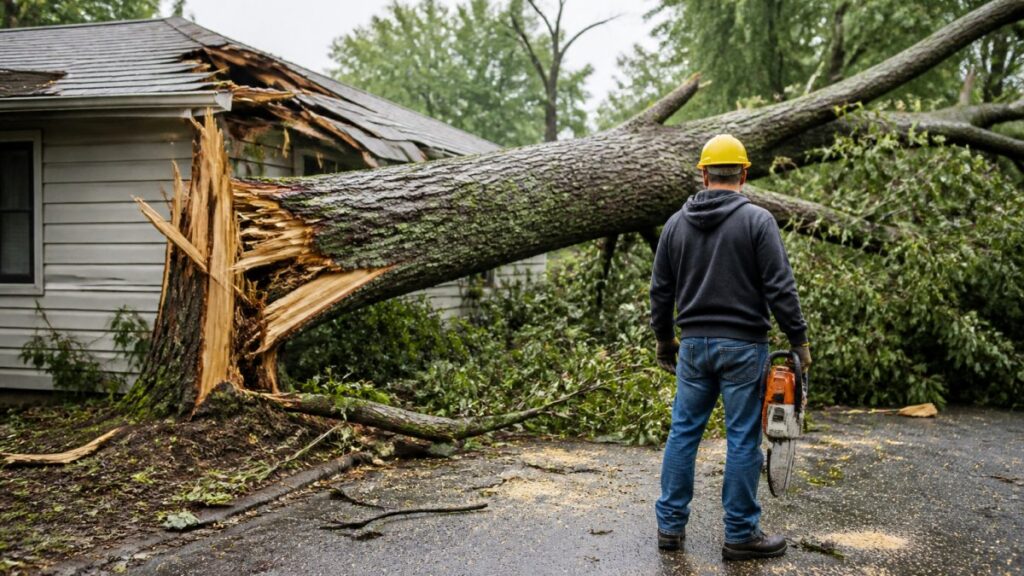
When a tree has fallen on or into your home, the situation becomes more complex. The tree is now both a hazard and potential evidence for your insurance claim.
Roof and structural damage assessment
Before removal, assess structural damage. If the tree penetrated the roof or damaged siding, the crew must coordinate carefully to avoid worsening damage. Photograph interior damage, water intrusion, and broken drywall.
A professional arborist can evaluate how the tree is resting on your home and determine whether section-by-section removal or whole-tree removal minimizes additional damage.
Do not allow anyone into rooms under the tree until a structural engineer or contractor clears them. A tree pressing on a roof creates load-bearing stress that weakens the structure.
Coordinating with your insurance company
Call your insurance company before removal begins. Your adjuster may want to inspect and document damage before the tree comes down, protecting your claim.
Provide your insurer with a written tree service estimate before work starts. Most insurers allow you to choose your own contractor.
Keep all receipts and invoices from the tree service. Your insurance claim will need itemized documentation of what was removed, what cleanup was performed, and the cost of each service.
Storm Damage Tree Cleanup: Managing Debris After Removal
Once the hazardous tree is removed, thorough cleanup restores your property to safe, usable condition.
What thorough cleanup actually means
Cleanup includes removing all branches, limbs, and trunk pieces from your yard, roof, gutters, and landscaping.
Ask your tree service what cleanup covers: Are branches removed? Is the area raked? Are wood chips removed or left as mulch? Is debris hauled off-site or chipped on-site?
Stump removal and disposal options
Stump removal is usually a separate service. Grinding grinds the stump 4-6 inches below ground for replanting. Full removal costs more but leaves no trace.
Stump grinding is faster and cheaper than full removal, but full removal gives you a clean slate for replanting or landscaping.
What to Do with Fallen Tree Branches: Sorting and Disposal
Branches scattered across your property need organization before disposal. Understanding your options helps you choose the most practical approach.
Separating branches by size and type
Sort branches into three categories: small branches (under 2 inches diameter), medium branches (2-6 inches), and large pieces (over 6 inches). Small branches can go in yard waste bins if your local service accepts them.
Separate branches with leaves or green growth from dead, dry wood. Green branches take longer to decompose if you’re composting. Dead wood is drier and easier to handle.
If you have a lot of debris, do not attempt to haul it yourself. A single large branch can be heavy and awkward. Professional crews have equipment to handle bulk debris safely.
Chipping, mulching, and hauling options
You have three main options for branch disposal: chipping on-site, hauling to a disposal facility, or leaving chips as mulch.
Chipping on-site reduces the volume of material significantly. A chipper can process most branches into wood chips in a few hours.
Hauling to a local yard waste facility is an option if you have the equipment and time.
Leaving chips as mulch is practical if you have garden beds or landscaping that benefits from mulch. Wood chips suppress weeds and retain moisture.
How to Evaluate and Hire an Emergency Tree Service
Choosing the right crew makes the difference between a smooth removal and a costly mistake. Know what to look for before you call.
Credentials and experience to verify
Ask if the crew holds certifications from the International Society of Arboriculture (ISA). This credential matters for hazardous removals.
Check for business licensing and insurance. A legitimate tree service carries liability insurance and workers’ compensation. Ask to see proof of insurance before work begins.
Experience with emergency removals is important. Ask how many emergency jobs the crew handles annually and whether they’re available 24/7.
Ask for references from recent jobs, especially storm damage and emergency removals. A reputable service will provide names of homeowners who can speak to their work quality and cleanup standards.
Ask about their experience specifically with hazardous trees and storm cleanup.
Getting a clear quote and understanding costs
Request a written estimate that itemizes each service: tree removal, stump grinding, debris removal, cleanup, and any additional work.
Ask what’s included in the estimate. Does cleanup mean the area is raked, or just large debris removed? Are wood chips removed or left? Is stump removal included, or quoted separately?
Compare estimates from multiple services, but don’t choose based on price alone. A significantly lower estimate may mean the crew cuts corners on cleanup or safety.
Ask about payment terms. Most services require payment on completion. Some offer financing for large jobs. Clarify before work begins.
Insurance and Documentation: Protecting Your Claim
Proper documentation protects your insurance claim and ensures you have a clear record of the work performed.
What homeowners insurance typically covers
Most homeowners insurance covers tree removal and damage caused by trees if the tree fell due to a covered event like a storm. Coverage varies by policy.
Tree removal is often subject to a deductible. If your deductible is $1,000, you pay that amount before insurance covers the rest. Ask your insurer specifically what’s covered under your policy and what your deductible is.
Coverage for preventive tree removal (removing a dead or diseased tree before it falls) is rare. Most policies cover only removal of trees that have already caused damage.
Records and receipts you’ll need
Keep all invoices from the tree service. Your insurance claim needs itemized documentation of what was removed and the cost.
Save photos of the damage and the removal process. Your insurer may request these as part of the claim.
Keep the estimate you received from the tree service. This shows you obtained competitive pricing and didn’t overpay. Your insurer uses this to verify the cost was reasonable.
Document any additional damage the tree caused: roof damage, fence damage, vehicle damage, or landscaping loss. Photograph each area and keep repair estimates if you obtain them.
Next Steps: Getting Your Property Back to Safe
After removal and cleanup, your property needs assessment and planning for next steps.
Once the hazardous tree is gone and debris is cleared, walk your property and identify any remaining damage. Roof damage needs repair promptly to prevent water intrusion.
If you’re planning to replant, choose species suited to your climate and soil. Avoid planting in the same spot if the previous tree had disease or pest issues.
Have your remaining trees evaluated if they were near the fallen tree or damaged in the storm. A professional assessment identifies hazards before they become emergencies.
At Steve’s Tree Service LLC, we specialize in emergency tree removal and storm cleanup for homeowners in Weatherford and Parker County. We provide detailed estimates, thorough cleanup, and honest guidance on what your property needs. Call us for a free estimate or immediate emergency response.
Frequently Asked Questions
What should I do if a tree falls on my house?
First, make sure no one is in immediate danger and evacuate if needed. Do not attempt to remove the tree yourself. Call a professional emergency tree service and your insurance company right away. Document the damage with photos and video before touching anything. If power lines are involved, call the utility company first and stay clear of the area. A certified arborist can assess structural damage and coordinate safe removal.
How quickly can an emergency tree service respond?
Response times vary based on weather conditions, the severity of other damage in the area, and the time of day you call. Many emergency tree services offer 24/7 availability and aim to respond within hours during storms. Some crews can arrive the same day for hazardous situations; others may take 24-48 hours depending on demand. Always ask about response time when you call, and confirm the crew’s experience with hazardous tree removal before hiring.
Will homeowners insurance cover emergency tree removal?
Coverage depends on your policy and the cause of damage. Most homeowners insurance covers tree removal if the tree damages your home or other structures. If a healthy tree falls due to a storm, removal is usually covered. However, if the tree was diseased or neglected, coverage may be denied. Check your policy details and contact your insurance company immediately after the incident. Keep all receipts and documentation from the tree service to support your claim.
Can I remove a storm-damaged tree myself?
Removing a storm-damaged tree is dangerous and not recommended without professional training. Dead or partially fallen trees are unstable and can shift unexpectedly, causing serious injury or death. Chainsaws, heavy equipment, and climbing require certification and experience. If the tree is near power lines, it becomes a utility hazard and must be handled by professionals. Hire a certified arborist or licensed tree service to handle removal safely and compliantly.
When a tree threatens your safety or property, the right professional makes all the difference. Steve’s Tree Service LLC has the experience, equipment, and commitment to quality that homeowners depend on. We handle emergency removals with the care your home deserves, manage insurance documentation, and leave your property clean and safe. Get a quote today and see why homeowners throughout the area trust our team.